Department of Rheumatology and Clinical Immunology, Charité - Universitätsmedizin, Berlin, Germany.
Curr Rheumatol Rep. 2020 Oct 12;22(12):85. doi: 10.1007/s11926-020-00961-0.
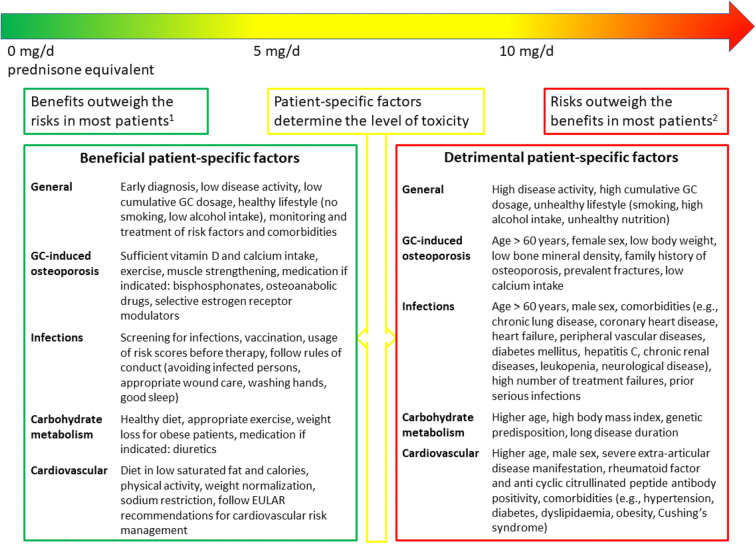
While glucocorticoids (GCs) are effective in large vessel vasculitis (LVV), they may cause serious adverse events (AEs), especially if taken for longer durations and at higher doses. Unfortunately, patients suffering from LVV often need long-term treatment with GCs; therefore, toxicity needs to be expected and countered.
GCs remain the mainstay of therapy for both giant cell arteritis and Takayasu arteritis. In order to minimize their toxicity, the following strategies should be considered: GC tapering, administration of conventional synthetic (e.g., methotrexate) or biologic (e.g., tocilizumab) GC-sparing agents, as well as monitoring, prophylaxis, and treatment of GC-related AEs. Several drugs are currently under investigation to expand the armamentarium for the treatment of LVV. GC treatment in LVV is effective but associated with toxicity. Strategies to minimize this toxicity should be applied when treating patients suffering from LVV.
糖皮质激素(GCs)在大动脉血管炎(LVV)中有效,但可能会引起严重的不良反应(AEs),尤其是在长期和高剂量使用时。不幸的是,患有 LVV 的患者通常需要长期接受 GCs 治疗;因此,需要预期并应对其毒性。
GCs 仍然是巨细胞动脉炎和 Takayasu 动脉炎治疗的主要方法。为了最大程度地降低其毒性,应考虑以下策略:GC 逐渐减量、使用传统合成(如甲氨蝶呤)或生物(如托珠单抗)GC 保留剂,以及监测、预防和治疗 GC 相关的不良反应。目前正在研究几种药物来扩大治疗 LVV 的手段。GC 在 LVV 中的治疗有效,但与毒性相关。在治疗 LVV 患者时,应采取策略来最大程度地降低这种毒性。