Massachusetts General Hospital, Boston, MA.
ECOG-ACRIN Cancer Research Group Biostatistics Center, Dana Farber Cancer Institute Boston, MA.
J Clin Oncol. 2020 Nov 20;38(33):3883-3894. doi: 10.1200/JCO.19.03010. Epub 2020 Oct 13.
Therapeutically actionable molecular alterations are widely distributed across cancer types. The National Cancer Institute Molecular Analysis for Therapy Choice (NCI-MATCH) trial was designed to evaluate targeted therapy antitumor activity in underexplored cancer types. Tumor biopsy specimens were analyzed centrally with next-generation sequencing (NGS) in a master screening protocol. Patients with a tumor molecular alteration addressed by a targeted treatment lacking established efficacy in that tumor type were assigned to 1 of 30 treatments in parallel, single-arm, phase II subprotocols.
Tumor biopsy specimens from 5,954 patients with refractory malignancies at 1,117 accrual sites were analyzed centrally with NGS and selected immunohistochemistry in a master screening protocol. The treatment-assignment rate to treatment arms was assessed. Molecular alterations in seven tumors profiled in both NCI-MATCH trial and The Cancer Genome Atlas (TCGA) of primary tumors were compared.
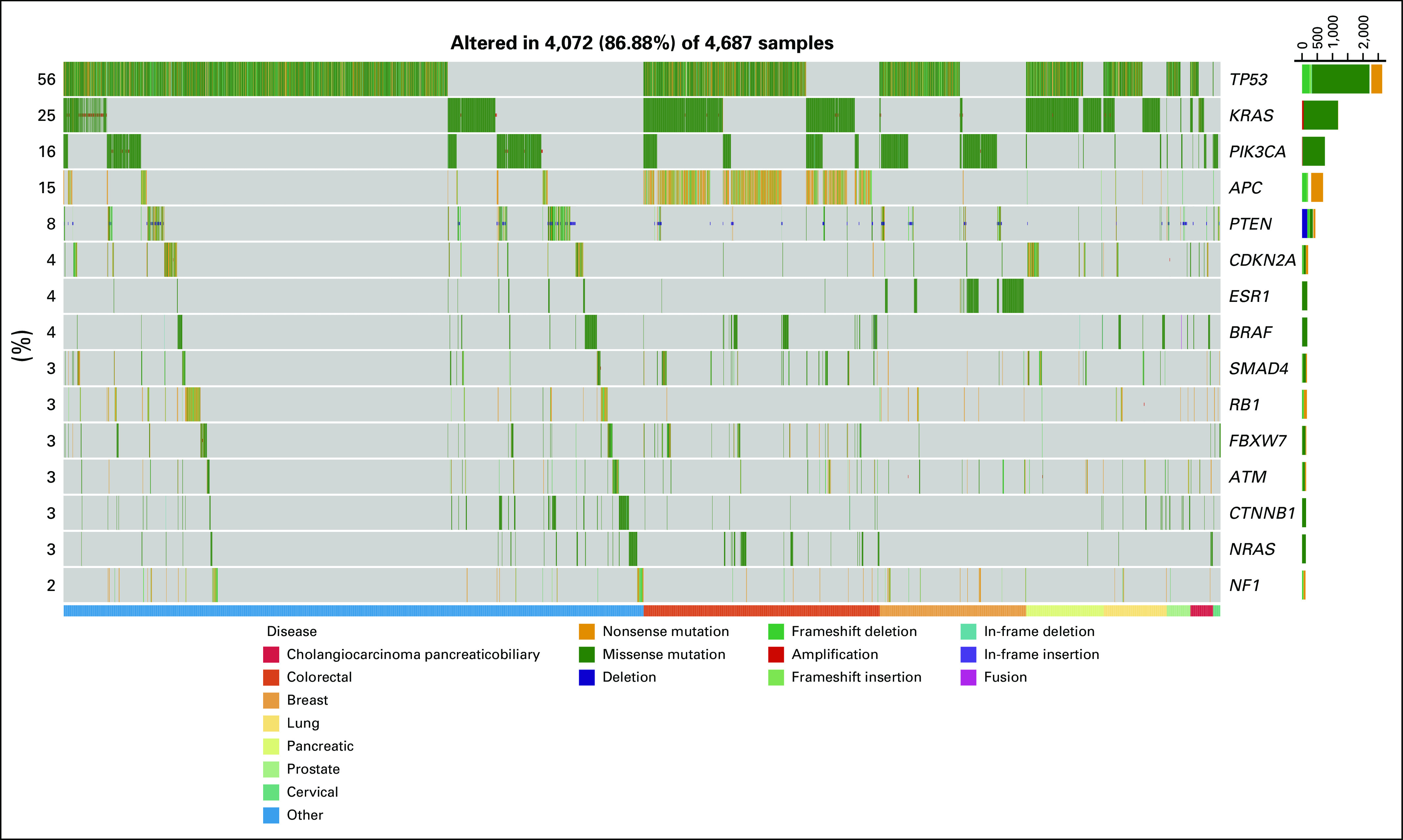
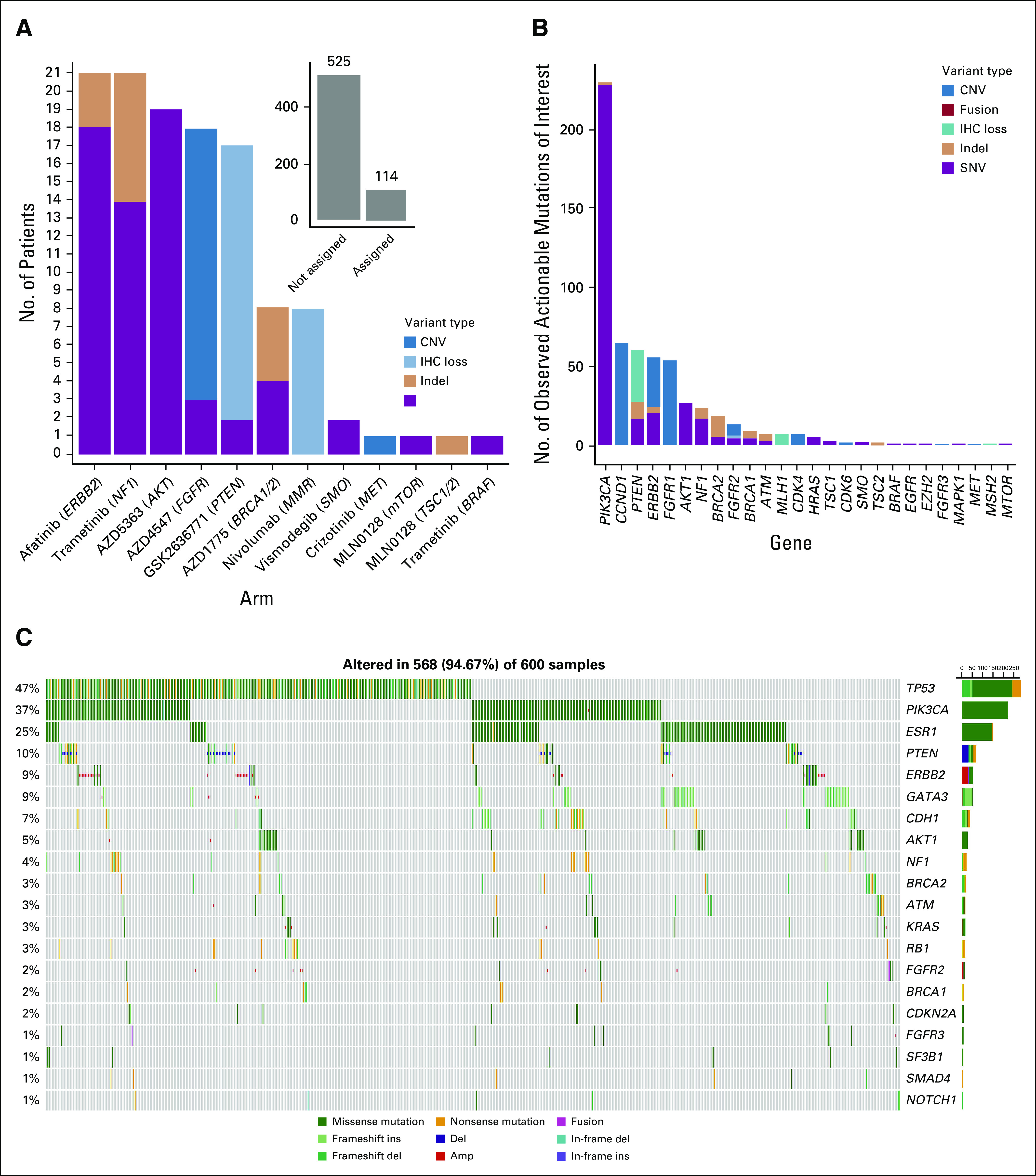
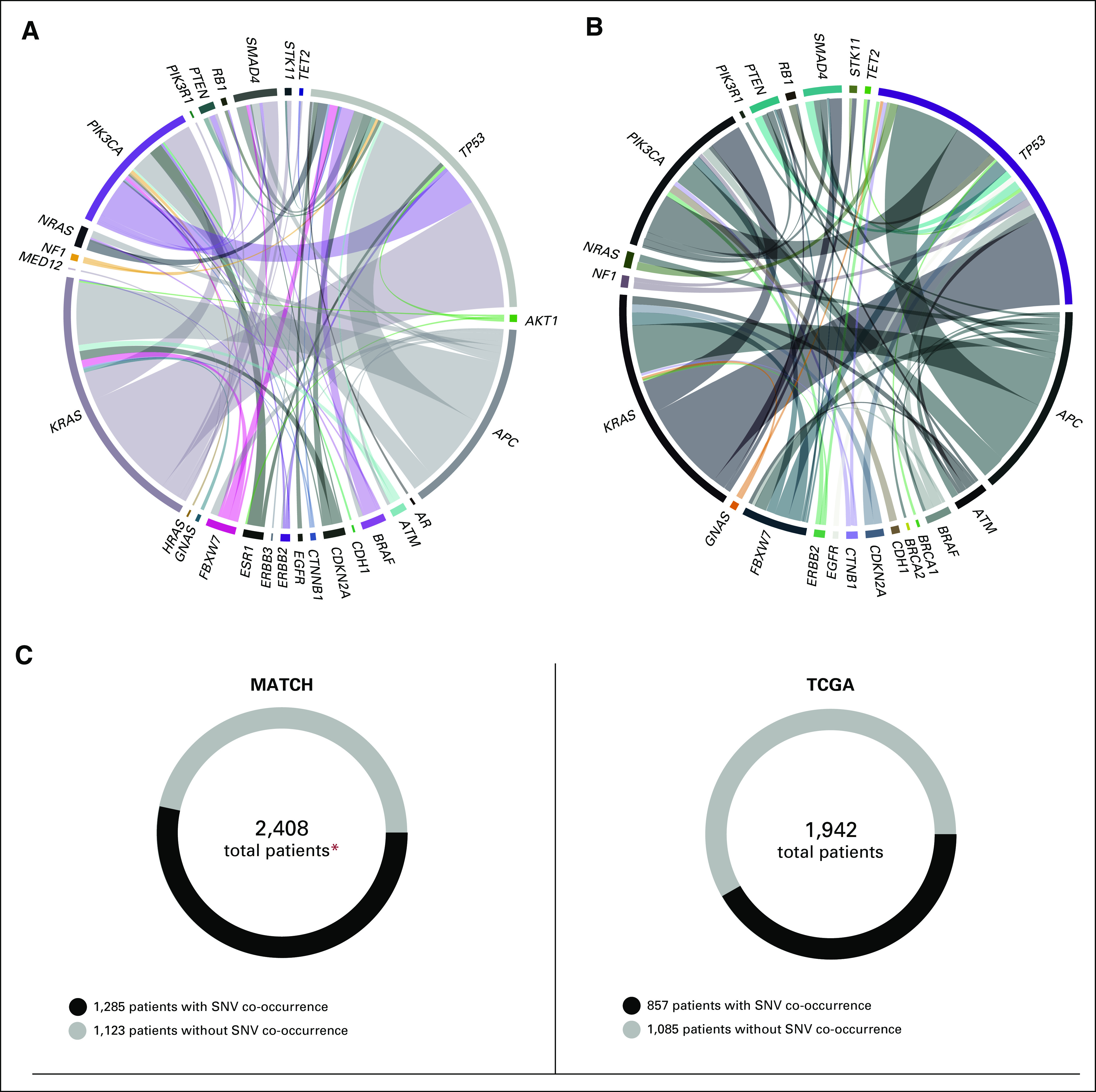
Molecular profiling was successful in 93.0% of specimens. An actionable alteration was found in 37.6%. After applying clinical and molecular exclusion criteria, 17.8% were assigned (26.4% could have been assigned if all subprotocols were available simultaneously). Eleven subprotocols reached their accrual goal as of this report. Actionability rates differed among histologies (eg, > 35% for urothelial cancers and < 6% for pancreatic and small-cell lung cancer). Multiple actionable or resistance-conferring tumor mutations were seen in 11.9% and 71.3% of specimens, respectively. Known resistance mutations to targeted therapies were numerically more frequent in NCI-MATCH than TCGA tumors, but not markedly so.
We demonstrated feasibility of screening large numbers of patients at numerous accruing sites in a complex trial to test investigational therapies for moderately frequent molecular targets. Co-occurring resistance mutations were common and endorse investigation of combination targeted-therapy regimens.
治疗相关的分子改变广泛存在于各种癌症类型中。国家癌症研究所分子分析用于治疗选择(NCI-MATCH)试验旨在评估靶向治疗在探索较少的癌症类型中的抗肿瘤活性。肿瘤活检标本通过新一代测序(NGS)在主筛查方案中进行中心分析。具有靶向治疗中缺乏既定疗效的肿瘤分子改变的患者被分配到 30 种平行、单臂、二期子方案中的 1 种治疗中。
在 1117 个入组地点,对 5954 名难治性恶性肿瘤患者的肿瘤活检标本进行了中心 NGS 和选定的免疫组织化学分析,采用主筛查方案。评估了治疗臂的治疗分配率。在 NCI-MATCH 试验和原发性肿瘤的癌症基因组图谱(TCGA)中对七种肿瘤的分子改变进行了比较。
标本的分子分析成功率为 93.0%。发现了 37.6%的可治疗改变。在应用临床和分子排除标准后,有 17.8%的患者被分配(如果所有子方案同时可用,则有 26.4%的患者可被分配)。截至本报告时,有 11 个子方案已达到入组目标。组织学的可操作性率不同(例如,尿路上皮癌>35%,胰腺癌和小细胞肺癌<6%)。分别有 11.9%和 71.3%的标本中出现了多个可操作或耐药性相关的肿瘤突变。在 NCI-MATCH 中,已知的靶向治疗耐药突变在数量上比 TCGA 肿瘤更频繁,但并不显著。
我们证明了在一项复杂的试验中,在大量入组的多个地点筛选大量患者,以测试针对中度常见分子靶标的研究性治疗的可行性。共同发生的耐药突变很常见,并支持联合靶向治疗方案的研究。