Mathematical Institute, University of Oxford, Oxford, United Kingdom.
Living Matter Laboratory, Stanford University, Stanford, California, USA.
PLoS Comput Biol. 2020 Oct 13;16(10):e1008267. doi: 10.1371/journal.pcbi.1008267. eCollection 2020 Oct.
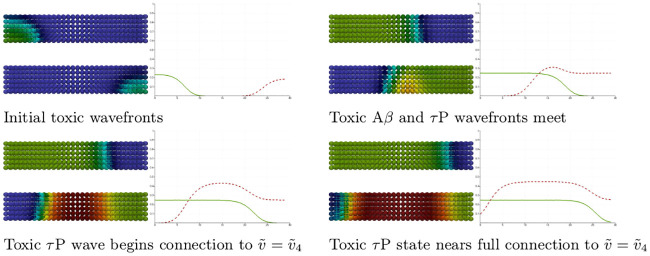
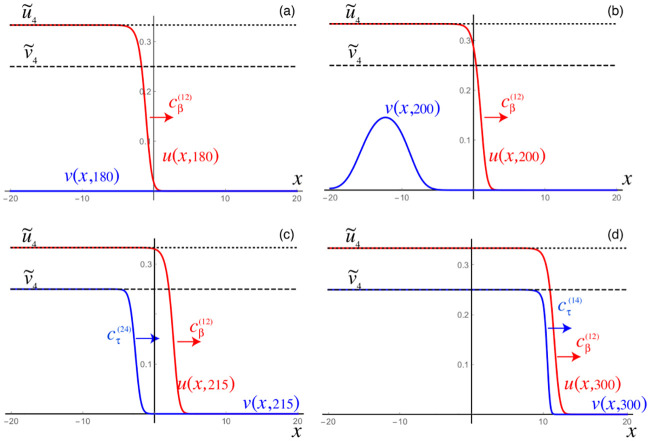
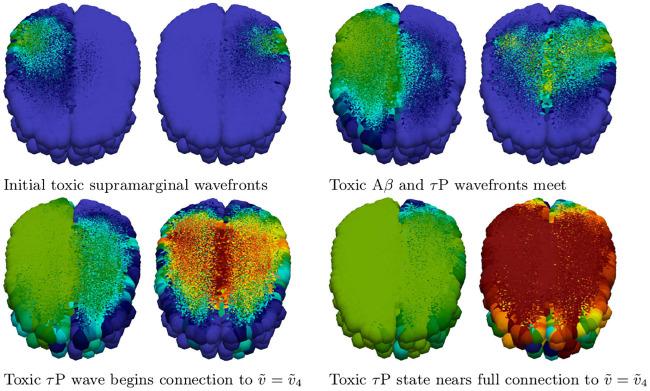
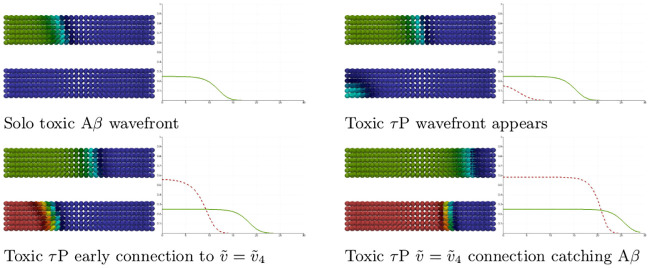
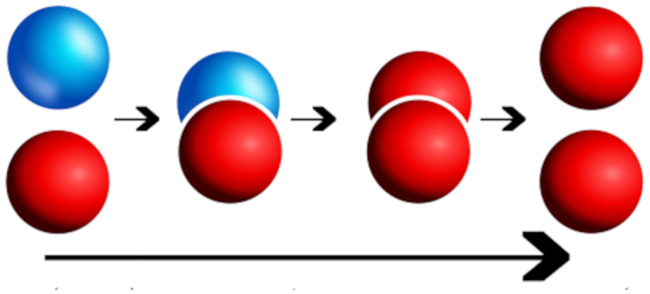
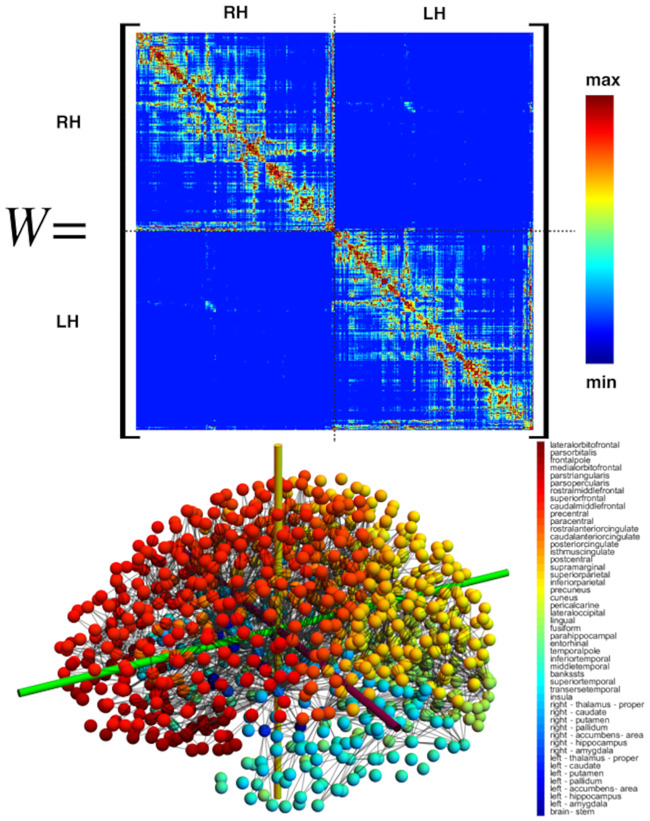
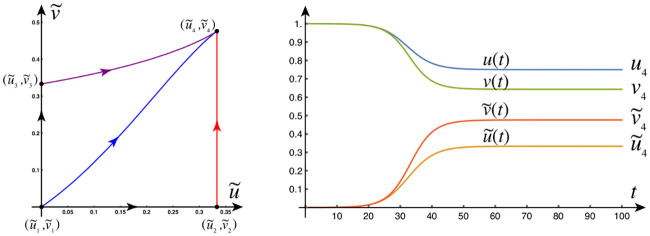
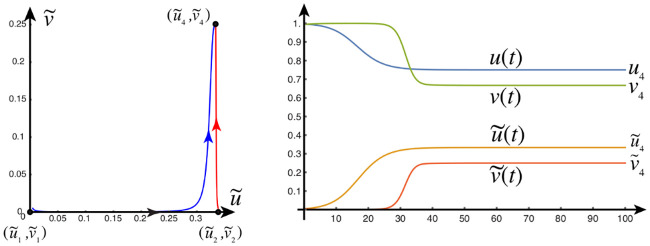
Neurodegenerative diseases such as Alzheimer's or Parkinson's are associated with the prion-like propagation and aggregation of toxic proteins. A long standing hypothesis that amyloid-beta drives Alzheimer's disease has proven the subject of contemporary controversy; leading to new research in both the role of tau protein and its interaction with amyloid-beta. Conversely, recent work in mathematical modeling has demonstrated the relevance of nonlinear reaction-diffusion type equations to capture essential features of the disease. Such approaches have been further simplified, to network-based models, and offer researchers a powerful set of computationally tractable tools with which to investigate neurodegenerative disease dynamics. Here, we propose a novel, coupled network-based model for a two-protein system that includes an enzymatic interaction term alongside a simple model of aggregate transneuronal damage. We apply this theoretical model to test the possible interactions between tau proteins and amyloid-beta and study the resulting coupled behavior between toxic protein clearance and proteopathic phenomenology. Our analysis reveals ways in which amyloid-beta and tau proteins may conspire with each other to enhance the nucleation and propagation of different diseases, thus shedding new light on the importance of protein clearance and protein interaction mechanisms in prion-like models of neurodegenerative disease.
神经退行性疾病,如阿尔茨海默病或帕金森病,与有毒蛋白质的类朊病毒传播和聚集有关。淀粉样蛋白-β驱动阿尔茨海默病的长期假设已被证明是当代争议的主题;导致tau 蛋白的作用及其与淀粉样蛋白-β相互作用的新研究。相反,数学建模的最新工作表明,非线性反应扩散型方程对于捕捉疾病的基本特征具有重要意义。这些方法已经进一步简化为基于网络的模型,为研究人员提供了一组强大的、可计算的工具,用于研究神经退行性疾病动力学。在这里,我们提出了一个新的、基于耦合网络的双蛋白系统模型,该模型包括酶相互作用项和简单的聚集跨神经元损伤模型。我们将这个理论模型应用于测试tau 蛋白和淀粉样蛋白-β之间可能的相互作用,并研究有毒蛋白质清除和蛋白病理现象之间的耦合行为。我们的分析揭示了淀粉样蛋白-β和 tau 蛋白可能相互勾结以增强不同疾病的成核和传播的方式,从而为神经退行性疾病的类朊病毒模型中蛋白质清除和蛋白质相互作用机制的重要性提供了新的线索。