Hussain Muhammad, Amin Yasar, Lee Kyung-Geun
Network Research Lab (NRL), Information and Communication Engineering Department, Sejong University, Seoul 05006, Korea.
ACTSENA Research Group, Department of Telecommunication Engineering, University of Engineering and Technology, Taxila, Punjab 47050, Pakistan.
Sensors (Basel). 2020 Oct 8;20(19):5713. doi: 10.3390/s20195713.
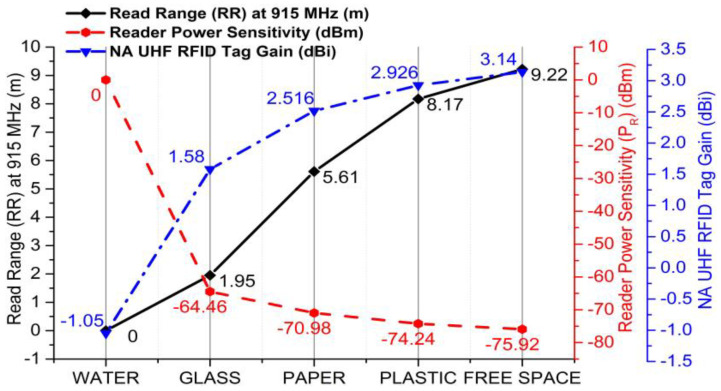
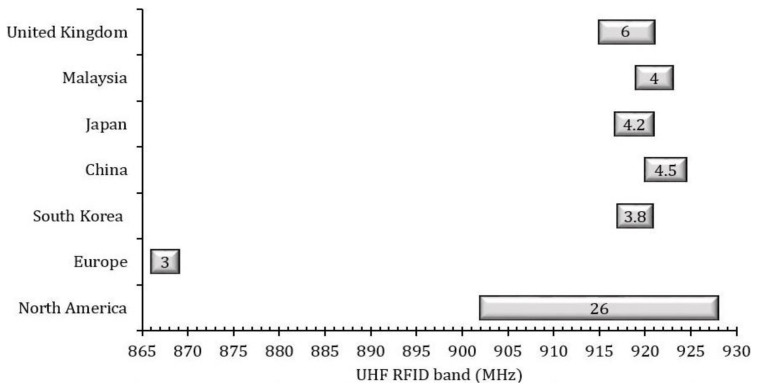
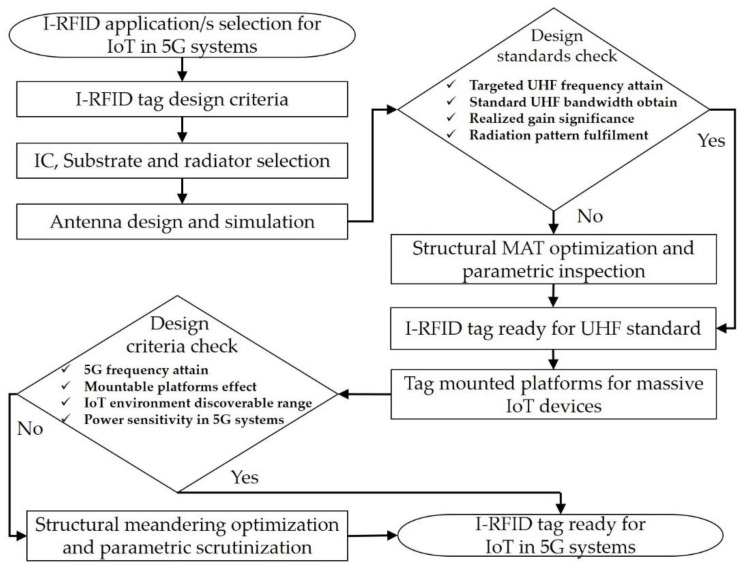
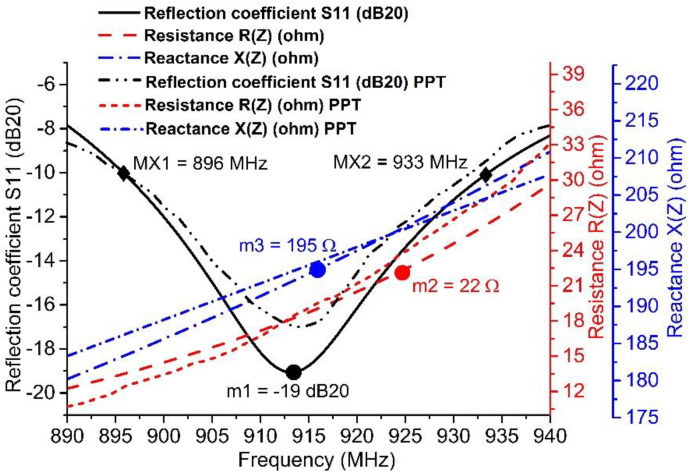
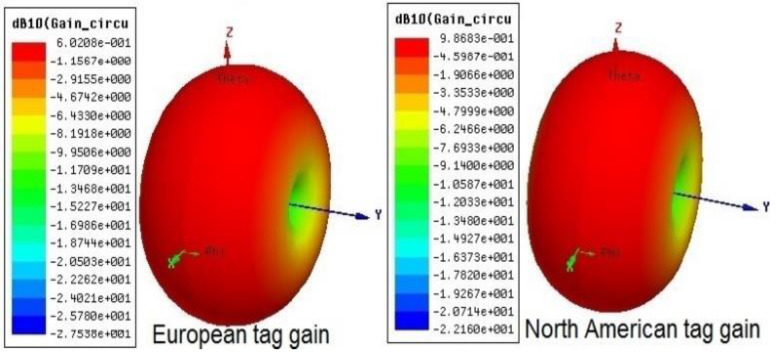
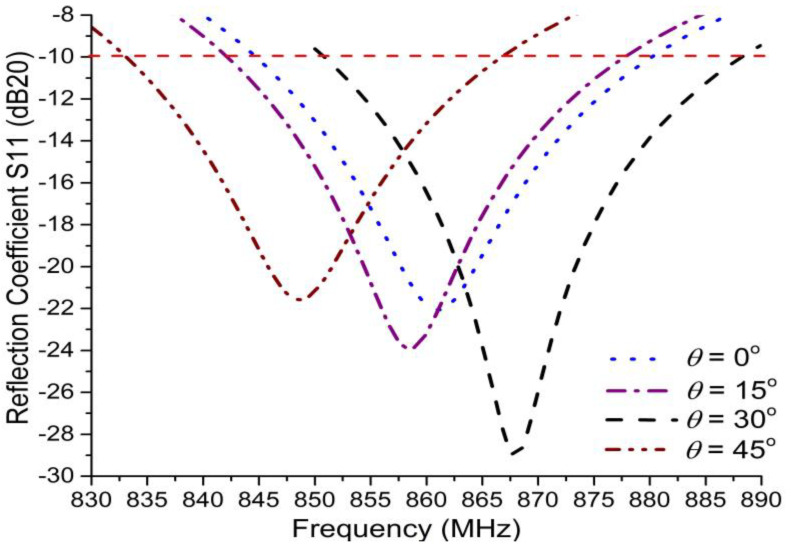
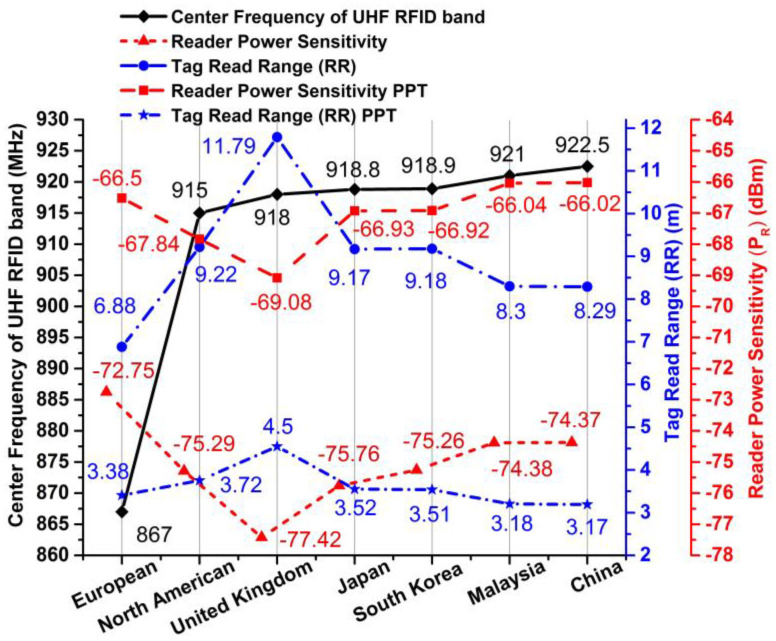
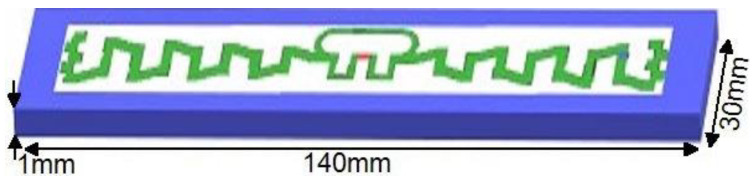
Upcoming 5th-generation (5G) systems incorporate physical objects (referred to as things), which sense the presence of components such as gears, gadgets, and sensors. They may transmit many kinds of states in the smart city context, such as new deals at malls, safe distances on roads, patient heart rhythms (especially in hospitals), and logistic control at aerodromes and seaports around the world. These serve to form the so-called future internet of things (IoT). From this futuristic perspective, everything should have its own identity. In this context, radio frequency identification (RFID) plays a specific role, which provides wireless communications in a secure manner. Passive RFID tags carry out work using the energy harvested among massive systems. RFID has been habitually realized as a prerequisite for IoT, the combination of which is called IoT RFID (I-RFID). For the current scenario, such tags should be productive, low-profile, compact, easily mountable, and have eco-friendly features. The presently available tags are not cost-effective and have not been proven as green tags for environmentally friendly IoT in 5G systems nor are they suitable for long-range communications in 5G systems. The proposed I-RFID tag uses the meandering angle technique (MAT) to construct a design that satisfies the features of a lower-cost printed antenna over the worldwide UHF RFID band standard (860-960 MHz). In our research, tag MAT antennas are fabricated on paper-based Korsnäs by screen- and flexo-printing, which have lowest simulated effective outcomes with dielectric variation due to humidity and have a plausible read range (RR) for European (EU; 866-868 MHz) and North American (NA; 902-928 MHz) UHF band standards. The I-RFID tag size is reduced by 36% to 38% w.r.t. a previously published case, the tag gain has been improved by 23.6% to 33.12%, and its read range has been enhanced by 50.9% and 59.6% for EU and NA UHF bands, respectively. It provides impressive performance on some platforms (e.g., plastic, paper, and glass), thereby providing a new state-of-the-art I-RFID tag with better qualities in 5G systems.
即将推出的第五代(5G)系统纳入了物理对象(称为事物),这些对象能够感知诸如齿轮、小工具和传感器等组件的存在。它们可以在智慧城市环境中传输多种状态,比如商场的新交易、道路上的安全距离、患者的心律(尤其是在医院)以及世界各地机场和海港的物流控制。这些共同构成了所谓的未来物联网(IoT)。从这个未来主义的角度来看,一切事物都应该有其自身的标识。在这种背景下,射频识别(RFID)发挥着特定作用,它以安全的方式提供无线通信。无源RFID标签利用在大量系统中收集的能量来开展工作。RFID一直被习惯性地视为物联网的一个先决条件,二者的结合被称为物联网RFID(I-RFID)。就当前情况而言,此类标签应该高效、低调、紧凑、易于安装且具有环保特性。目前可用的标签并不具有成本效益,在5G系统中尚未被证明是适用于环保物联网的绿色标签,也不适用于5G系统中的远距离通信。所提出的I-RFID标签采用曲折角技术(MAT)来构建一种设计,该设计在全球超高频RFID频段标准(860 - 960 MHz)上满足低成本印刷天线的特性。在我们的研究中,标签MAT天线通过丝网印刷和柔性版印刷在基于纸张的科思创纸上制造,由于湿度导致介电变化时,其模拟有效结果最低,并且对于欧洲(EU;866 - 868 MHz)和北美(NA;902 - 928 MHz)超高频频段标准具有合理的读取范围(RR)。与之前发表的案例相比,I-RFID标签尺寸缩小了36%至38%,标签增益提高了23.6%至33.12%,其在欧盟和北美超高频频段的读取范围分别提高了50.9%和59.6%。它在一些平台(如塑料、纸张和玻璃)上表现出色,从而在5G系统中提供了一种具有更好品质的新型先进I-RFID标签。