Institute of Tropical Bioscience and Biotechnology, Chinese Academy of Tropical Agricultural Sciences, Haikou 571101, China.
Hainan Key Laboratory for Protection and Utilization of Tropical Bioresources, Hainan Institute for Tropical Agricultural Resources, Chinese Academy of Tropical Agricultural Sciences, Haikou 571101, China.
Biomolecules. 2020 Oct 9;10(10):1430. doi: 10.3390/biom10101430.
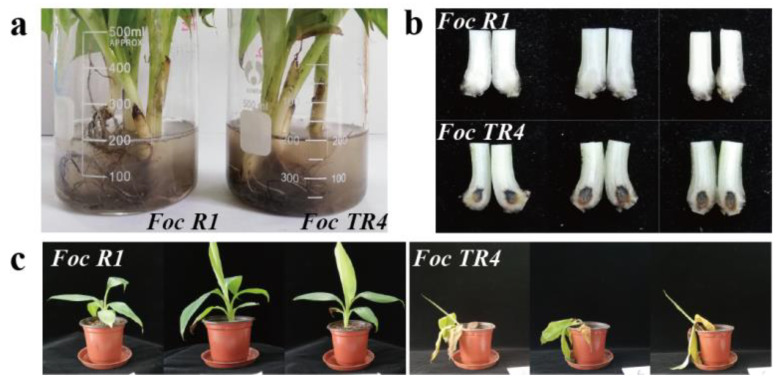
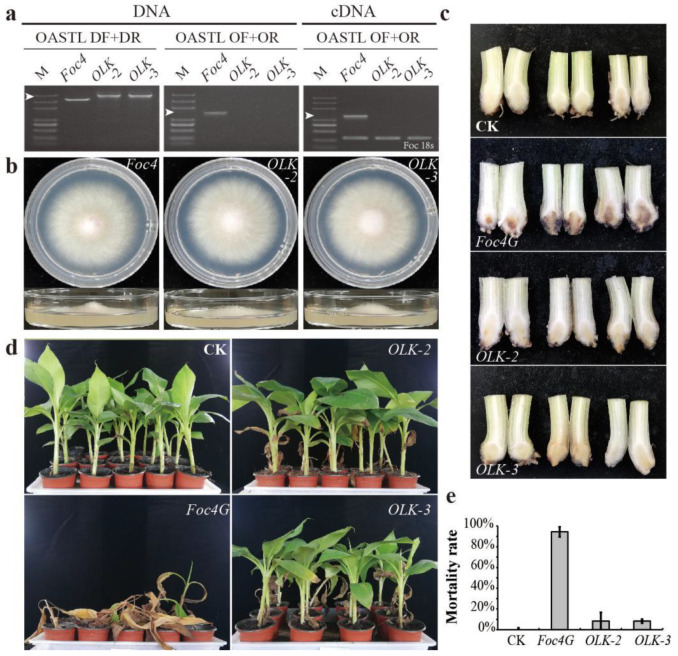
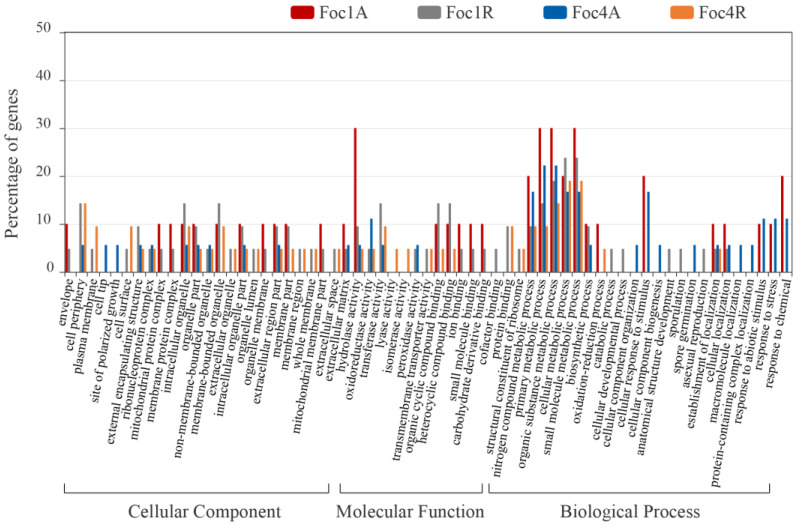
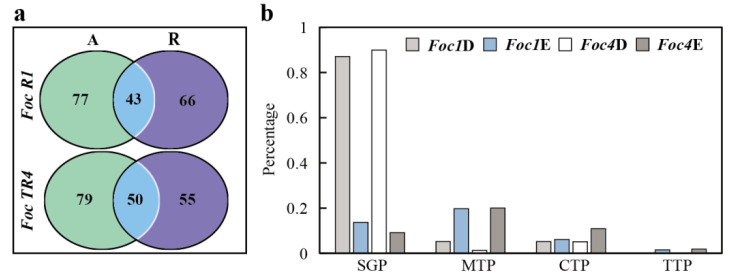
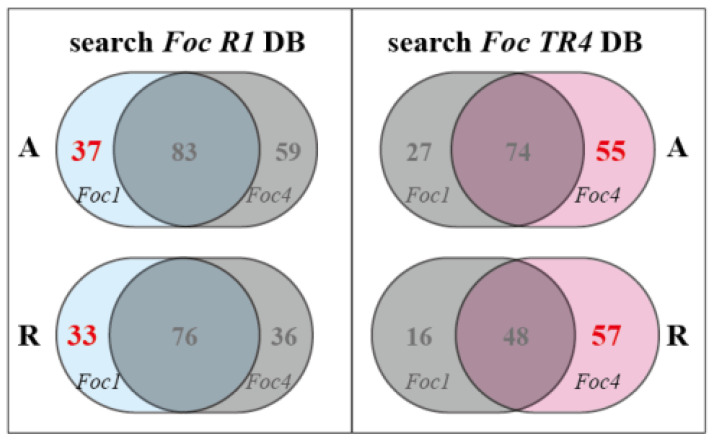
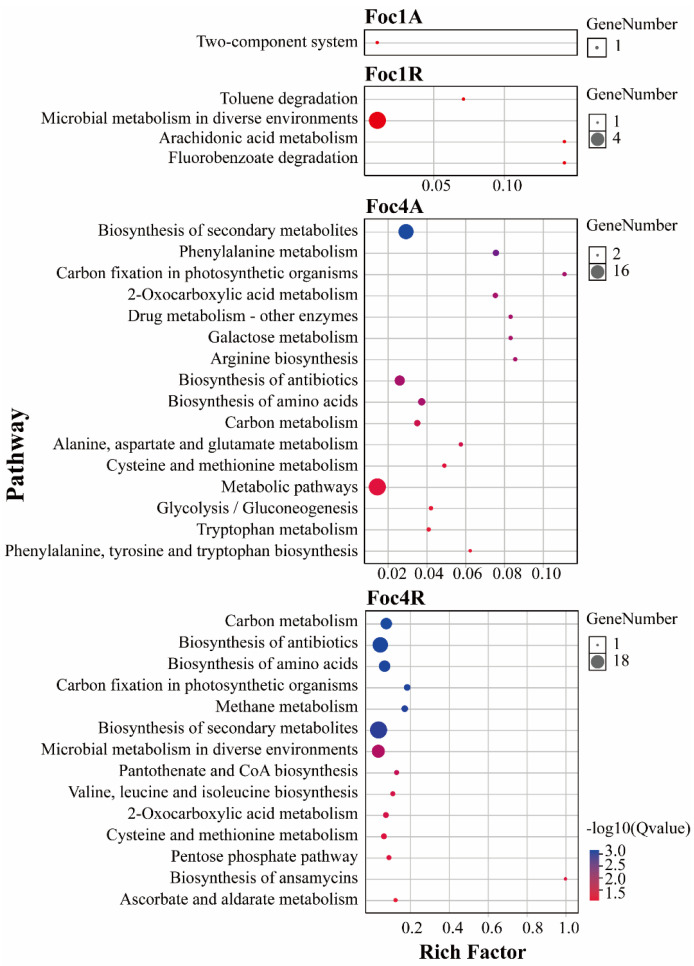
Banana Fusarium wilt (BFW), which is one of the most important banana diseases worldwide, is mainly caused by f. sp. tropic race 4 (). In this study, we conducted secretome analysis of and and discovered a total of 120 and 109 secretory proteins (SPs) from cultured alone or with banana roots, respectively, and 129 and 105 SPs respectively from cultured under the same conditions. and shared numerous SPs associated with hydrolase activity, oxidoreductase activity, and transferase activity. Furthermore, in culture with banana roots, and secreted many novel SPs, of which approximately 90% (; 57/66; ; 50/55) were unconventional SPs without signal peptides. Comparative analysis of SPs in and revealed that not only generated more specific SPs but also had a higher proportion of SPs involved in various metabolic pathways, such as phenylalanine metabolism and cysteine and methionine metabolism. The cysteine biosynthesis enzyme O-acetylhomoserine (thiol)-lyase (OASTL) was the most abundant root inducible -specific SP. In addition, knockout of the gene did not affect growth of ; but resulted in the loss of pathogenicity in banana 'Brazil'. We speculated that OASTL functions in banana by interfering with the biosynthesis of cysteine, which is the precursor of an enormous number of sulfur-containing defense compounds. Overall, our studies provide a basic understanding of the SPs in and ; including a novel effector in .
香蕉枯萎病(BFW)是全球最重要的香蕉病害之一,主要由 f. sp. tropic race 4()引起。在本研究中,我们对 和 进行了分泌组分析,分别从单独培养的 和与香蕉根共培养的 中发现了总共 120 种和 109 种分泌蛋白(SP),以及在相同条件下培养的 中分别发现了 129 种和 105 种 SP。 和 共享许多与水解酶活性、氧化还原酶活性和转移酶活性相关的大量 SP。此外,在与香蕉根共培养的条件下, 和 分泌了许多新的 SP,其中约 90%(;57/66;;50/55)是没有信号肽的非常规 SP。对 和 中的 SP 进行比较分析表明, 不仅产生了更多的特异性 SP,而且还具有更高比例的 SP 参与各种代谢途径,如苯丙氨酸代谢和半胱氨酸和蛋氨酸代谢。半胱氨酸生物合成酶 O-乙酰高丝氨酸(硫醇)-裂合酶(OASTL)是最丰富的根诱导 -特异性 SP。此外, 基因敲除不影响 的生长;但导致香蕉 '巴西' 的致病性丧失。我们推测,OASTL 通过干扰半胱氨酸的生物合成在香蕉中发挥作用,半胱氨酸是大量含硫防御化合物的前体。总的来说,我们的研究为 和 中的 SP 提供了基本的了解;包括 在 中的一个新效应因子。