Department of Digital Media Design, National Yunlin University of Science and Technology, Douliu 64002, Taiwan.
Sensors (Basel). 2020 Oct 9;20(20):5741. doi: 10.3390/s20205741.
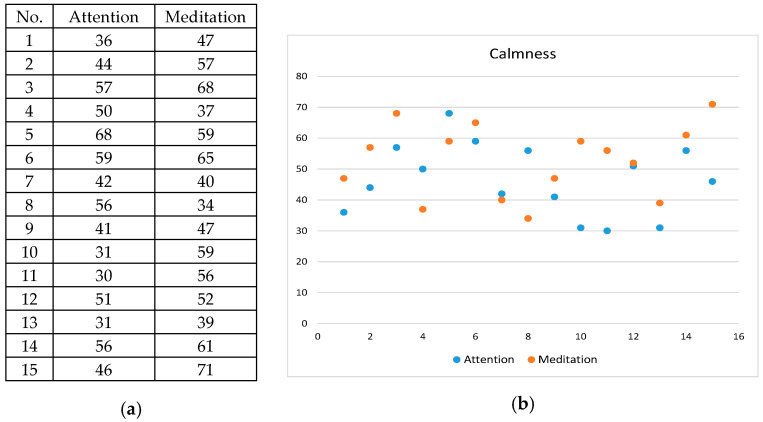
A novel interactive system for calligraphy called mind calligraphy that reflects the writer's emotions in real time by affective computing and visualization techniques is proposed. Differently from traditional calligraphy, which emphasizes artistic expression, the system is designed to visualize the writer's mental-state changes during writing using audio-visual tools. The writer's mental state is measured with a brain wave machine to yield attention and meditation signals, which are classified next into the four types of emotion, namely, focusing, relaxation, calmness, and anxiety. These emotion types then are represented both by animations and color palettes for by-standing observers to appreciate. Based on conclusions drawn from data collected from on-site observations, surveys via Likert-scale questionnaires, and semi-structured interviews, the proposed system was improved gradually. The participating writers' cognitive, emotional, and behavioral engagements in the system were recorded and analyzed to obtain the following findings: (1) the interactions with the system raise the writer's interest in calligraphy; (2) the proposed system reveals the writer's emotions during the writing process in real time via animations of mixtures of fish swimming and sounds of raindrops, insects, and thunder; (3) the dynamic visualization of the writer's emotion through animations and color-palette displays makes the writer understand better the connection of calligraphy and personal emotions; (4) the real-time audio-visual feedback increases the writer's willingness to continue in calligraphy; and (5) the engagement of the writer in the system with interactions of diversified forms provides the writer with a new experience of calligraphy.
提出了一种名为“意念书法”的新型交互系统,它通过情感计算和可视化技术实时反映作者的情感。与传统书法强调艺术表达不同,该系统旨在使用视听工具可视化书写过程中作者的心理状态变化。作者的心理状态通过脑波机进行测量,产生注意力和冥想信号,这些信号被分类为专注、放松、平静和焦虑四种情绪类型。然后,这些情绪类型通过动画和调色板来表示,供旁观者欣赏。根据现场观察、李克特量表问卷调查和半结构化访谈收集的数据得出的结论,逐步改进了所提出的系统。记录并分析参与书写者在系统中的认知、情感和行为参与度,得出以下发现:(1)与系统的交互提高了书写者对书法的兴趣;(2)通过鱼类游动和雨滴、昆虫和雷声的混合动画,实时揭示书写者在书写过程中的情绪;(3)通过动画和调色板显示动态可视化书写者的情绪,使书写者更好地理解书法与个人情绪的联系;(4)实时视听反馈增加了书写者继续书法创作的意愿;(5)书写者与多样化形式的系统交互参与为书写者提供了书法创作的新体验。