Munir Javaria, Yoon Jeong Kyo, Ryu Seongho
Soonchunhyang Institute of Medibioscience (SIMS), Soonchunhyang University, Cheonan, Chungcheongnam-do 31151, Korea.
Department of Integrated Biomedicine, Soonchunhyang University, Cheonan, Chungcheongnam-do 31151, Korea.
Cells. 2020 Oct 11;9(10):2271. doi: 10.3390/cells9102271.
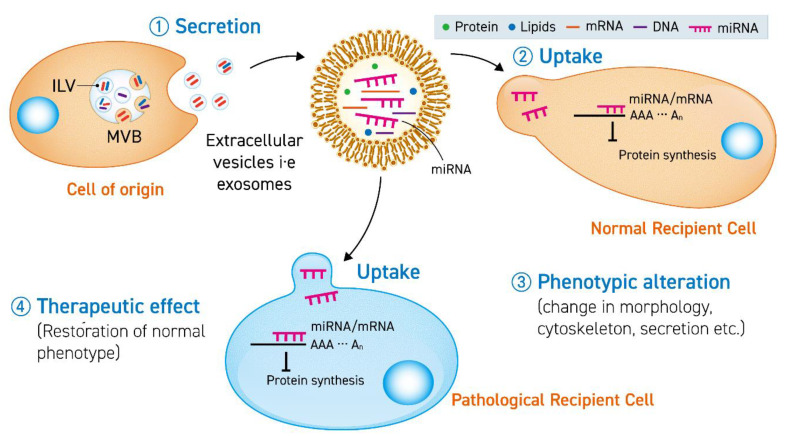
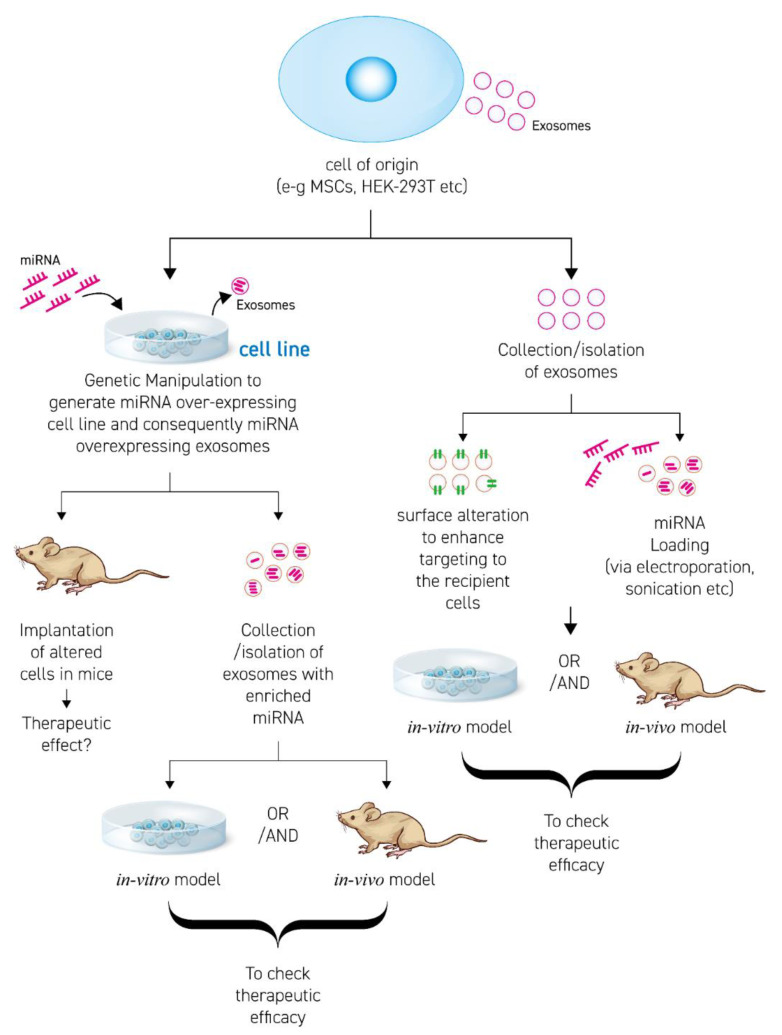
Extracellular vesicles (EVs) are 50-300 nm vesicles secreted by eukaryotic cells. They can carry cargo (including miRNA) from the donor cell to the recipient cell. miRNAs in EVs can change the translational profile of the recipient cell and modulate cellular morphology. This endogenous mechanism has attracted the attention of the drug-delivery community in the last few years. EVs can be enriched with exogenous therapeutic miRNAs and used for treatment of diseases by targeting pathological recipient cells. However, there are some obstacles that need to be addressed before introducing therapeutic miRNA-enriched EVs in clinics. Here, we focused on the progress in the field of therapeutic miRNA enriched EVs, highlighted important areas where research is needed, and discussed the potential to use them as therapeutic miRNA carriers in the future.
细胞外囊泡(EVs)是真核细胞分泌的50-300纳米的囊泡。它们可以将货物(包括微小RNA)从供体细胞运输到受体细胞。细胞外囊泡中的微小RNA可以改变受体细胞的翻译谱并调节细胞形态。这种内源性机制在过去几年中引起了药物递送领域的关注。细胞外囊泡可以富集外源性治疗性微小RNA,并通过靶向病理性受体细胞用于疾病治疗。然而,在临床引入富含治疗性微小RNA的细胞外囊泡之前,有一些障碍需要解决。在这里,我们关注了富含治疗性微小RNA的细胞外囊泡领域的进展,强调了需要研究的重要领域,并讨论了未来将它们用作治疗性微小RNA载体的潜力。