Park Jeong Seop, Piao Jiyuan, Park Gabee, Hong Hyun Sook
Department of Biomedical Science and Technology, Graduate School, Kyung Hee University, Seoul 02447, Korea.
Department of Genetic Engineering, College of Life Science and Graduate School of Biotechnology, Kyung Hee University, Yong In 17104, Korea.
Antioxidants (Basel). 2020 Oct 12;9(10):978. doi: 10.3390/antiox9100978.
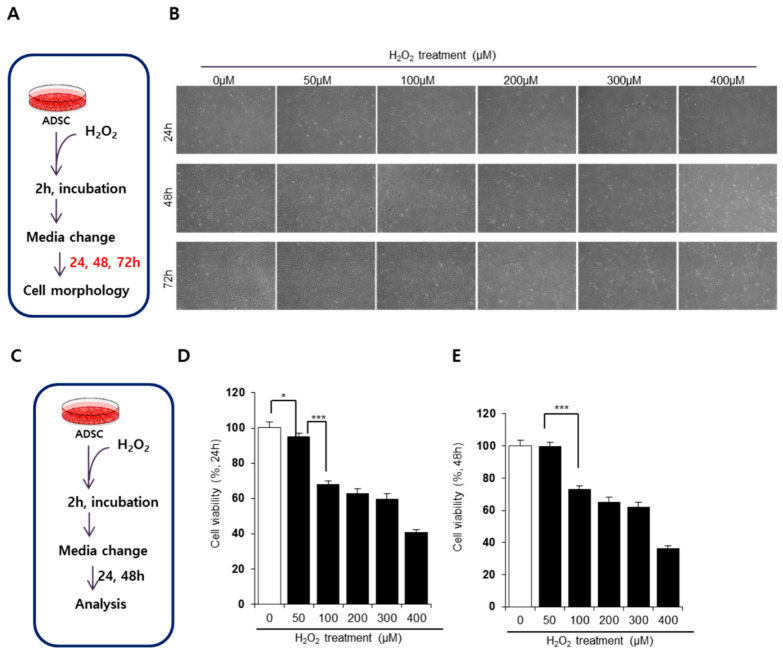
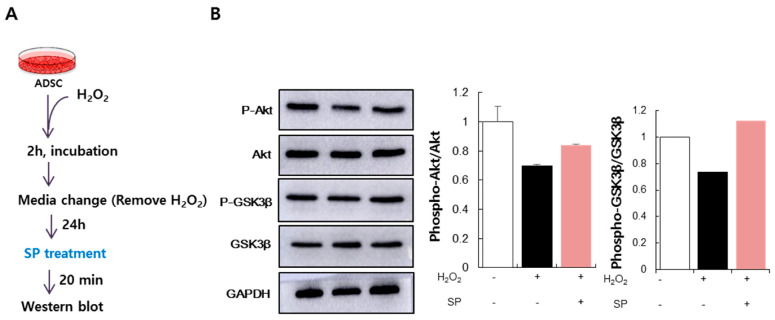
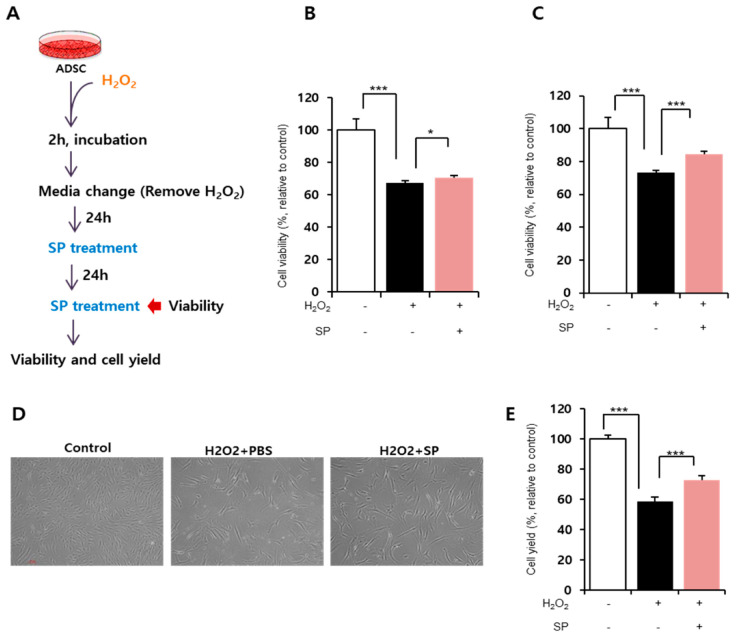
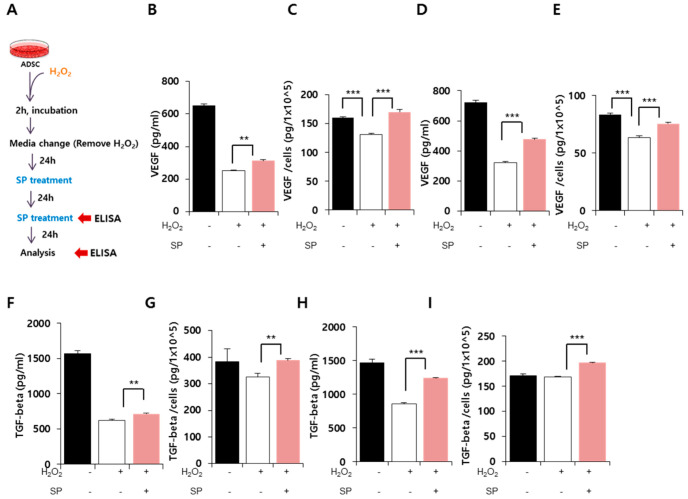
Oxidative stress induces cellular damage, which accelerates aging and promotes the development of serious illnesses. Adipose-derived stem cells (ADSCs) are novel cellular therapeutic tools and have been applied for tissue regeneration. However, ADSCs from aged and diseased individuals may be affected in vivo by the accumulation of free radicals, which can impair their therapeutic efficacy. Substance-P (SP) is a neuropeptide that is known to rescue stem cells from senescence and inflammatory attack, and this study explored the restorative effect of SP on ADSCs under oxidative stress. ADSCs were transiently exposed to HO, and then treated with SP. HO treatment decreased ADSC cell viability, proliferation, and cytokine production and this activity was not recovered even after the removal of HO. However, the addition of SP increased cell viability and restored paracrine potential, leading to the accelerated repopulation of ADSCs injured by HO. Furthermore, SP was capable of activating Akt/GSK-3β signaling, which was found to be downregulated following HO treatment. This might contribute to the restorative effect of SP on injured ADSCs. Collectively, SP can protect ADSCs from oxidant-induced cell damage, possibly by activating Akt/GSK-3β signaling in ADSCs. This study supports the possibility that SP can recover cell activity from oxidative stress-induced dysfunction.
氧化应激会导致细胞损伤,加速衰老并促进严重疾病的发展。脂肪来源干细胞(ADSCs)是新型的细胞治疗工具,已被应用于组织再生。然而,来自老年和患病个体的ADSCs在体内可能会受到自由基积累的影响,这会损害它们的治疗效果。P物质(SP)是一种神经肽,已知可使干细胞免受衰老和炎症攻击,本研究探讨了SP在氧化应激下对ADSCs的修复作用。将ADSCs短暂暴露于过氧化氢(HO),然后用SP处理。HO处理降低了ADSC的细胞活力、增殖能力和细胞因子产生,即使去除HO后这种活性也未恢复。然而,添加SP可提高细胞活力并恢复旁分泌潜能,导致受HO损伤的ADSCs加速重新增殖。此外,SP能够激活Akt/GSK-3β信号通路,发现该信号通路在HO处理后被下调。这可能有助于SP对受损ADSCs的修复作用。总体而言,SP可以保护ADSCs免受氧化剂诱导的细胞损伤,可能是通过激活ADSCs中的Akt/GSK-3β信号通路。本研究支持SP可以从氧化应激诱导的功能障碍中恢复细胞活性的可能性。