McLean Hospital, Department of Psychiatry, Harvard Medical School, Belmont, MA, 02478, USA.
Gene Transfer Core, Massachusetts General Hospital, Boston, MA, 02114, USA.
Nat Commun. 2020 Oct 14;11(1):5180. doi: 10.1038/s41467-020-18985-6.
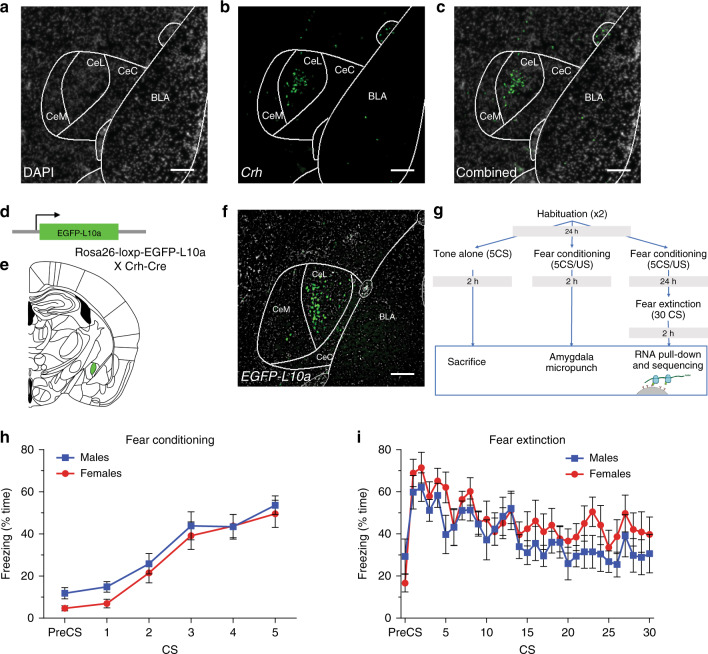
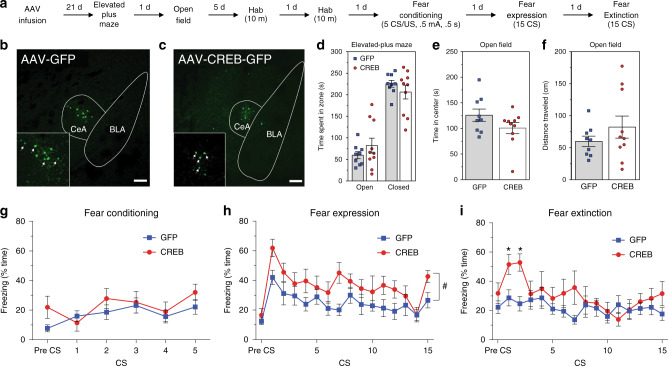
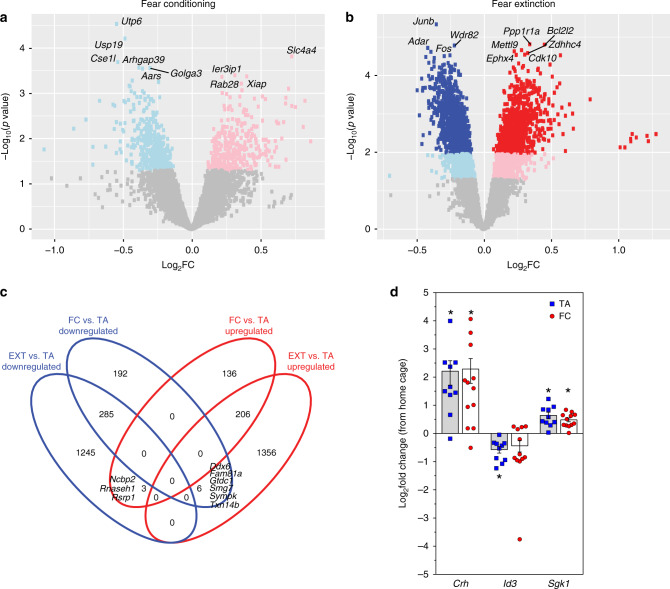
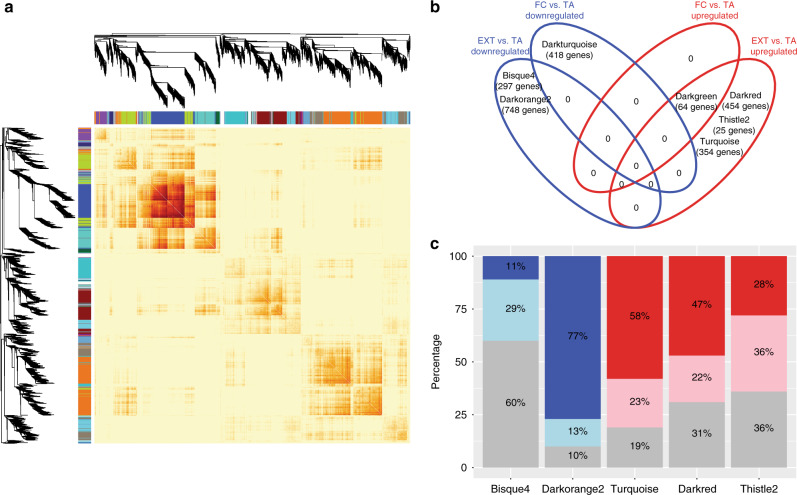
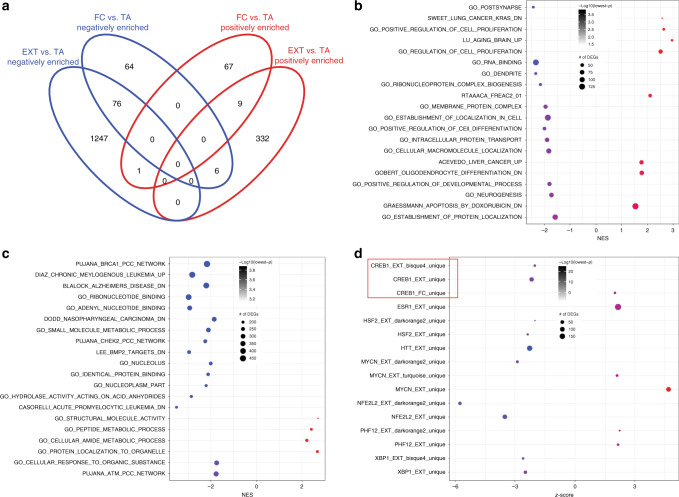
Fear and extinction learning are adaptive processes caused by molecular changes in specific neural circuits. Neurons expressing the corticotropin-releasing hormone gene (Crh) in central amygdala (CeA) are implicated in threat regulation, yet little is known of cell type-specific gene pathways mediating adaptive learning. We translationally profiled the transcriptome of CeA Crh-expressing cells (Crh neurons) after fear conditioning or extinction in mice using translating ribosome affinity purification (TRAP) and RNAseq. Differential gene expression and co-expression network analyses identified diverse networks activated or inhibited by fear vs extinction. Upstream regulator analysis demonstrated that extinction associates with reduced CREB expression, and viral vector-induced increased CREB expression in Crh neurons increased fear expression and inhibited extinction. These findings suggest that CREB, within CeA Crh neurons, may function as a molecular switch that regulates expression of fear and its extinction. Cell-type specific translational analyses may suggest targets useful for understanding and treating stress-related psychiatric illness.
恐惧和消退学习是由特定神经回路中的分子变化引起的适应性过程。表达促肾上腺皮质激素释放激素基因 (Crh) 的神经元参与威胁调节,但介导适应性学习的细胞类型特异性基因途径知之甚少。我们使用翻译核糖体亲和纯化 (TRAP) 和 RNAseq 对恐惧条件反射或消退后小鼠中央杏仁核 (CeA) 中表达 Crh 的细胞 (Crh 神经元) 的转录组进行了翻译组谱分析。差异基因表达和共表达网络分析确定了由恐惧与消退激活或抑制的不同网络。上游调节剂分析表明,消退与 CREB 表达减少相关,而病毒载体诱导 Crh 神经元中 CREB 表达增加会增加恐惧表达并抑制消退。这些发现表明,CeA Crh 神经元中的 CREB 可能作为一种分子开关,调节恐惧及其消退的表达。细胞类型特异性翻译分析可能为理解和治疗与应激相关的精神疾病提供有用的靶点。