Aberdeen Biomedical Imaging Centre, Institute of Medical Sciences, University of Aberdeen, Aberdeen, United Kingdom.
PLoS One. 2020 Oct 15;15(10):e0240697. doi: 10.1371/journal.pone.0240697. eCollection 2020.
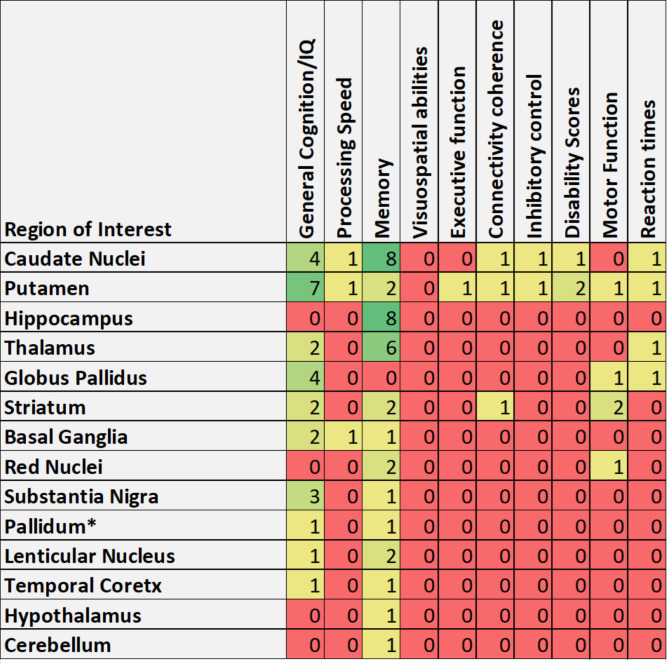
Iron is involved in many processes in the brain including, myelin generation, mitochondrial function, synthesis of ATP and DNA and the cycling of neurotransmitters. Disruption of normal iron homeostasis can result in iron accumulation in the brain, which in turn can partake in interactions which amplify oxidative damage. The development of MRI techniques for quantifying brain iron has allowed for the characterisation of the impact that brain iron has on cognition and neurodegeneration. This review uses a systematic approach to collate and evaluate the current literature which explores the relationship between brain iron and cognition. The following databases were searched in keeping with a predetermined inclusion criterion: Embase Ovid, PubMed and PsychInfo (from inception to 31st March 2020). The included studies were assessed for study characteristics and quality and their results were extracted and summarised. This review identified 41 human studies of varying design, which statistically assessed the relationship between brain iron and cognition. The most consistently reported interactions were in the Caudate nuclei, where increasing iron correlated poorer memory and general cognitive performance in adulthood. There were also consistent reports of a correlation between increased Hippocampal and Thalamic iron and poorer memory performance, as well as, between iron in the Putamen and Globus Pallidus and general cognition. We conclude that there is consistent evidence that brain iron is detrimental to cognitive health, however, more longitudinal studies will be required to fully understand this relationship and to determine whether iron occurs as a primary cause or secondary effect of cognitive decline.
铁元素参与大脑中的许多过程,包括髓鞘生成、线粒体功能、ATP 和 DNA 的合成以及神经递质的循环。正常铁稳态的破坏会导致大脑中铁的积累,进而参与放大氧化损伤的相互作用。用于定量大脑铁的 MRI 技术的发展使得能够描述大脑铁对认知和神经退行性变的影响。本综述采用系统的方法整理和评估了目前探索大脑铁与认知之间关系的文献。根据预定的纳入标准,在以下数据库中进行了搜索:Embase Ovid、PubMed 和 PsychInfo(从成立到 2020 年 3 月 31 日)。评估了纳入研究的研究特征和质量,并提取和总结了它们的结果。本综述确定了 41 项不同设计的人类研究,这些研究从统计学上评估了大脑铁与认知之间的关系。最常报告的相互作用是在尾状核中,铁的增加与成年人记忆力和一般认知表现较差相关。还有一致的报告表明,海马体和丘脑铁的增加与记忆力下降有关,以及壳核和苍白球铁与一般认知有关。我们得出结论,有一致的证据表明大脑铁对认知健康有害,但是,需要更多的纵向研究来充分了解这种关系,并确定铁是认知能力下降的主要原因还是次要后果。