Am J Epidemiol. 2021 Apr 6;190(4):663-672. doi: 10.1093/aje/kwaa225.
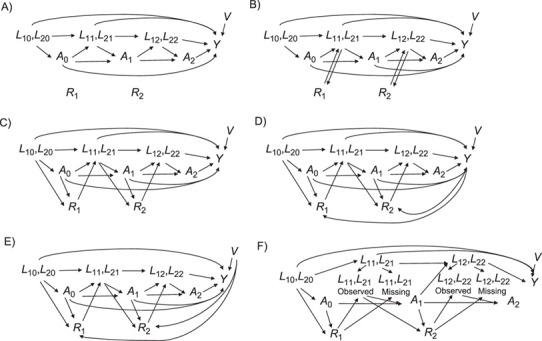
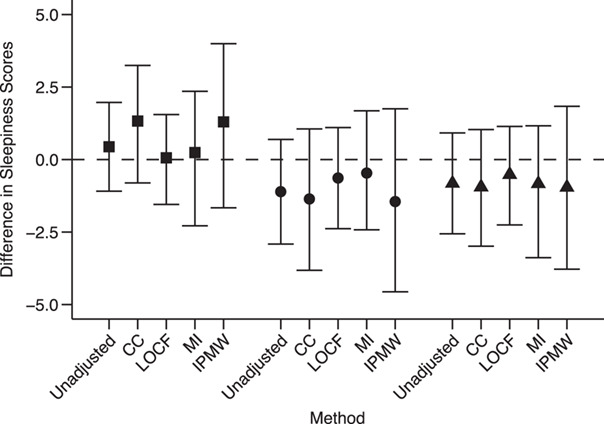
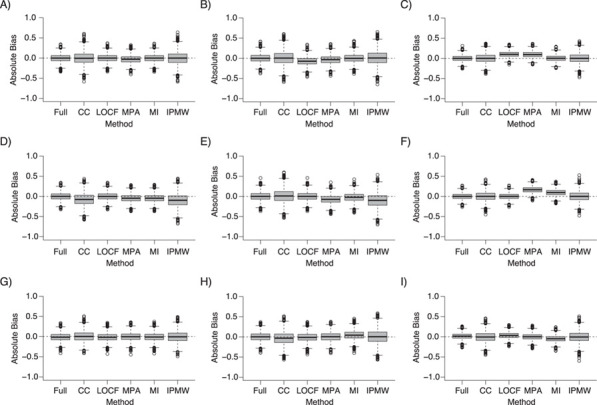
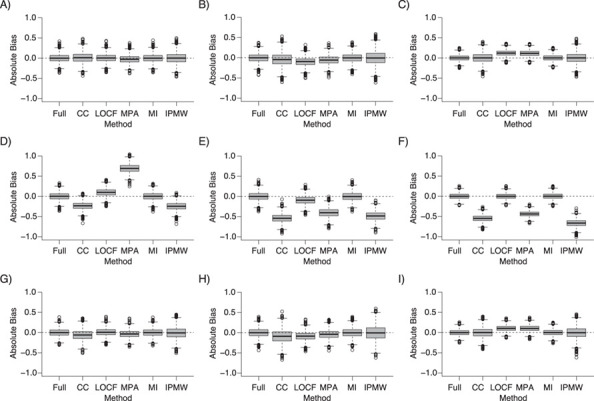
Marginal structural models (MSMs) are commonly used to estimate causal intervention effects in longitudinal nonrandomized studies. A common challenge when using MSMs to analyze observational studies is incomplete confounder data, where a poorly informed analysis method will lead to biased estimates of intervention effects. Despite a number of approaches described in the literature for handling missing data in MSMs, there is little guidance on what works in practice and why. We reviewed existing missing-data methods for MSMs and discussed the plausibility of their underlying assumptions. We also performed realistic simulations to quantify the bias of 5 methods used in practice: complete-case analysis, last observation carried forward, the missingness pattern approach, multiple imputation, and inverse-probability-of-missingness weighting. We considered 3 mechanisms for nonmonotone missing data encountered in research based on electronic health record data. Further illustration of the strengths and limitations of these analysis methods is provided through an application using a cohort of persons with sleep apnea: the research database of the French Observatoire Sommeil de la Fédération de Pneumologie. We recommend careful consideration of 1) the reasons for missingness, 2) whether missingness modifies the existing relationships among observed data, and 3) the scientific context and data source, to inform the choice of the appropriate method(s) for handling partially observed confounders in MSMs.
边缘结构模型(MSMs)常用于估计纵向非随机研究中的因果干预效应。当使用 MSM 分析观察性研究时,一个常见的挑战是混杂因素数据不完整,分析方法不当会导致干预效果的估计产生偏差。尽管文献中描述了许多用于处理 MSM 中缺失数据的方法,但对于在实践中什么方法有效以及为什么有效,几乎没有指导。我们回顾了 MSM 中现有的缺失数据方法,并讨论了它们潜在假设的合理性。我们还进行了现实模拟,以量化实践中使用的 5 种方法的偏差:完全案例分析、末次观测结转、缺失模式方法、多重插补和逆概率缺失加权。我们考虑了电子健康记录数据研究中遇到的非单调缺失数据的 3 种机制。通过使用睡眠呼吸暂停患者队列的应用进一步说明了这些分析方法的优缺点:法国呼吸病学会观察性睡眠研究的研究数据库。我们建议仔细考虑 1)缺失的原因,2)缺失是否改变了观察数据之间的现有关系,以及 3)科学背景和数据源,以告知选择适当的方法来处理 MSM 中部分观察到的混杂因素。