Department of Biochemistry and Molecular Biology, University of Miami Miller School of Medicine, Miami, FL, USA.
FASEB J. 2020 Dec;34(12):16319-16332. doi: 10.1096/fj.202001562R. Epub 2020 Oct 14.
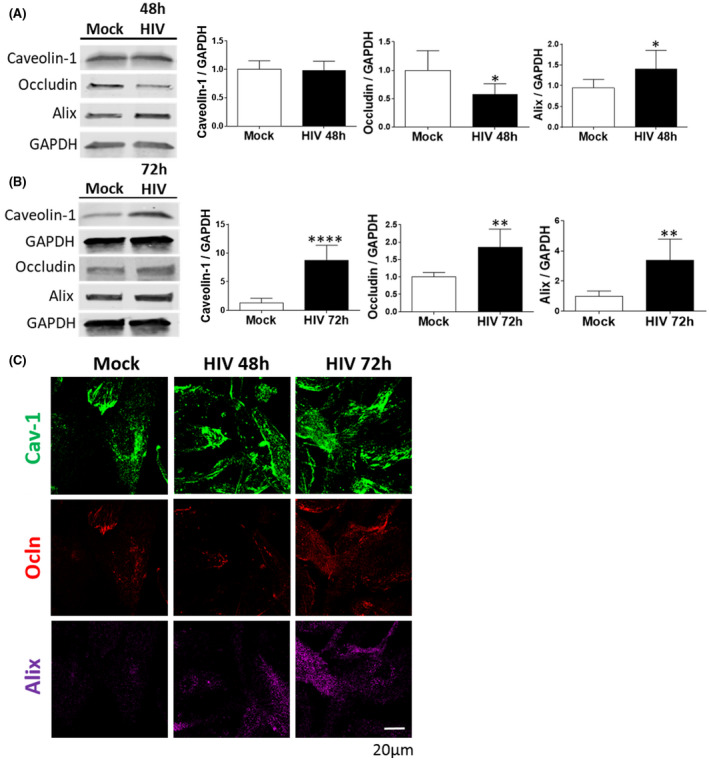
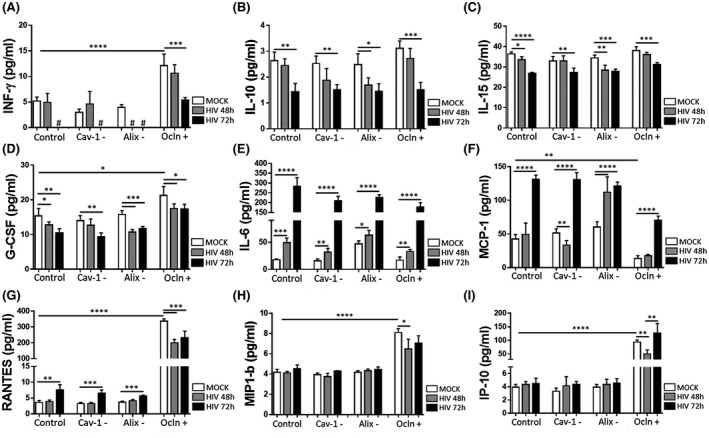
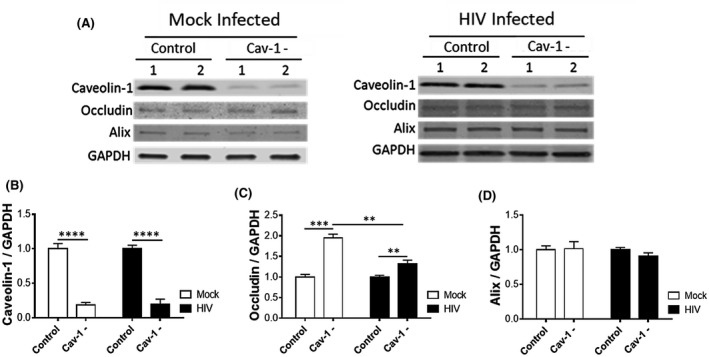
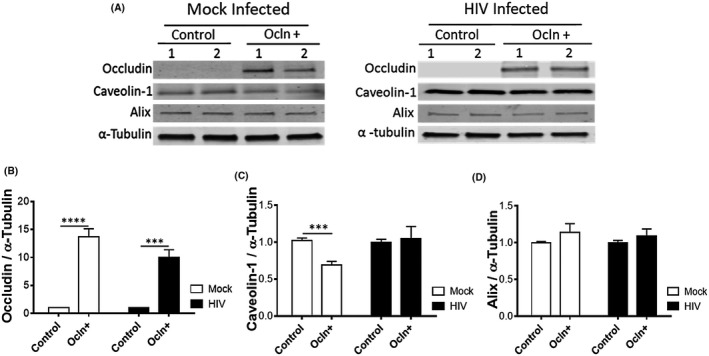
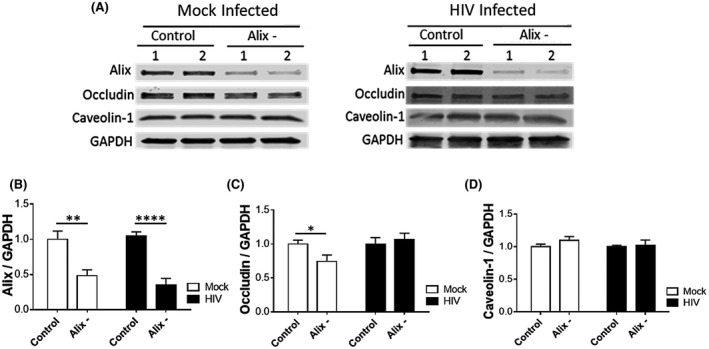
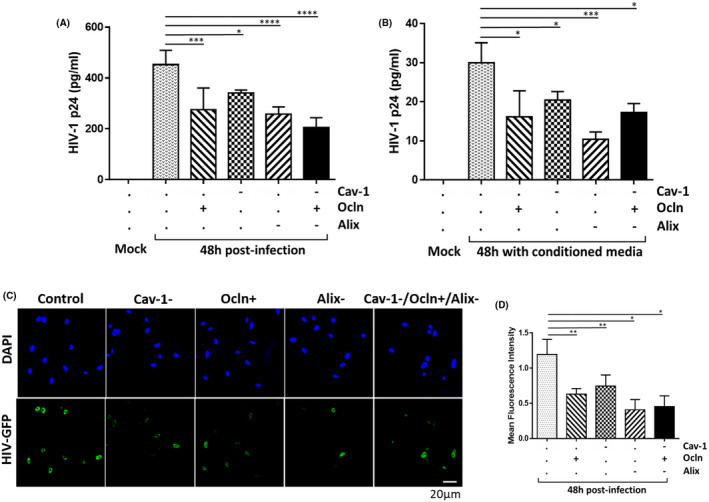
HIV-1 enters the brain by altering properties of the blood-brain barrier (BBB). Recent evidence indicates that among cells of the BBB, pericytes are prone to HIV-1 infection. Occludin (ocln) and caveolin-1 (cav-1) are critical determinants of BBB integrity that can regulate barrier properties of the BBB in response to HIV-1 infection. Additionally, Alix is an early acting endosomal factor involved in HIV-1 budding from the cells. The aim of the present study was to evaluate the role of cav-1, ocln, and Alix in HIV-1 infection of brain pericytes. Our results indicated that cav-1, ocln, and Alix form a multi-protein complex in which they cross-regulate each other's expression. Importantly, the stability of this complex was affected by HIV-1 infection. Modifications of the complex resulted in diminished HIV-1 infection and alterations of the cytokine profile produced by brain pericytes. These results identify a novel mechanism involved in HIV-1 infection contributing to a better understanding of the HIV-1 pathology and the associated neuroinflammatory responses.
HIV-1 通过改变血脑屏障(BBB)的特性进入大脑。最近的证据表明,在 BBB 的细胞中,周细胞容易感染 HIV-1。紧密连接蛋白(ocln)和小窝蛋白-1(cav-1)是 BBB 完整性的关键决定因素,可以调节 BBB 对 HIV-1 感染的屏障特性。此外,Alix 是一种早期作用的内体因子,参与 HIV-1 从细胞中出芽。本研究的目的是评估 cav-1、ocln 和 Alix 在脑周细胞 HIV-1 感染中的作用。我们的结果表明,cav-1、ocln 和 Alix 形成一个多蛋白复合物,它们相互交叉调节彼此的表达。重要的是,该复合物的稳定性受到 HIV-1 感染的影响。复合物的修饰导致 HIV-1 感染减少,并改变脑周细胞产生的细胞因子谱。这些结果确定了一种新的 HIV-1 感染机制,有助于更好地理解 HIV-1 病理学和相关的神经炎症反应。