Holze Friederike, Vizeli Patrick, Ley Laura, Müller Felix, Dolder Patrick, Stocker Melanie, Duthaler Urs, Varghese Nimmy, Eckert Anne, Borgwardt Stefan, Liechti Matthias E
Department of Biomedicine and Department of Clinical Research, Clinical Pharmacology and Toxicology, University Hospital Basel, Basel, Switzerland.
Department of Pharmaceutical Sciences, University of Basel, Basel, Switzerland.
Neuropsychopharmacology. 2021 Feb;46(3):537-544. doi: 10.1038/s41386-020-00883-6. Epub 2020 Oct 15.
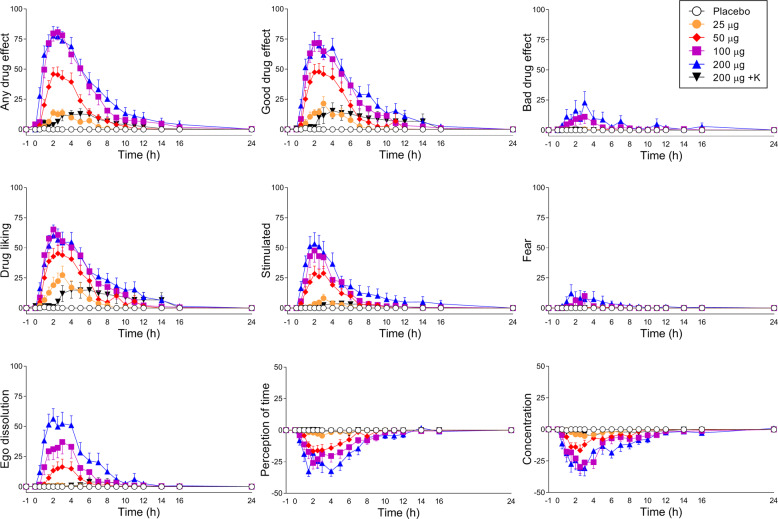
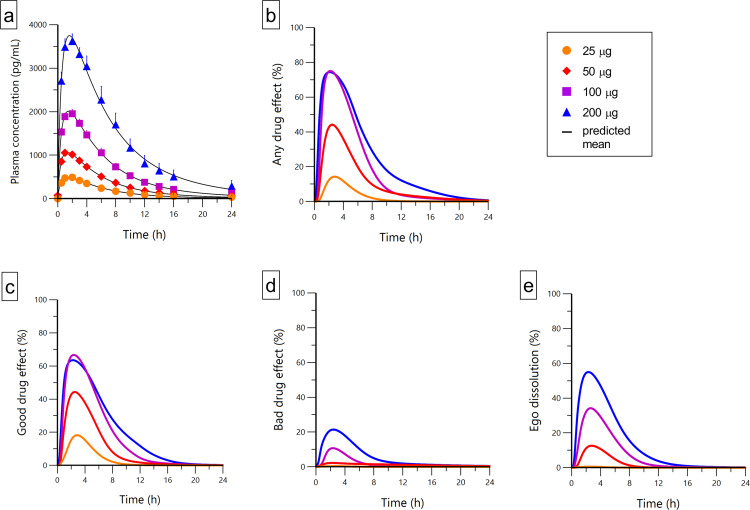
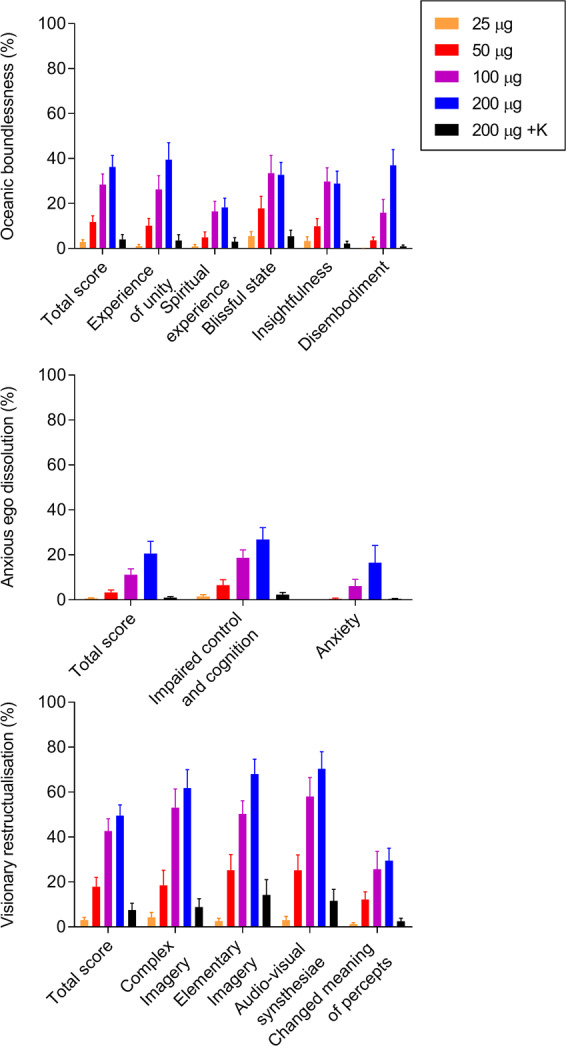
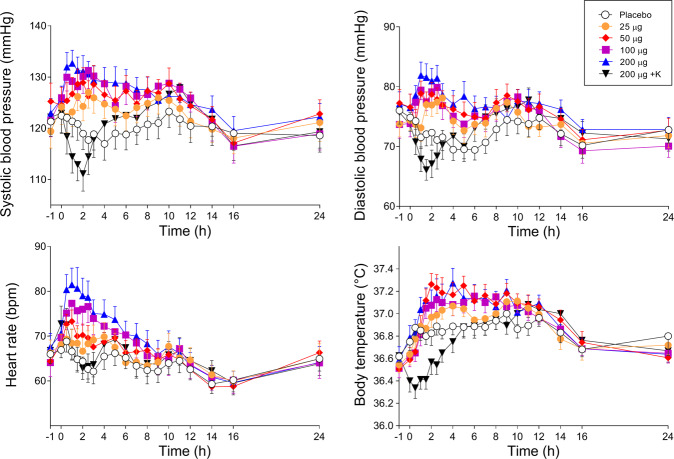
Growing interest has been seen in using lysergic acid diethylamide (LSD) in psychiatric research and therapy. However, no modern studies have evaluated subjective and autonomic effects of different and pharmaceutically well-defined doses of LSD. We used a double-blind, randomized, placebo-controlled, crossover design in 16 healthy subjects (eight women, eight men) who underwent six 25 h sessions and received placebo, LSD (25, 50, 100, and 200 µg), and 200 µg LSD 1 h after administration of the serotonin 5-hydroxytryptamine-2A (5-HT) receptor antagonist ketanserin (40 mg). Test days were separated by at least 10 days. Outcome measures included self-rating scales that evaluated subjective effects, autonomic effects, adverse effects, plasma brain-derived neurotrophic factor levels, and pharmacokinetics up to 24 h. The pharmacokinetic-subjective response relationship was evaluated. LSD showed dose-proportional pharmacokinetics and first-order elimination and dose-dependently induced subjective responses starting at the 25 µg dose. A ceiling effect was observed for good drug effects at 100 µg. The 200 µg dose of LSD induced greater ego dissolution than the 100 µg dose and induced significant anxiety. The average duration of subjective effects increased from 6.7 to 11 h with increasing doses of 25-200 µg. LSD moderately increased blood pressure and heart rate. Ketanserin effectively prevented the response to 200 µg LSD. The LSD dose-response curve showed a ceiling effect for subjective good effects, and ego dissolution and anxiety increased further at a dose above 100 µg. These results may assist with dose finding for future LSD research. The full psychedelic effects of LSD are primarily mediated by serotonin 5-HT receptor activation.
在精神病学研究和治疗中,使用麦角酸二乙酰胺(LSD)的兴趣与日俱增。然而,尚无现代研究评估不同且药学上明确界定剂量的LSD的主观和自主神经效应。我们在16名健康受试者(8名女性,8名男性)中采用双盲、随机、安慰剂对照、交叉设计,这些受试者接受了6次25小时的疗程,并接受了安慰剂、LSD(25、50、100和200μg),以及在服用血清素5-羟色胺-2A(5-HT)受体拮抗剂酮色林(40mg)1小时后服用200μg LSD。测试日之间至少间隔10天。结果测量包括评估主观效应、自主神经效应、不良反应、血浆脑源性神经营养因子水平以及长达24小时的药代动力学的自评量表。评估了药代动力学-主观反应关系。LSD显示出剂量比例药代动力学和一级消除,并且从25μg剂量开始剂量依赖性地诱导主观反应。在100μg时观察到良好药物效应的天花板效应。200μg剂量的LSD比100μg剂量诱导更大的自我解体,并诱发明显的焦虑。随着25-200μg剂量的增加,主观效应的平均持续时间从6.7小时增加到11小时。LSD适度升高血压和心率。酮色林有效预防了对200μg LSD的反应。LSD剂量反应曲线显示主观良好效应的天花板效应,并且在高于100μg的剂量下自我解体和焦虑进一步增加。这些结果可能有助于未来LSD研究的剂量确定。LSD的完全致幻效应主要由血清素5-HT受体激活介导。