Laboratory of Cellular and Molecular Biology, Center for Cancer Research, National Cancer Institute, NIH, Bethesda, MD 20892.
Optical Microscopy and Analysis Laboratory, Cancer Research Technology Program, Frederick National Laboratory for Cancer Research, Leidos Biomedical Research Inc. for the National Cancer Institute, NIH, Frederick, MD 21702.
Proc Natl Acad Sci U S A. 2020 Nov 3;117(44):27423-27434. doi: 10.1073/pnas.2010872117. Epub 2020 Oct 15.
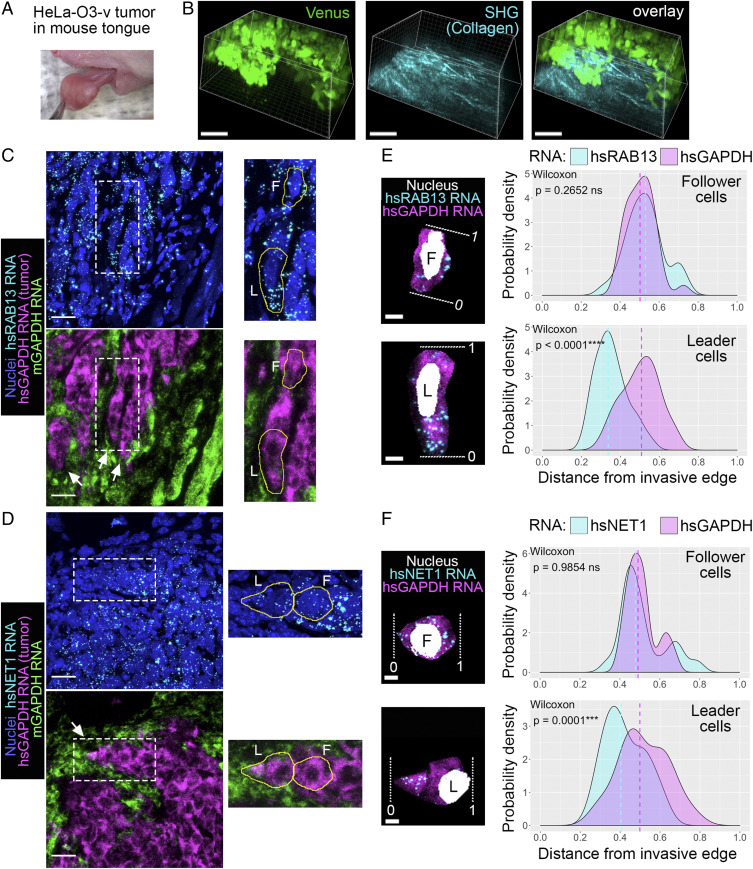
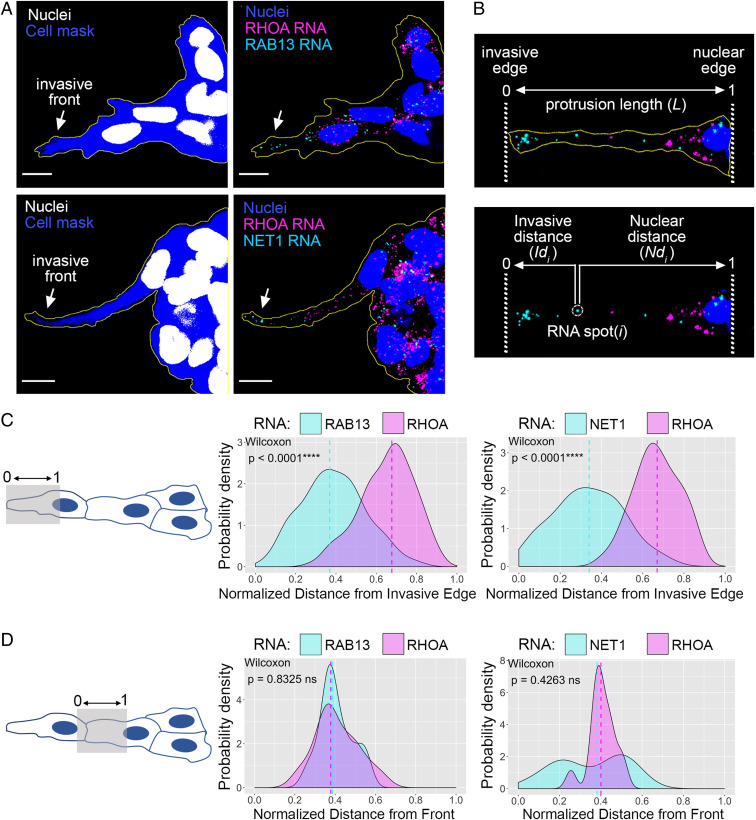
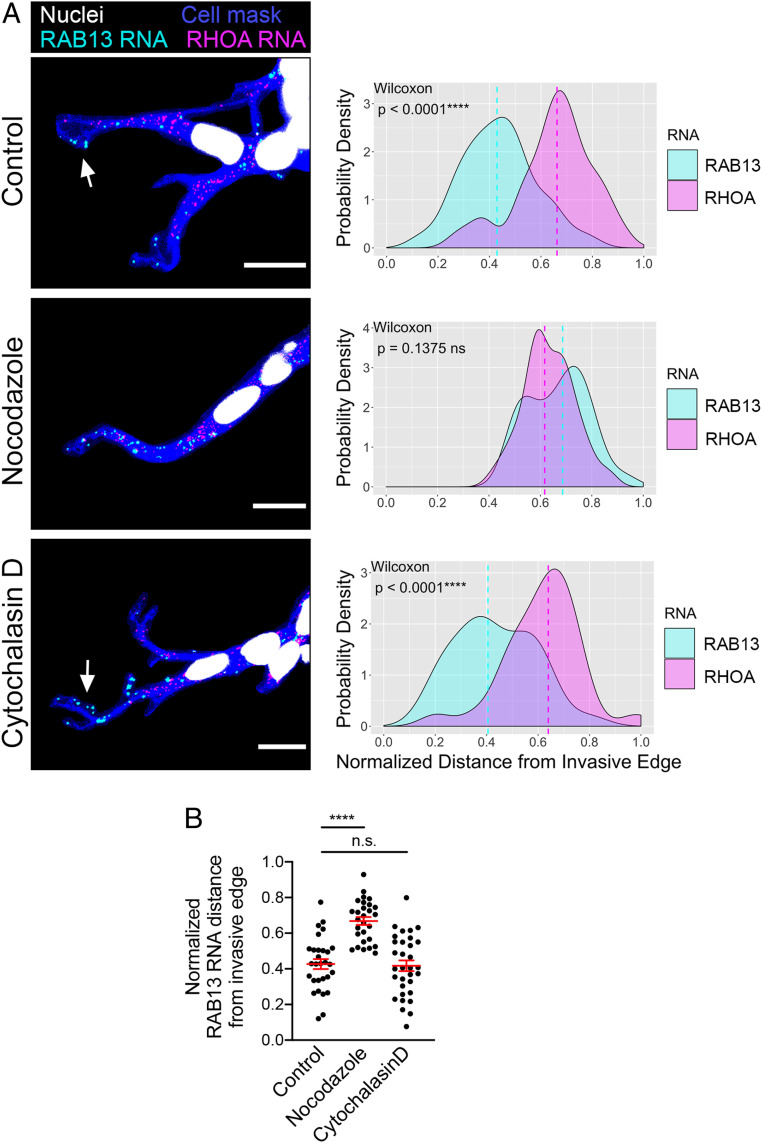
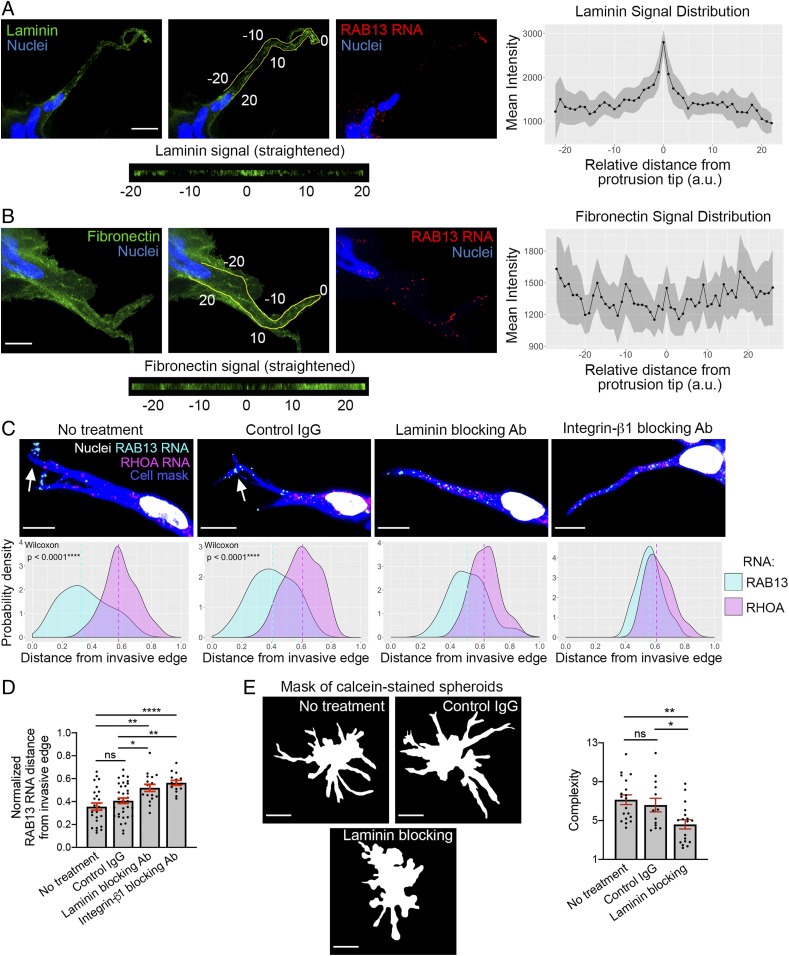
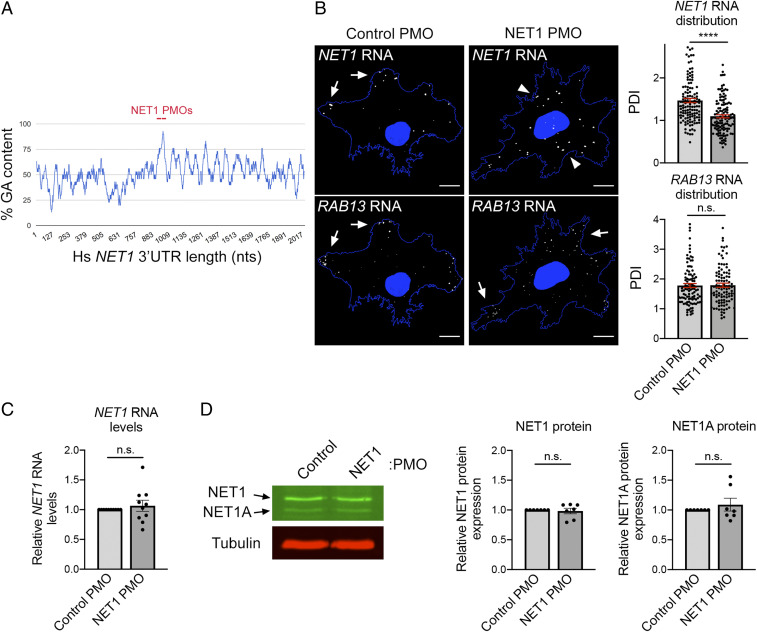
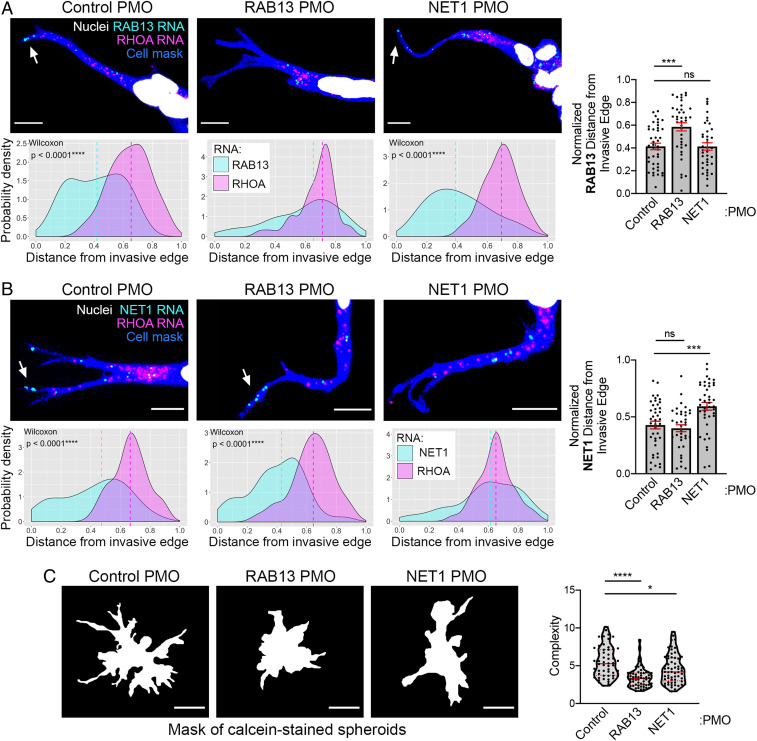
Localization of RNAs at protrusive regions of cells is important for single-cell migration on two-dimensional surfaces. Protrusion-enriched RNAs encode factors linked to cancer progression, such as the RAB13 GTPase and the NET1 guanine nucleotide exchange factor, and are regulated by the tumor-suppressor protein APC. However, tumor cells in vivo often do not move as single cells but rather utilize collective modes of invasion and dissemination. Here, we developed an inducible system of three-dimensional (3D) collective invasion to study the behavior and importance of protrusion-enriched RNAs. We find that, strikingly, both the and RNAs are enriched specifically at the invasive front of leader cells in invasive cell strands. This localization requires microtubules and coincides with sites of high laminin concentration. Indeed, laminin association and integrin engagement are required for RNA accumulation at the invasive front. Importantly, perturbing RNA accumulation reduces collective 3D invasion. Examination of in vivo tumors reveals a similar localization of the and RNAs at potential invasive sites, suggesting that this mechanism could provide a targeting opportunity for interfering with collective cancer cell invasion.
细胞突起区域的 RNA 定位对于二维表面上的单细胞迁移很重要。突起富集的 RNA 编码与癌症进展相关的因子,如 RAB13 GTPase 和 NET1 鸟嘌呤核苷酸交换因子,并受肿瘤抑制蛋白 APC 的调节。然而,体内的肿瘤细胞通常不会作为单细胞迁移,而是利用集体入侵和扩散的模式。在这里,我们开发了一种诱导性三维(3D)集体入侵系统来研究突起富集 RNA 的行为和重要性。我们发现,令人惊讶的是, 和 RNA 都特异性地富集在侵袭性细胞链中先导细胞的侵袭前沿。这种定位需要微管,并且与高层粘连蛋白浓度的部位一致。事实上,层粘连蛋白的结合和整合素的参与对于 RNA 在侵袭前沿的积累是必需的。重要的是,扰乱 RNA 积累会降低 3D 集体入侵。对体内肿瘤的检查显示, 和 RNA 也类似地定位于潜在的侵袭部位,这表明这种机制可能为干扰集体癌细胞侵袭提供了一个靶向机会。