International Collaboration On Repair Discoveries (ICORD), University of British Columbia, Vancouver, BC, Canada.
Department of Cellular and Physiological Sciences, Faculty of Medicine, University of British Columbia, Vancouver, BC, Canada.
Nat Commun. 2020 Oct 15;11(1):5209. doi: 10.1038/s41467-020-18905-8.
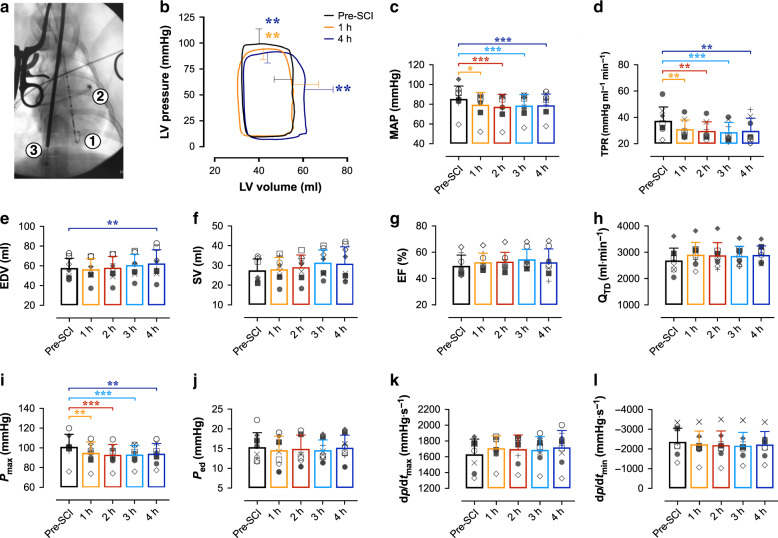
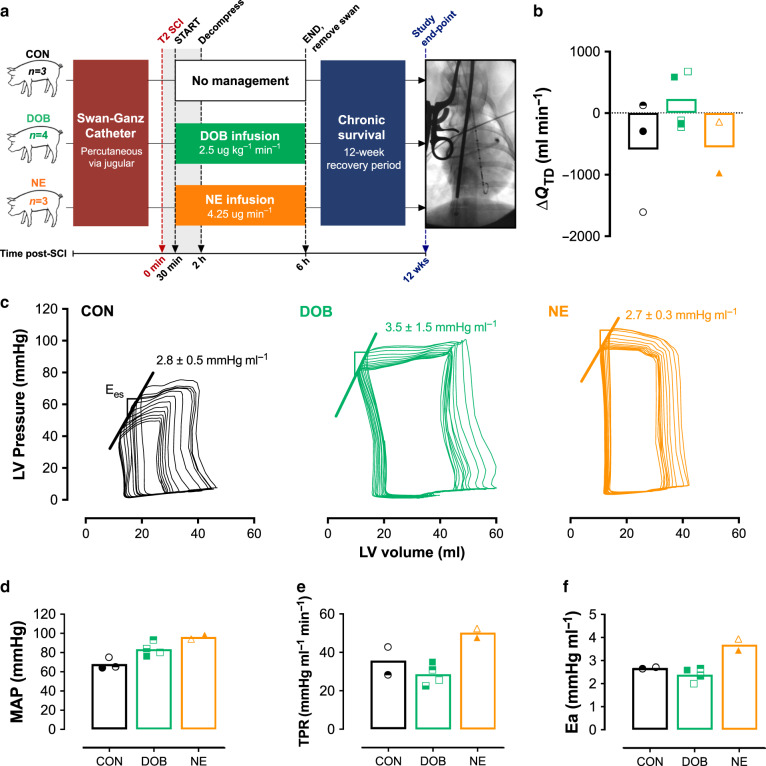
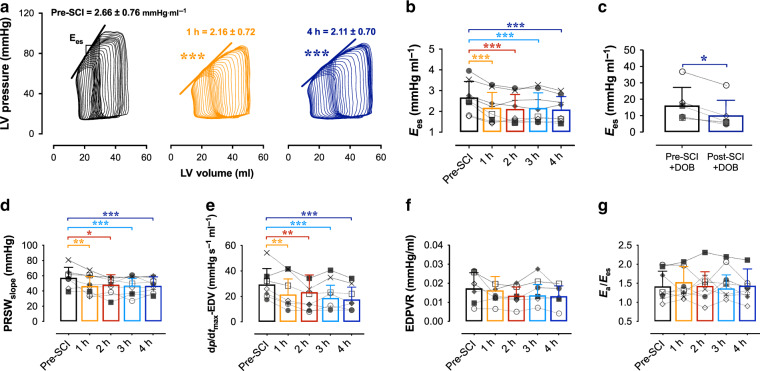
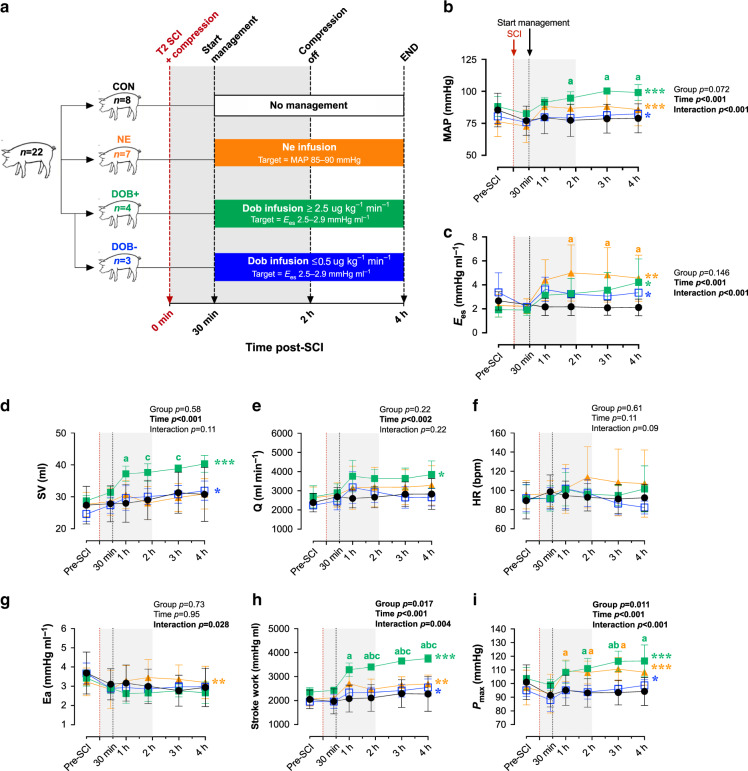
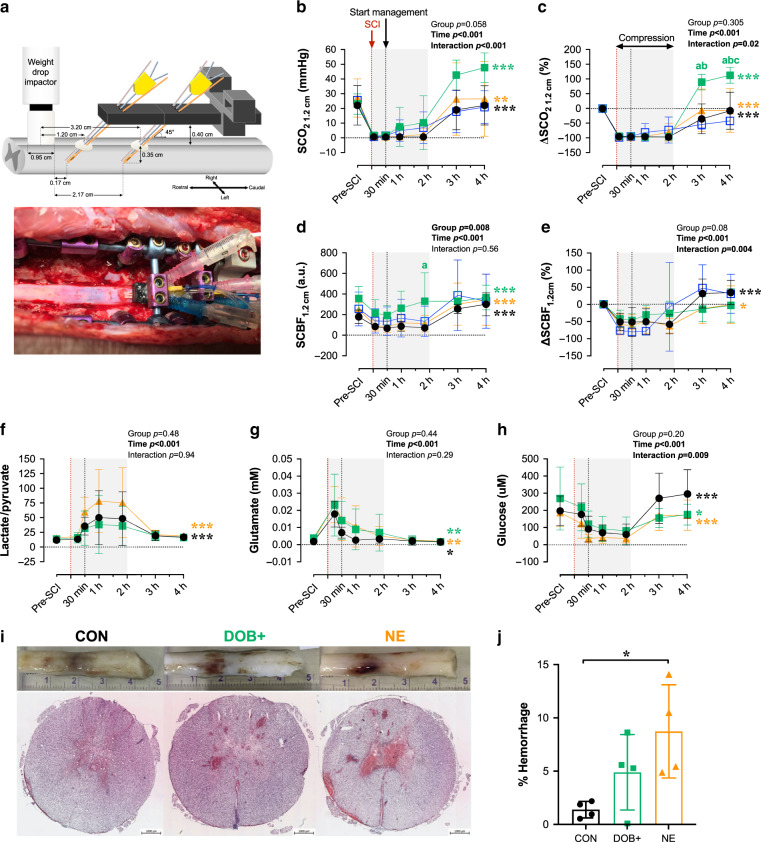
Chronic high-thoracic and cervical spinal cord injury (SCI) results in a complex phenotype of cardiovascular consequences, including impaired left ventricular (LV) contractility. Here, we aim to determine whether such dysfunction manifests immediately post-injury, and if so, whether correcting impaired contractility can improve spinal cord oxygenation (SCO), blood flow (SCBF) and metabolism. Using a porcine model of T2 SCI, we assess LV end-systolic elastance (contractility) via invasive pressure-volume catheterization, monitor intraparenchymal SCO and SCBF with fiberoptic oxygen sensors and laser-Doppler flowmetry, respectively, and quantify spinal cord metabolites with microdialysis. We demonstrate that high-thoracic SCI acutely impairs cardiac contractility and substantially reduces SCO and SCBF within the first hours post-injury. Utilizing the same model, we next show that augmenting LV contractility with the β-agonist dobutamine increases SCO and SCBF more effectively than vasopressor therapy, whilst also mitigating increased anaerobic metabolism and hemorrhage in the injured cord. Finally, in pigs with T2 SCI survived for 12 weeks post-injury, we confirm that acute hemodynamic management with dobutamine appears to preserve cardiac function and improve hemodynamic outcomes in the chronic setting. Our data support that cardio-centric hemodynamic management represents an advantageous alternative to the current clinical standard of vasopressor therapy for acute traumatic SCI.
慢性高胸段和颈段脊髓损伤(SCI)导致心血管并发症的复杂表型,包括左心室(LV)收缩功能受损。在这里,我们旨在确定这种功能障碍是否在损伤后立即表现出来,如果是,那么纠正受损的收缩功能是否可以改善脊髓氧合(SCO)、脊髓血流量(SCBF)和代谢。我们使用 T2 SCI 的猪模型,通过有创压力-容积导管测定法评估 LV 收缩末期弹性(收缩性),分别使用光纤氧传感器和激光多普勒血流计监测脑实质 SCO 和 SCBF,并通过微透析定量脊髓代谢物。我们证明,高胸段 SCI 会在损伤后最初几小时内急性损害心脏收缩功能,并大大降低 SCO 和 SCBF。在相同的模型中,我们接下来表明,用β-激动剂多巴酚丁胺增强 LV 收缩功能比血管加压剂治疗更有效地增加 SCO 和 SCBF,同时减轻损伤脊髓中增加的无氧代谢和出血。最后,在 T2 SCI 损伤后存活 12 周的猪中,我们证实,用多巴酚丁胺进行急性血液动力学管理似乎可以在慢性情况下保留心脏功能并改善血液动力学结果。我们的数据支持以心脏为中心的血液动力学管理是急性创伤性 SCI 目前血管加压剂治疗标准的有利替代方案。