Department of Endocrinology, The Ninth People's Hospital of Chongqing, Chongqing 400700, People's Republic of China.
Department of Cardiology, The Ninth People's Hospital of Chongqing, Chongqing 400700, People's Republic of China.
Drug Des Devel Ther. 2020 Sep 25;14:3929-3940. doi: 10.2147/DDDT.S249846. eCollection 2020.
Atherosclerosis is one of the major causes of cardiovascular diseases. Lipid uptake and accumulation in macrophages play a major role in atherosclerotic plaque formation from its initiation to advanced atheroma formation. The dipeptidyl peptidase-4 (DPP-4) inhibitor Linagliptin is commonly used to lower blood glucose in type 2 diabetes patients. Recent studies report that Linagliptin has cardiovascular protective and anti-inflammatory effects.
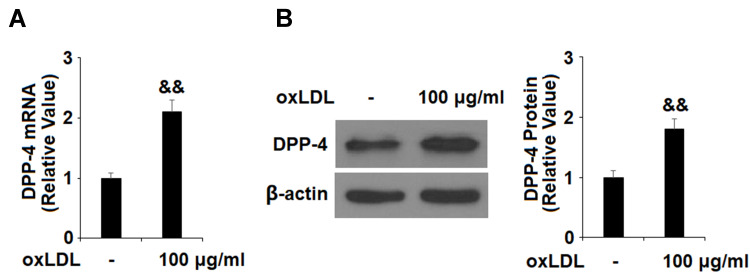
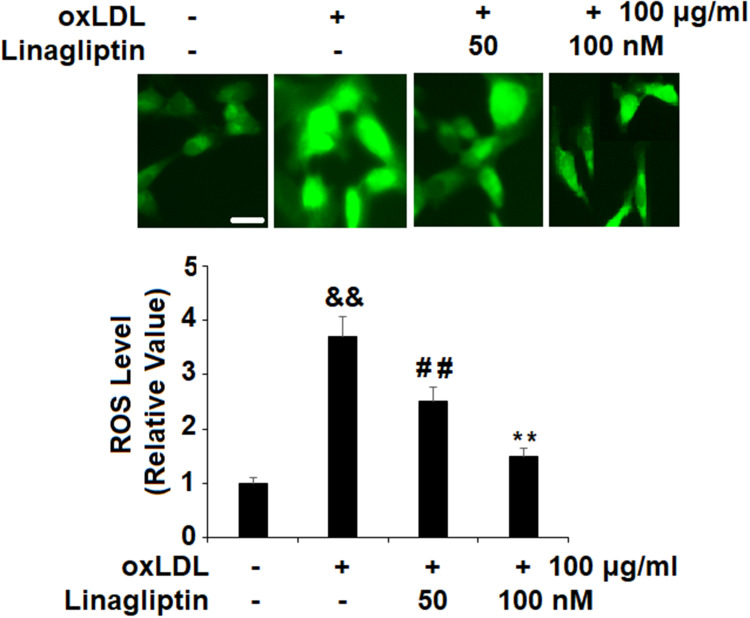
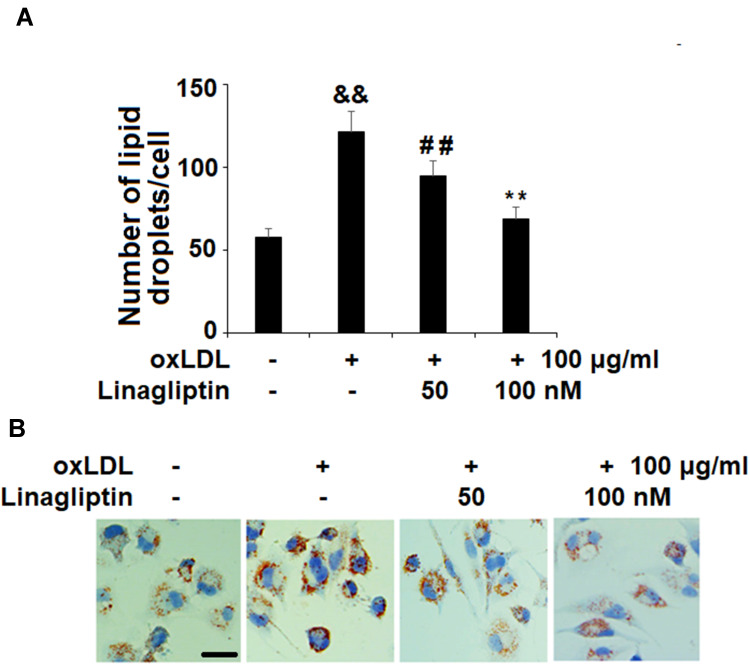
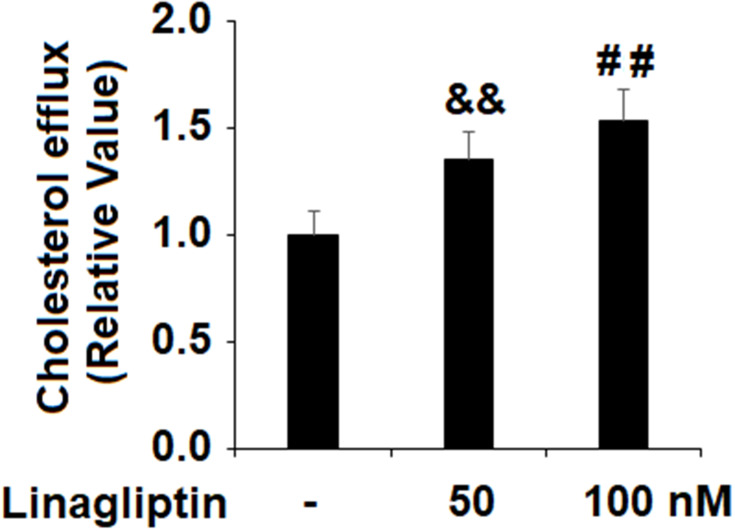
THP-1 macrophage cells were treated with 100 nM PMA for 72 hour to induce foam cell formation. The differentiated cells were exposed to 100 μg/mL ox-LDL in the presence or absence of the DPP-4 inhibitor Linagliptin. The expression levels of DPP-4 and inflammatory cytokines were detected by RT-PCR, ELISA, and Western blot experiments. The cellular ROS level was measured by staining the cells with the fluorescent probe DCFH-DA. The separation of lipoprotein fractions was achieved by high-performance liquid chromatography (HPLC). The cells were labeled with fluorescent-labeled cholesterol to measure cholesterol efflux, and lipid droplets were revealed by Nile red staining.
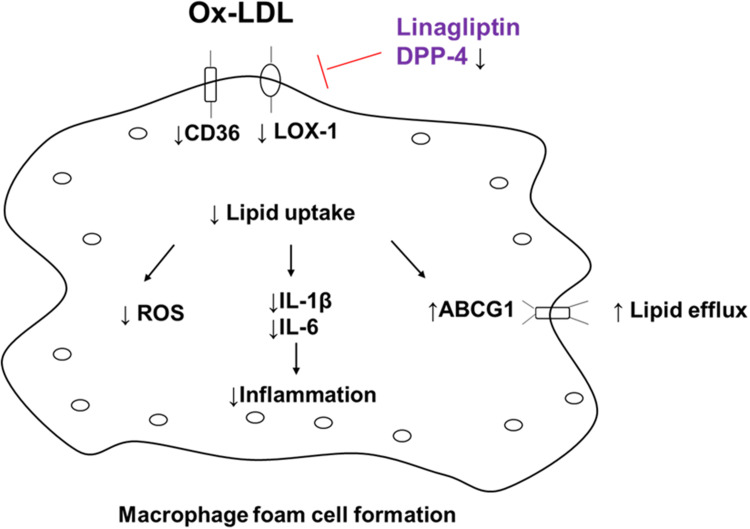
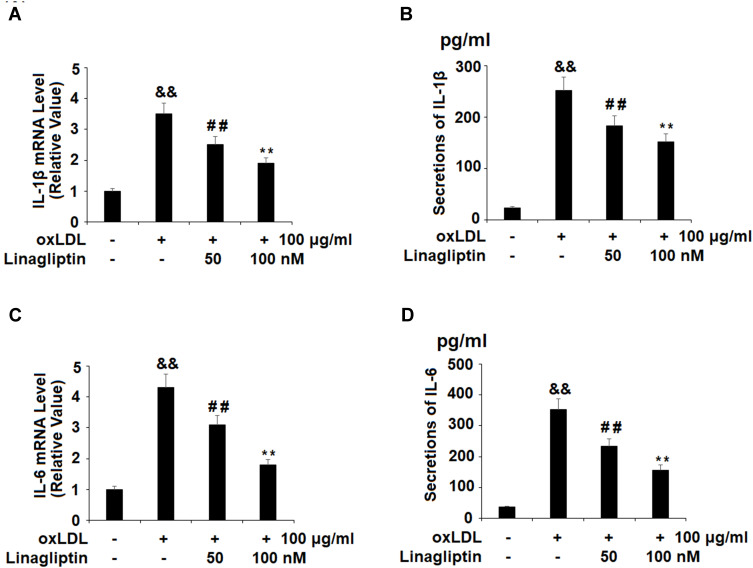
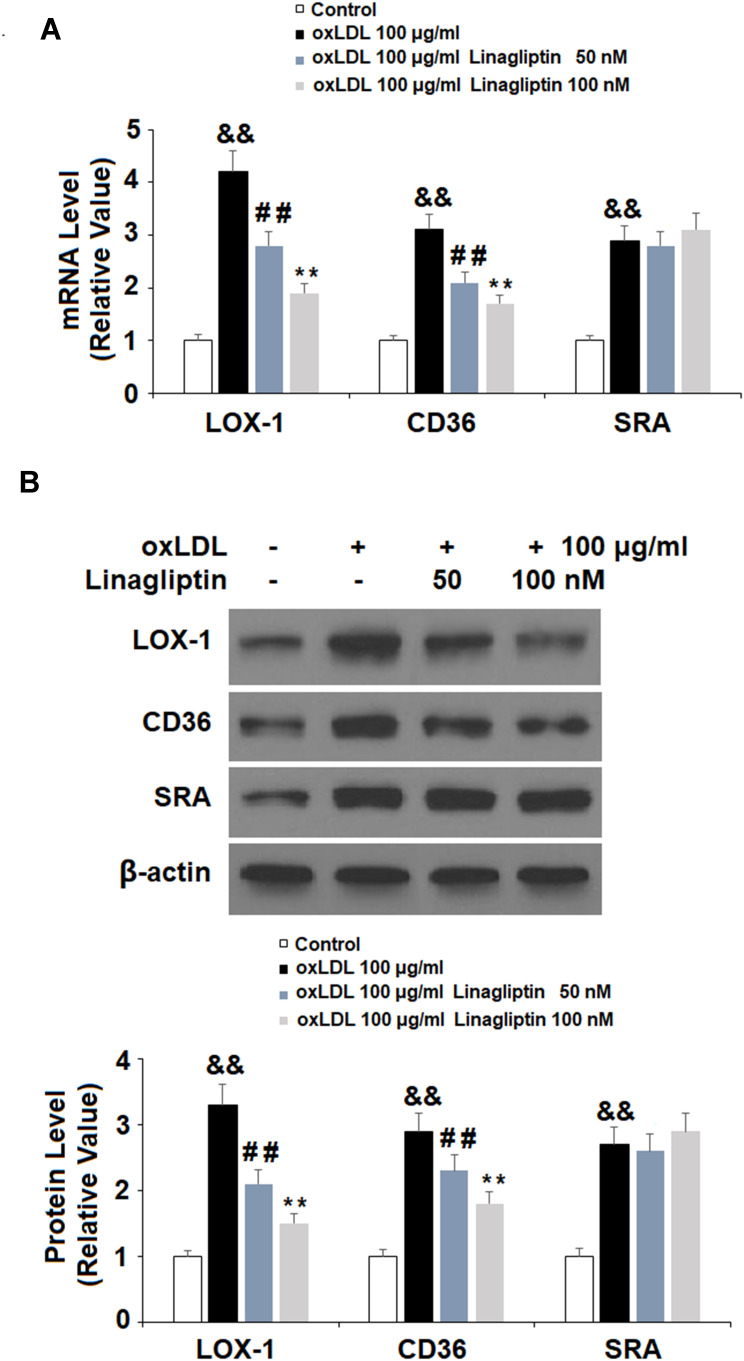
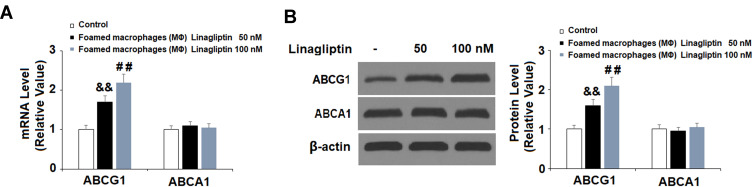
The presence of Linagliptin significantly reduced ox-LDL-induced cytokine production (IL-1β and IL-6) and ROS production. Linagliptin ameliorated ox-LDL-induced lipid accumulation and impaired cholesterol efflux in macrophages. Mechanistically, this study showed that Linagliptin mitigated ox-LDL-induced expression of the scavenger receptors CD36 and LOX-1, but not SRA. Furthermore, Linagliptin increased the expression of the cholesterol transporter ABCG1, but not ABCA1.
Linagliptin possesses a potent inhibitory effect on THP-1 macrophage-derived foam cell formation in response to ox-LDL. This effect could be mediated through a decrease in the expression of CD36 and LOX-1 on macrophages and an increase in the expression of the cholesterol transporter ABCG1. This study indicates that the DPP-4 inhibitor Linagliptin plays a critical role in preventing foam cell formation in vitro. However, future research using an atherosclerotic animal model is necessary to determine its effectiveness and to prove its potential implication in the prevention and treatment of atherosclerosis.
动脉粥样硬化是心血管疾病的主要病因之一。脂质在巨噬细胞中的摄取和积累在动脉粥样斑块形成的起始阶段到晚期动脉粥样硬化斑块形成过程中起着重要作用。二肽基肽酶-4(DPP-4)抑制剂利拉利汀通常用于降低 2 型糖尿病患者的血糖。最近的研究报告称,利拉利汀具有心血管保护和抗炎作用。
用 100 nM PMA 处理 THP-1 巨噬细胞 72 小时以诱导泡沫细胞形成。将分化的细胞暴露于 100 μg/mL ox-LDL 中,同时存在或不存在 DPP-4 抑制剂利拉利汀。通过 RT-PCR、ELISA 和 Western blot 实验检测 DPP-4 和炎症细胞因子的表达水平。通过用荧光探针 DCFH-DA 染色细胞来测量细胞内 ROS 水平。通过高效液相色谱(HPLC)分离脂蛋白级分。用荧光标记的胆固醇标记细胞以测量胆固醇流出,并用尼罗红染色显示脂质滴。
利拉利汀的存在显著降低了 ox-LDL 诱导的细胞因子产生(IL-1β 和 IL-6)和 ROS 产生。利拉利汀改善了 ox-LDL 诱导的巨噬细胞内脂质积累和胆固醇流出受损。机制上,本研究表明,利拉利汀减轻了 ox-LDL 诱导的清道夫受体 CD36 和 LOX-1 的表达,但不是 SRA。此外,利拉利汀增加了胆固醇转运体 ABCG1 的表达,但不是 ABCA1。
利拉利汀对 ox-LDL 诱导的 THP-1 巨噬细胞源性泡沫细胞形成具有强大的抑制作用。这种作用可能是通过降低巨噬细胞上 CD36 和 LOX-1 的表达和增加胆固醇转运体 ABCG1 的表达来介导的。本研究表明,DPP-4 抑制剂利拉利汀在体外阻止泡沫细胞形成中起关键作用。然而,需要使用动脉粥样硬化动物模型进行进一步研究,以确定其有效性,并证明其在预防和治疗动脉粥样硬化方面的潜在意义。