Department of Stomatology, The Second Hospital of Tianjin Medical University, Tianjin, People's Republic of China.
Int J Nanomedicine. 2020 Sep 29;15:7185-7198. doi: 10.2147/IJN.S239550. eCollection 2020.
Next generation of coating materials on the surface of implants is designed with a paradigm shift from an inert material to an osteoimmunomodulatory material. Regulating immune response to biomedical implants through influencing the polarization of macrophage has been proven to be an effective strategy.
Through anodization and hydrothermal treatment, magnesium ion incorporated TiO nanotube array (MgN) coating was fabricated on the surface of titanium and it is hypothesized that it has osteoimmunomodulatory properties. To verify this assumption, systematic studies were carried out by in vitro and in vivo experiments.
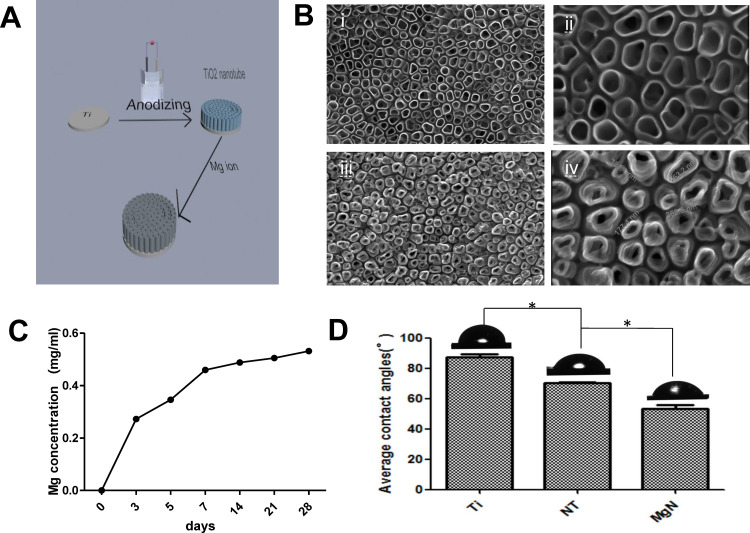
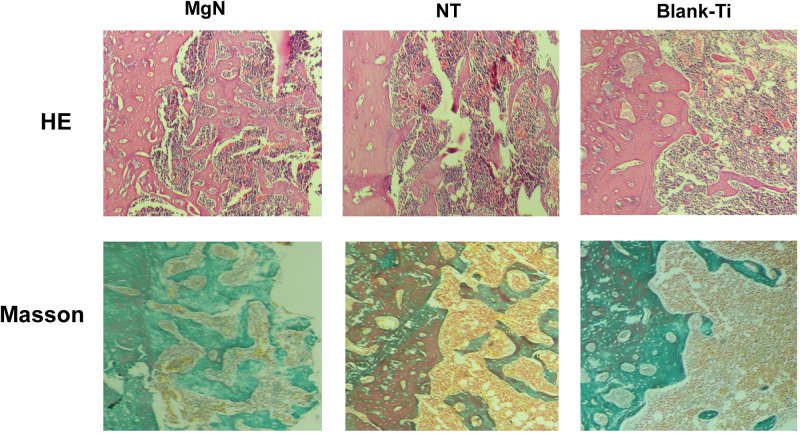
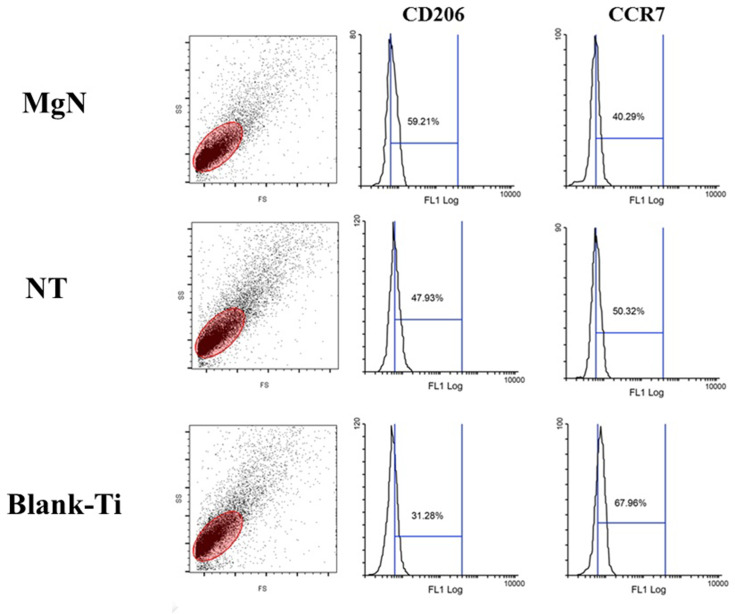
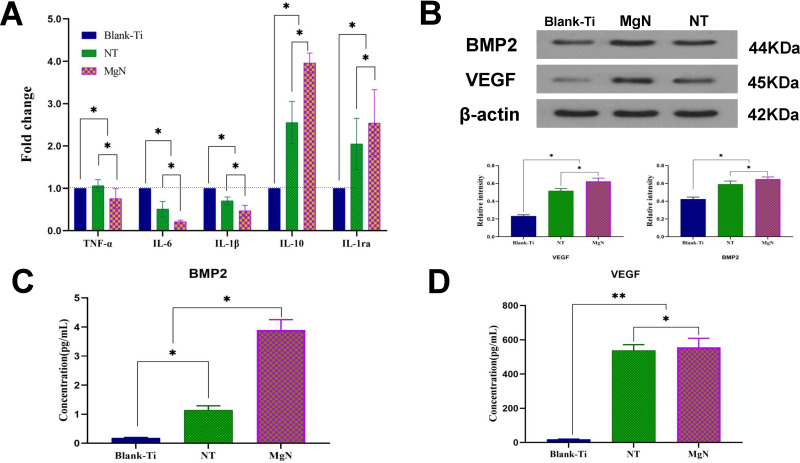
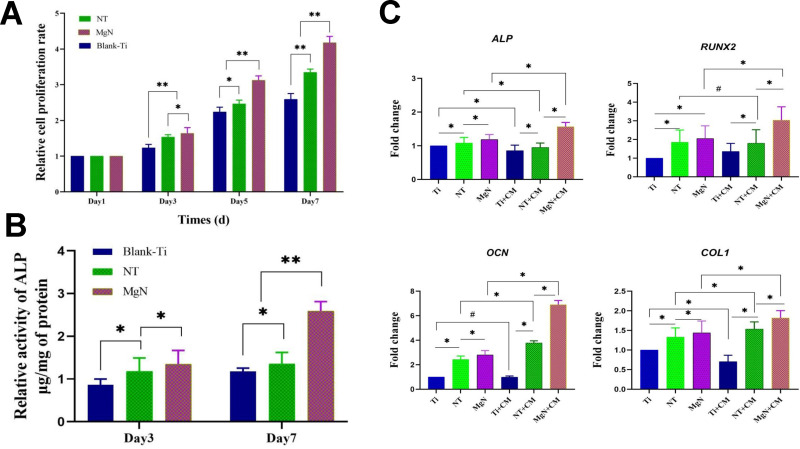
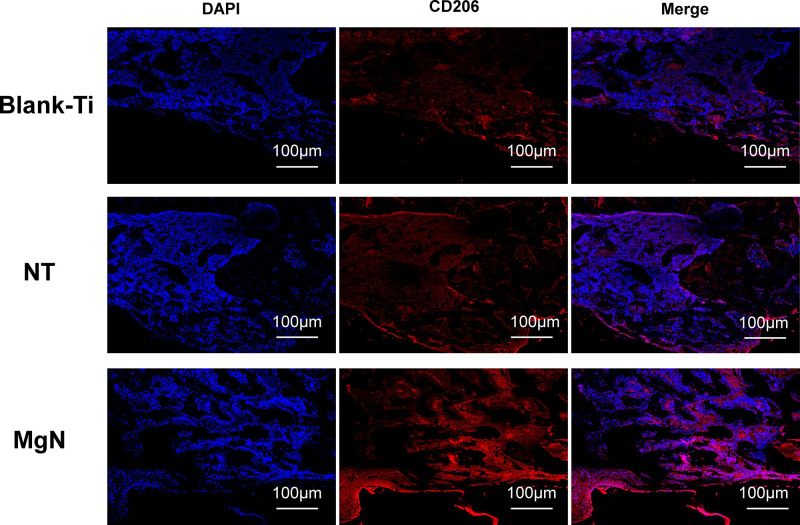
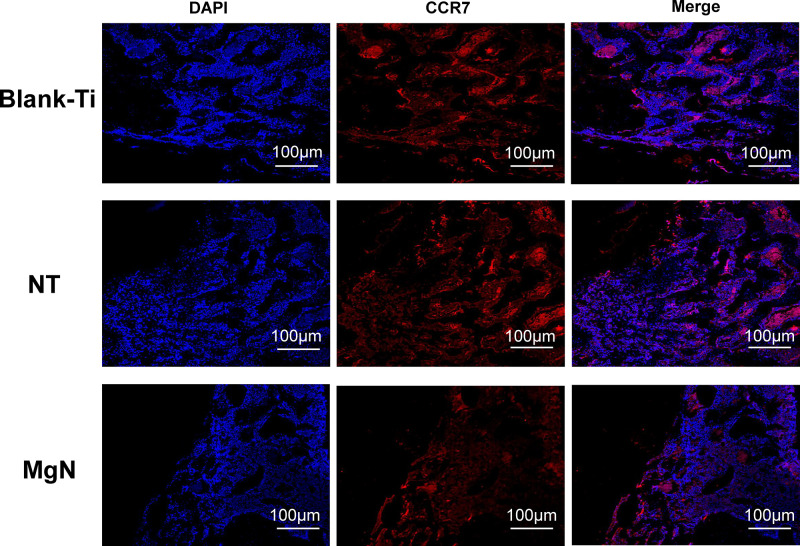
Mg ion release behavior results showed that MgN coating was successfully fabricated on the surface of titanium using anodization and hydrothermal technology. Scanning electron microscopy (SEM) images showed the morphology of the MgN coating on the titanium. The expression of inflammation-related genes ) was downregulated in MgN group compared with TiO nanotube (NT) and blank Ti groups, but anti-inflammatory genes ( and ) were remarkably upregulated in the MgN group. The in vitro and in vivo results demonstrated that MgN coating influenced macrophage polarization toward the M2 phenotype compared with NT and blank-Ti groups, which enhanced osteogenic differentiation of rat bone mesenchymal stem cells rBMSCs in conditioned media (CM) generated by macrophages.
MgN coating on the titanium endowed the surface with immune-regulatory features and exerted an advantageous effect on osteogenesis, thereby providing excellent strategies for the surface modification of biomedical implants.
新一代的植入物表面涂层材料设计理念正从惰性材料向骨免疫调节材料转变。通过影响巨噬细胞的极化来调节对生物医学植入物的免疫反应已被证明是一种有效的策略。
通过阳极氧化和水热处理,在钛表面制备了镁离子掺杂的 TiO 纳米管阵列(MgN)涂层,假设其具有骨免疫调节特性。为了验证这一假设,通过体外和体内实验进行了系统研究。
镁离子释放行为结果表明,成功地通过阳极氧化和水热技术在钛表面制备了 MgN 涂层。扫描电子显微镜(SEM)图像显示了钛上 MgN 涂层的形态。与 TiO 纳米管(NT)和空白 Ti 组相比,MgN 组炎症相关基因的表达下调,但抗炎基因(和)在 MgN 组显著上调。体外和体内结果表明,与 NT 和空白 Ti 组相比,MgN 涂层影响巨噬细胞向 M2 表型极化,从而增强了巨噬细胞产生的条件培养基(CM)中大鼠骨髓间充质干细胞(rBMSCs)的成骨分化。
钛上的 MgN 涂层赋予了表面免疫调节特性,并对成骨产生了有利影响,从而为生物医学植入物的表面改性提供了优异的策略。