Gong Xiuqun, Lu Zeyu, Feng Xiwu, Yu Chuanqing, Xue Min, Yu Liang, Wang Tao, Cheng Xiaosi, Lu Jun, Zhang Mei
Department of Neurology, First Affiliated Hospital of Anhui University of Science and Technology, First People's Hospital of Huainan, Huainan 232001, Anhui, People's Republic of China.
School of Medicine, Anhui University of Science and Technology, Huainan 232001, Anhui, People's Republic of China.
Neuropsychiatr Dis Treat. 2020 Sep 21;16:2153-2159. doi: 10.2147/NDT.S269210. eCollection 2020.
Inflammation plays a critical role in the development of depression after intracerebral hemorrhage (ICH), while neutrophil-to-lymphocyte ratio (NLR) has been identified as a novel comprehensive inflammatory indicator in recent years. The aim of this study was to examine the association between NLR and depression after ICH.
From January 2016 to December 2018, ICH patients were prospectively enrolled. NLR was measured at admission. Depression at 3 months after ICH was diagnosed according to the Hamilton Depression Scale (HAMD).
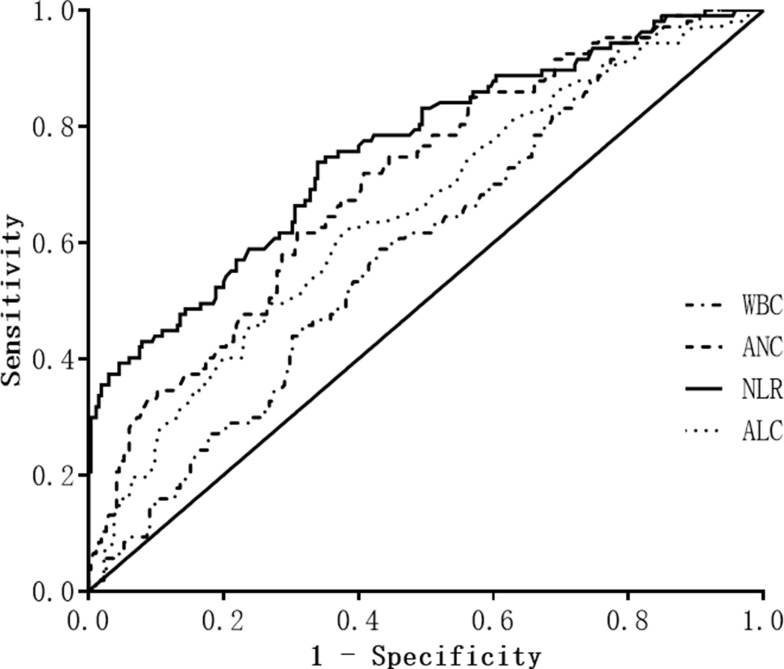
Of the 372 enrolled patients, 107 (28.8%) were diagnosed with depression at 3 months after ICH. Patients with depression had a higher NLR (6.15 vs 3.55, < 0.001). Logistic regression analysis detected that after adjusting for major confounders, NLR remained independently associated with depression after ICH (OR = 2.25, 95% CI: 1.45-3.49, < 0.001). Moreover, NLR acted as the optimal variable for prediction, with the optimal predictive threshold of 4.53 in ROC analysis.
Elevated NLR is associated with depression at 3 months after ICH, suggesting that NLR may be a significant biomarker to predict depression after ICH.
炎症在脑出血(ICH)后抑郁症的发生中起关键作用,而中性粒细胞与淋巴细胞比值(NLR)近年来已被确定为一种新的综合炎症指标。本研究旨在探讨脑出血后NLR与抑郁症之间的关联。
前瞻性纳入2016年1月至2018年12月期间的脑出血患者。入院时测定NLR。根据汉密尔顿抑郁量表(HAMD)诊断脑出血后3个月时的抑郁症。
在372例纳入研究的患者中,107例(28.8%)在脑出血后3个月被诊断为抑郁症。抑郁症患者的NLR较高(6.15对3.55,<0.001)。逻辑回归分析发现,在调整主要混杂因素后,NLR仍然与脑出血后的抑郁症独立相关(OR = 2.25,95%CI:1.45 - 3.49,<0.001)。此外,NLR作为预测的最佳变量,在ROC分析中的最佳预测阈值为4.53。
脑出血后3个月时NLR升高与抑郁症相关,提示NLR可能是预测脑出血后抑郁症的重要生物标志物。