Sultana Nahid
Department of Computer Science, College of Computer Science and Information Technology, Imam Abdulrahman Bin Faisal University, Dammam, Saudi Arabia.
Clin Cosmet Investig Dermatol. 2020 Sep 29;13:717-730. doi: 10.2147/CCID.S265477. eCollection 2020.
The incidence of skin cancer has increased over the past few years, owing to excessive exposure to ultraviolet (UV) radiation. Over the past decade, protection against solar radiation has been highly encouraged in numerous public health education campaigns. The adopted sun protection practices include avoiding exposure to the sun, using protective clothing, and applying sunscreen. The aim of this paper was to analyze the awareness and attitudes towards sun protection practices in some regions of the Arabian Peninsula.
The main objective of this study is to estimate the level of sun protection practices and determine the factors that have a significant impact on the level of adoption of sun protection practices by residents in the Arabian Peninsula.
A 35-question self-reporting online questionnaire to evaluate the sun protection measures adopted by the residents was distributed in the Kingdom of Saudi Arabia and Kingdom of Bahrain. The survey was conducted from January 2018 to May 2019, and a total 830 responses were collected for analysis. The data were analyzed using the statistical software SPSS. The chi-squared test and Spearman's correlation were performed to determine the association of the sun protection level with factors concerning the socio-demographic characteristics, sun sensitivity, health-conscious lifestyle, adopted sun protection measures, and general awareness about the UV index, skin cancer, and vitamin D. Logistic regression classification was applied in developing the empirical model to predict the sun protection level of the residents.
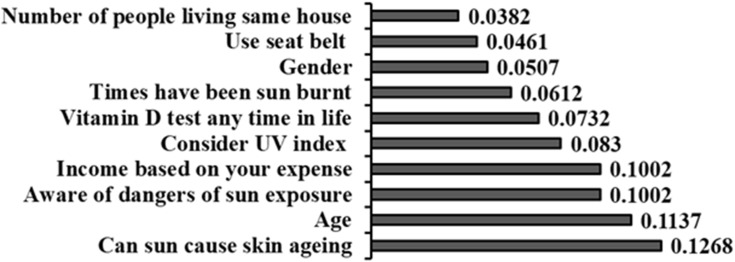
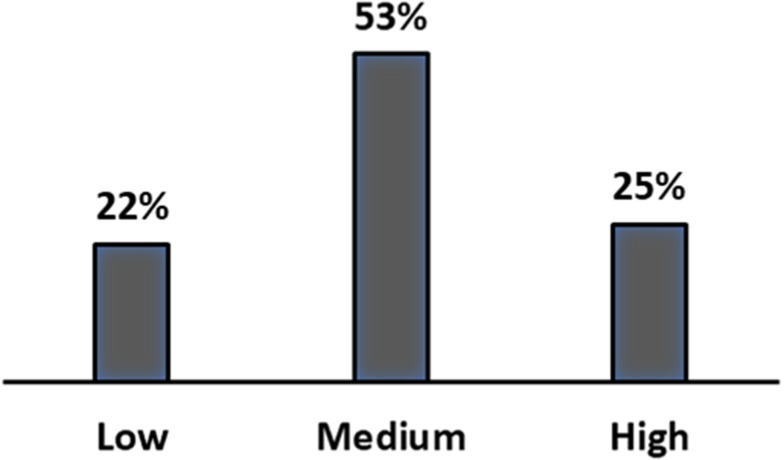
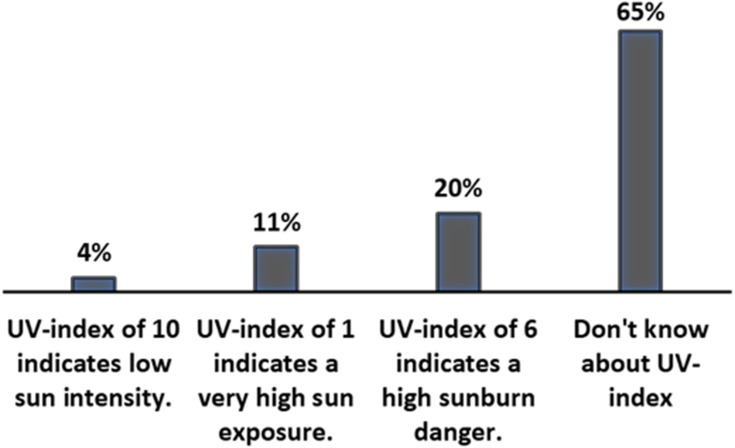
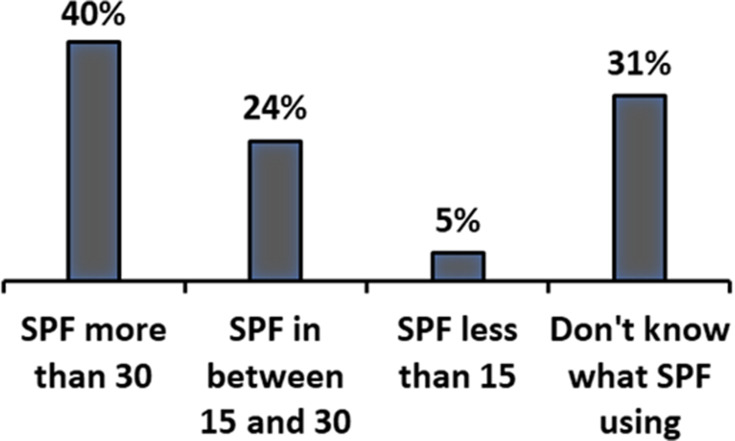
Based on the analysis, only 34% of the total 830 respondents use sunscreen and most of the sunscreen users are female. The three most popular sun protection practices are: 1) avoiding exposure to the sun during peak hours, 2) using protective clothing, and 3) using sunglasses. The results indicate that 22% of respondents use a low level of sun protection, 53% use a medium level of protection, while 25% of respondents use a high level of sun protection. Many of the respondents understand that exposure to the sun can cause skin cancer and skin aging, while 54% of the respondents still believe that a suntan can be healthy if sunburn is avoided. Thirty percent of the participants of this study are aware of the UV index, and only 20% of all respondents know the correct meaning of the UV index. The overall predictive accuracy of the constructed logistic regression model is 67%. Based on the results of the logistic regression model, the five most significant factors of the sun protection level are: 1) perception that the sun can cause skin aging, or not, 2) age, 3) awareness of the dangerous effects of sun exposure, 4) income with respect to expenses, and 5) taking the UV index into consideration during exposure to the sun.
Most of the respondents are aware about sun protection. However, the sun protection level of the residents is still inadequate. An efficient strategy of increasing the awareness of the effective use of sun protection systems must be established based on the significant factors to prevent skin cancer.
在过去几年中,由于过度暴露于紫外线(UV)辐射,皮肤癌的发病率有所上升。在过去十年里,众多公共卫生教育活动大力鼓励人们防范太阳辐射。所采用的防晒措施包括避免阳光照射、使用防护服和涂抹防晒霜。本文旨在分析阿拉伯半岛某些地区对防晒措施的认知和态度。
本研究的主要目的是评估防晒措施的实施水平,并确定对阿拉伯半岛居民采用防晒措施水平有重大影响的因素。
在沙特阿拉伯王国和巴林王国分发了一份包含35个问题的自评在线问卷,以评估居民采取的防晒措施。调查于2018年1月至2019年5月进行,共收集了830份回复用于分析。使用统计软件SPSS对数据进行分析。进行卡方检验和斯皮尔曼相关性分析,以确定防晒水平与社会人口特征、阳光敏感度、注重健康的生活方式、采用的防晒措施以及对紫外线指数、皮肤癌和维生素D的一般认知等因素之间的关联。应用逻辑回归分类法建立实证模型,以预测居民的防晒水平。
基于分析,在830名受访者中,只有34%的人使用防晒霜,且大多数使用防晒霜的是女性。最受欢迎的三种防晒措施是:1)在高峰时段避免阳光照射,2)使用防护服,3)使用太阳镜。结果表明,22%的受访者防晒措施水平较低,53%的人采取中等水平的防护,而25%的受访者采取高水平的防晒措施。许多受访者知道阳光照射会导致皮肤癌和皮肤老化,而54%的受访者仍然认为如果避免晒伤,晒黑是健康的。本研究中30%的参与者了解紫外线指数,而所有受访者中只有20%知道紫外线指数的正确含义。构建的逻辑回归模型的总体预测准确率为67%。根据逻辑回归模型的结果,防晒水平的五个最重要因素是:1)是否认为阳光会导致皮肤老化,2)年龄,3)对阳光照射危险影响的认知,4)收入与支出情况,5)在阳光照射时是否考虑紫外线指数。
大多数受访者了解防晒知识。然而,居民的防晒水平仍然不足。必须基于这些重要因素制定一项提高有效使用防晒系统意识的有效策略,以预防皮肤癌。