Cheng Chuanyu, Song Dongkui, Wu Yudong, Liu Bingqian
Department of Urology, The First Affiliated Hospital of Zhengzhou University, Zhengzhou, China.
Front Mol Biosci. 2020 Aug 31;7:218. doi: 10.3389/fmolb.2020.00218. eCollection 2020.
Bladder cancer (BCa) represents one of the most common malignant cancers with high incidence and mortality rates globally. Dysregulation of gene expression has been shown to play critical roles in cancer progression. RAC3 is up-regulated to play an oncogenic role in several cancers, however, the underlying mechanism of RAC3 in BCa is yet to be elucidated. Therefore, this study aimed to investigate the function and mechanism of RAC3 in BCa.
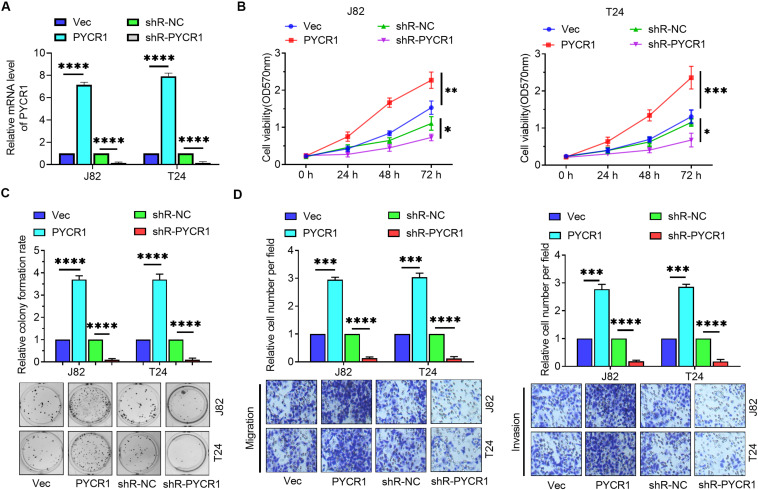
Bioinformatics analysis was employed to demonstrate the expression of RAC3 and PYCR1 in BCa tissues, as well as, its correlation with the overall survival rate of BCa patients. RT-qPCR was performed to detect and quantify the mRNA levels of RAC3 and PYCR1 in BCa cells and immortalized human bladder epithelial cells. MTT, colony formation and Transwell assays were employed to determine cell proliferation, migration, and invasion. Western blotting was performed to detect and quantity proteins expressed.
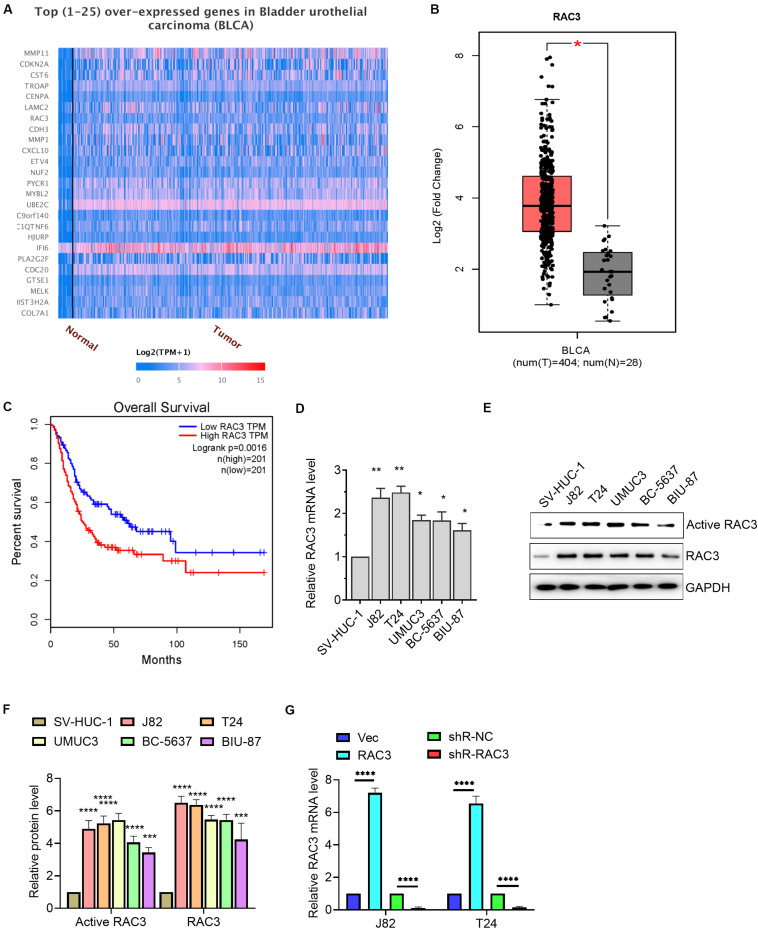
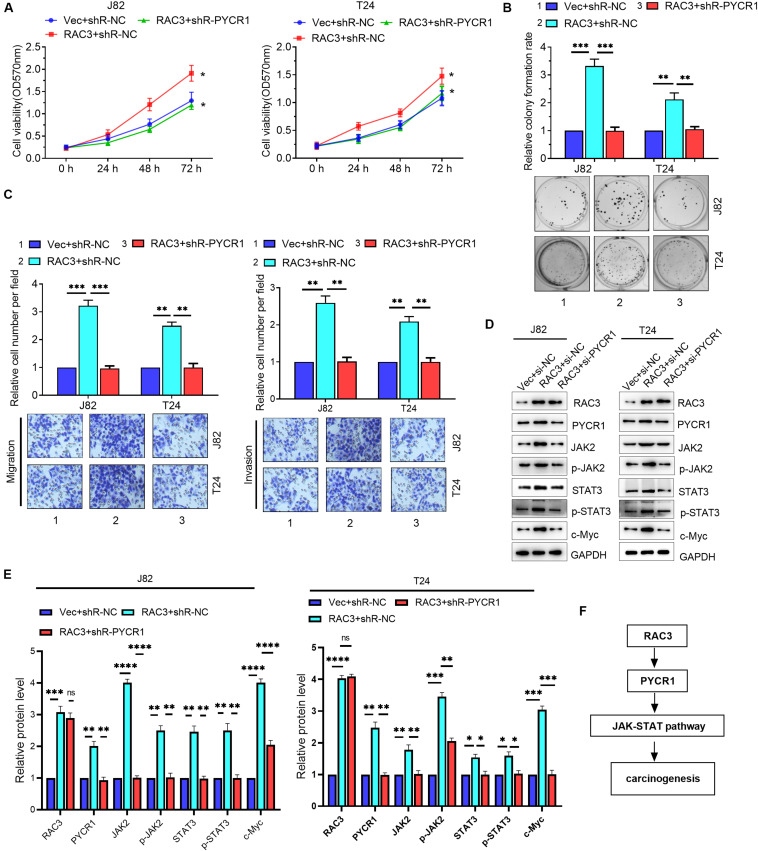
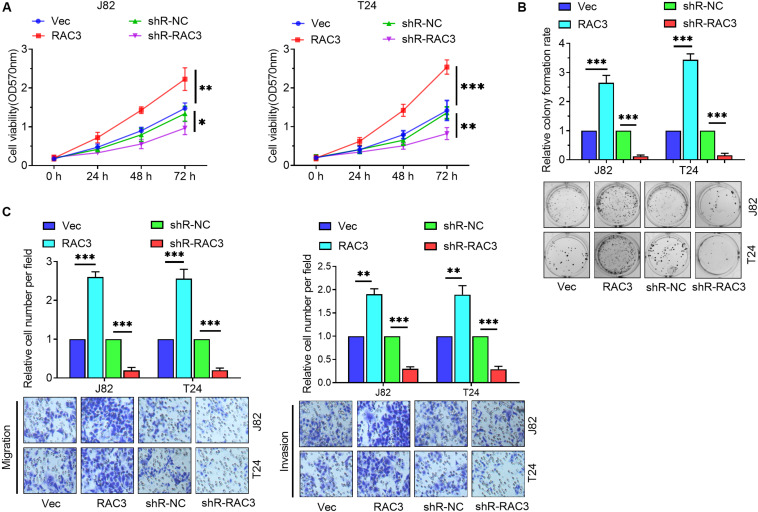
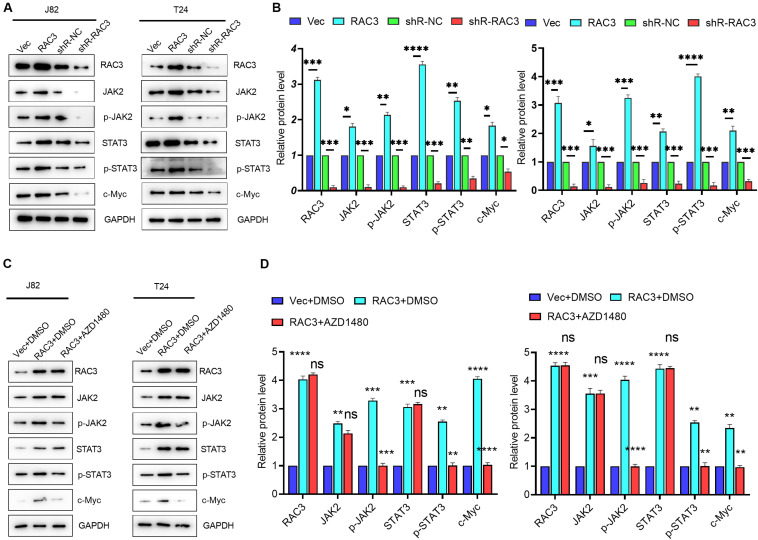
Bioinformatics analysis showed that RAC3 was up-regulated in BCa tissues when compared to normal tissues. Patients with up-regulated RAC3 expression had lower overall survival than patients with down-regulated RAC3 expression. The mRNA level of RAC3 was higher in BCa cells than in immortalized human bladder epithelial cell. RAC3 promoted cell proliferation, migration, and invasion by activating Janus kinases (JAKs) and signal transducers and activators of transcription (STATs) signaling. Notably, RAC3 up-regulated PYCR1, which is positively correlated with RAC3, and thus played an oncogenic role in BCa cells. Moreover, we demonstrated that RAC3 overexpression activated JAK/STAT signaling via PYCR1 axis.
RAC3 promoted cell proliferation, migration, and invasion. This is likely due to its role in activating JAK/STAT signaling, which was mediated by PYCR1. This study provides a novel biomarker and target for diagnostic or therapeutic intervention for BCa.
膀胱癌(BCa)是全球发病率和死亡率较高的常见恶性肿瘤之一。基因表达失调在癌症进展中起着关键作用。RAC3在多种癌症中上调并发挥致癌作用,然而,RAC3在膀胱癌中的潜在机制尚待阐明。因此,本研究旨在探讨RAC3在膀胱癌中的功能和机制。
采用生物信息学分析来证明RAC3和PYCR1在膀胱癌组织中的表达及其与膀胱癌患者总生存率的相关性。进行逆转录定量聚合酶链反应(RT-qPCR)以检测和定量膀胱癌细胞和永生化人膀胱上皮细胞中RAC3和PYCR1的mRNA水平。采用MTT法、集落形成实验和Transwell实验来测定细胞增殖、迁移和侵袭能力。进行蛋白质免疫印迹法以检测和定量表达的蛋白质。
生物信息学分析表明,与正常组织相比,RAC3在膀胱癌组织中上调。RAC3表达上调的患者总生存率低于RAC3表达下调的患者。RAC3的mRNA水平在膀胱癌细胞中高于永生化人膀胱上皮细胞。RAC3通过激活Janus激酶(JAKs)和信号转导子与转录激活子(STATs)信号通路促进细胞增殖、迁移和侵袭。值得注意的是,RAC3上调了与RAC3呈正相关的PYCR1,从而在膀胱癌细胞中发挥致癌作用。此外,我们证明RAC3过表达通过PYCR1轴激活JAK/STAT信号通路。
RAC3促进细胞增殖、迁移和侵袭。这可能是由于其在激活由PYCR1介导的JAK/STAT信号通路中的作用。本研究为膀胱癌的诊断或治疗干预提供了一种新的生物标志物和靶点。