School of Biosciences, University of Nottingham, Loughborough, Leicestershire, UK.
State Key Laboratory of Soil and Sustainable Agriculture, Institute of Soil Sciences, Chinese Academy of Sciences, Nanjing, PR China.
J Exp Bot. 2021 Feb 2;72(2):747-756. doi: 10.1093/jxb/eraa475.
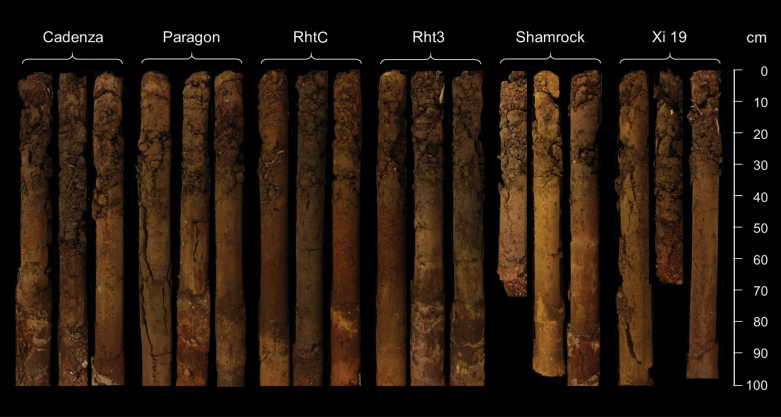
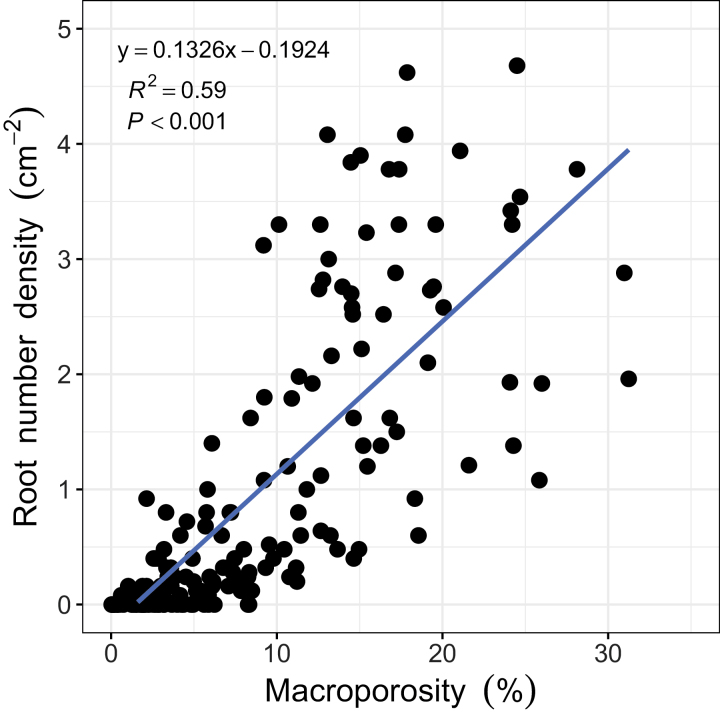
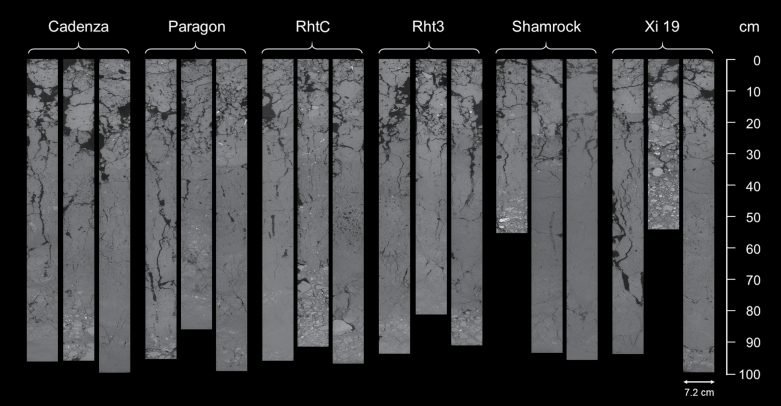
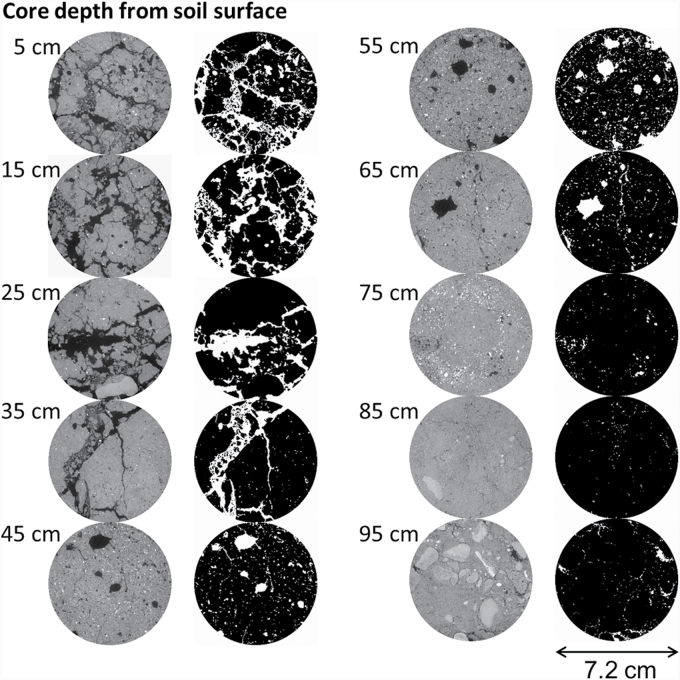
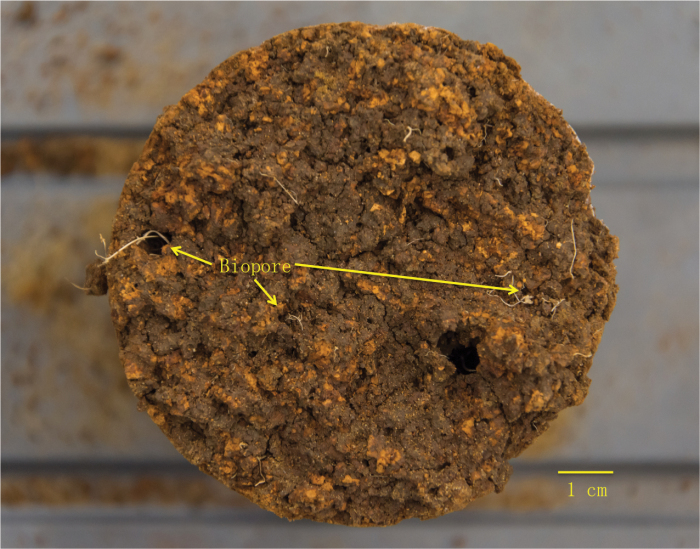
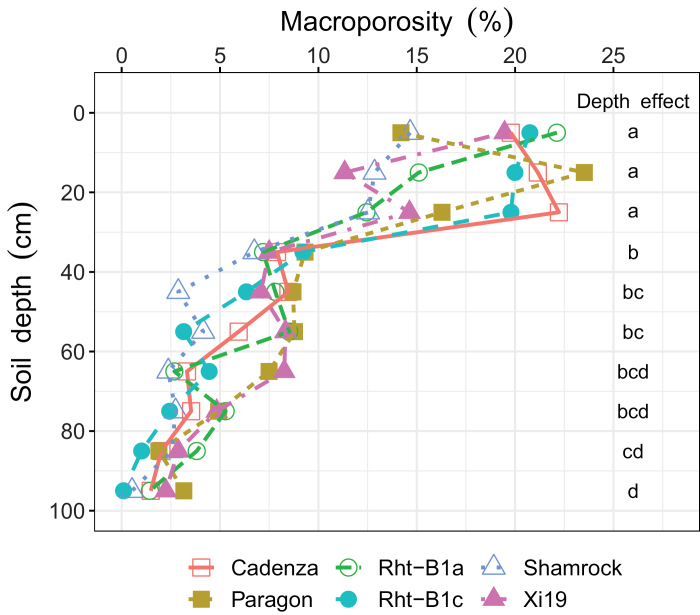
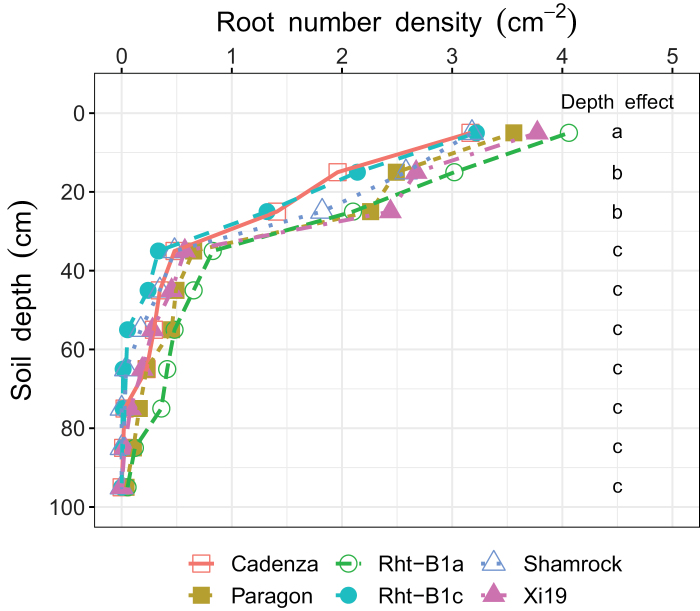
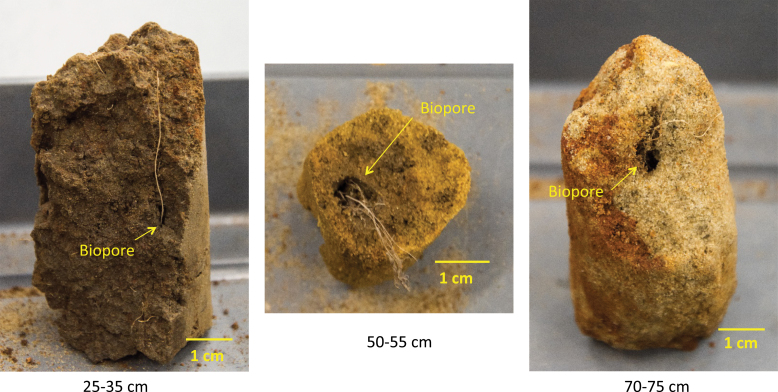
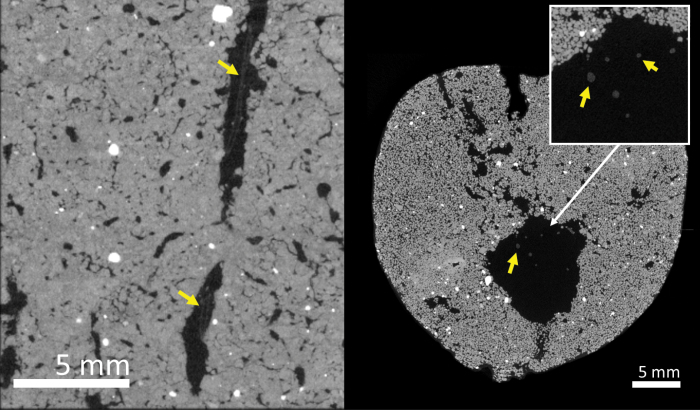
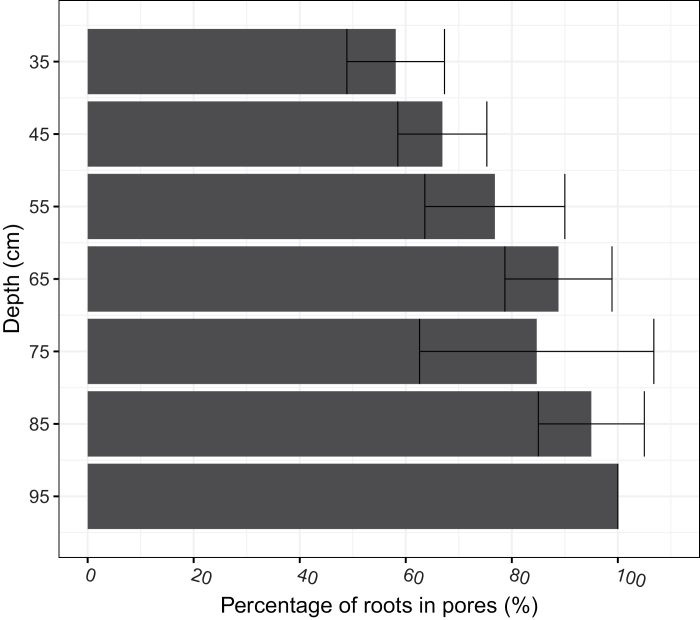
Wheat (Triticum aestivum L.) root growth in the subsoil is usually constrained by soil strength, although roots can use macropores to elongate to deeper layers. The quantitative relationship between the elongation of wheat roots and the soil pore system, however, is still to be determined. We studied the depth distribution of roots of six wheat varieties and explored their relationship with soil macroporosity from samples with the field structure preserved. Undisturbed soil cores (to a depth of 100 cm) were collected from the field and then non-destructively imaged using X-ray computed tomography (at a spatial resolution of 90 µm) to quantify soil macropore structure and root number density (the number of roots cm-2 within a horizontal cross-section of a soil core). Soil macroporosity changed significantly with depth but not between the different wheat lines. There was no significant difference in root number density between wheat varieties. In the subsoil, wheat roots used macropores, especially biopores (i.e. former root or earthworm channels) to grow into deeper layers. Soil macroporosity explained 59% of the variance in root number density. Our data suggested that the development of the wheat root system in the field was more affected by the soil macropore system than by genotype. On this basis, management practices which enhance the porosity of the subsoil may therefore be an effective strategy to improve deep rooting of wheat.
小麦(Triticum aestivum L.)根系在土壤下层的生长通常受到土壤强度的限制,尽管根系可以利用大孔来延伸到更深的土层。然而,小麦根系伸长与土壤孔隙系统之间的定量关系仍有待确定。我们研究了六个小麦品种的根系在深度上的分布,并从保存田间结构的样本中探讨了它们与土壤大孔隙率的关系。从田间采集未扰动的土壤芯(至 100cm 深),然后使用 X 射线计算机断层扫描(空间分辨率为 90μm)进行无损成像,以定量土壤大孔隙结构和根系密度(土壤芯水平横截面内的根系数量 cm-2)。土壤大孔隙率随深度显著变化,但不同小麦品种之间没有差异。小麦品种间的根系密度没有显著差异。在土壤下层,小麦根系利用大孔,特别是生物孔(即前根或蚯蚓通道)生长到更深的土层。土壤大孔隙率解释了根系密度变异的 59%。我们的数据表明,田间小麦根系系统的发育更多地受到土壤大孔隙系统的影响,而不是基因型的影响。在此基础上,增强土壤下层孔隙率的管理措施可能是提高小麦深层根系的有效策略。