European Neuroscience Institute (ENI) - A Joint Initiative of the University Medical Center Göttingen and the Max-Planck-Society, Göttingen, Germany.
Mediterranean Institute for Life Sciences, Split, Croatia.
Nat Commun. 2020 Oct 16;11(1):5226. doi: 10.1038/s41467-020-19104-1.
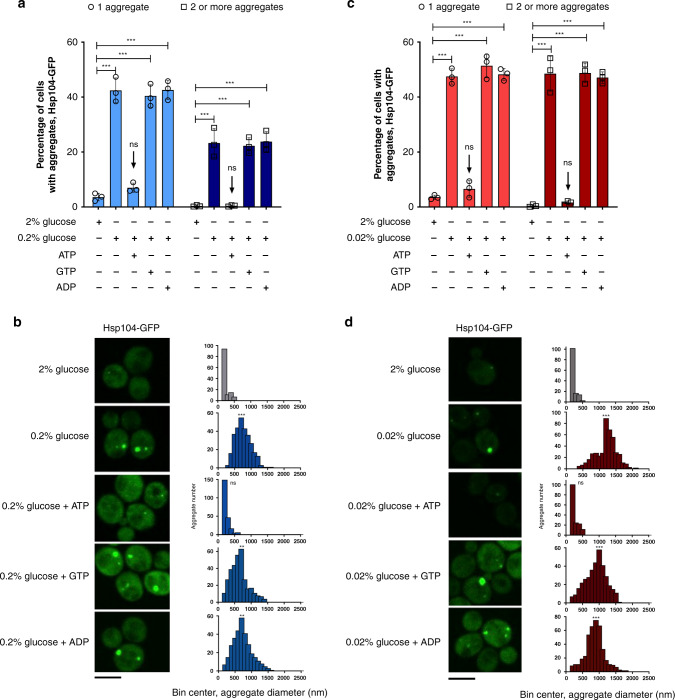
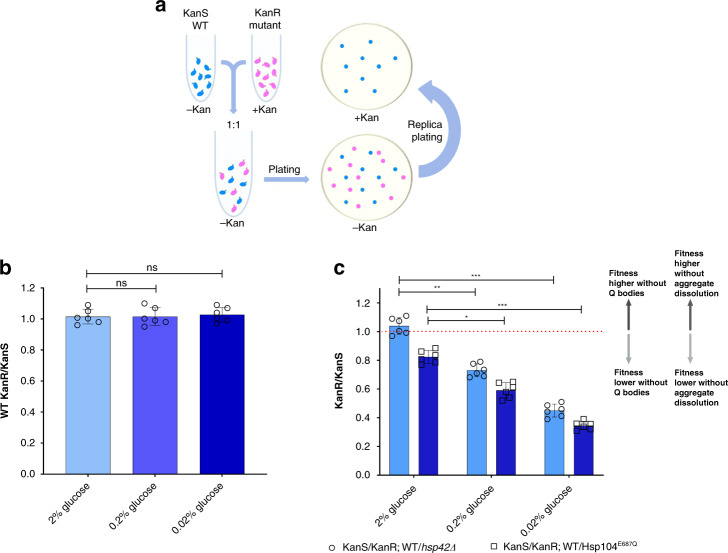
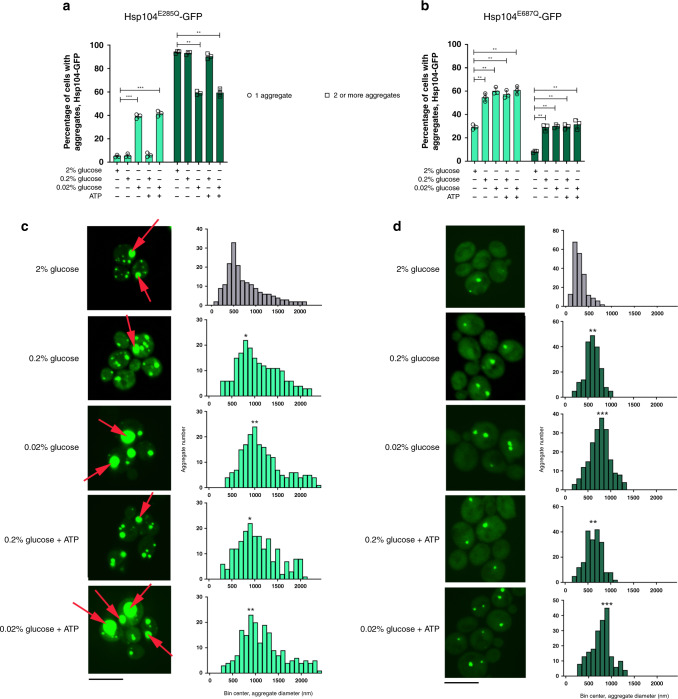
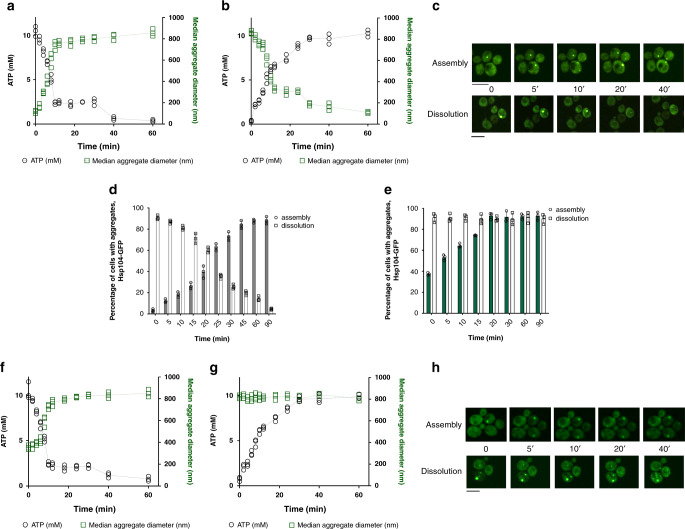
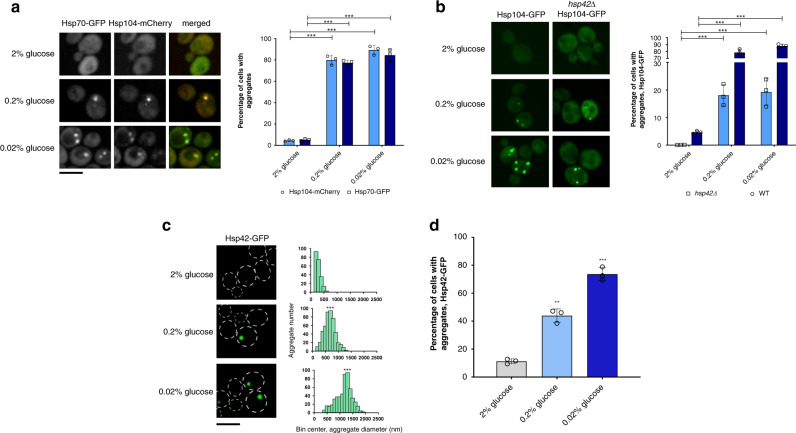
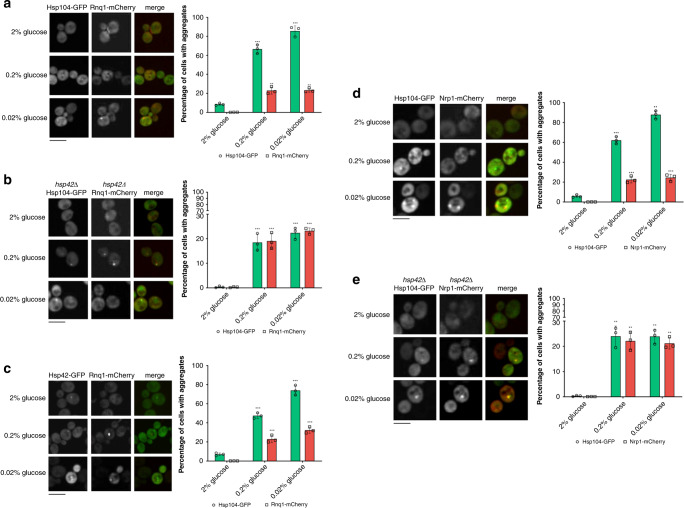
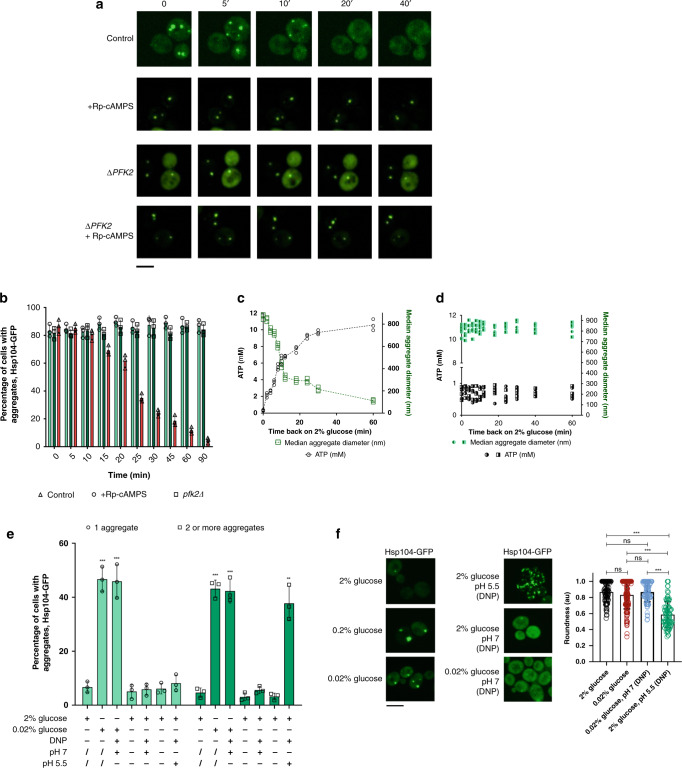
Signs of proteostasis failure often entwine with those of metabolic stress at the cellular level. Here, we study protein sequestration during glucose deprivation-induced ATP decline in Saccharomyces cerevisiae. Using live-cell imaging, we find that sequestration of misfolded proteins and nascent polypeptides into two distinct compartments, stress granules, and Q-bodies, is triggered by the exhaustion of ATP. Both compartments readily dissolve in a PKA-dependent manner within minutes of glucose reintroduction and ATP level restoration. We identify the ATP hydrolase activity of Hsp104 disaggregase as the critical ATP-consuming process determining compartments abundance and size, even in optimal conditions. Sequestration of proteins into distinct compartments during acute metabolic stress and their retrieval during the recovery phase provide a competitive fitness advantage, likely promoting cell survival during stress.
蛋白质稳态失效的迹象常常与细胞水平代谢应激的迹象交织在一起。在这里,我们研究了在葡萄糖剥夺诱导的 ATP 下降期间,酿酒酵母中蛋白质的隔离。使用活细胞成像,我们发现错误折叠的蛋白质和新生多肽被隔离到两个不同的隔室,应激颗粒和 Q 体,是由 ATP 的耗尽触发的。在几分钟内葡萄糖重新引入和 ATP 水平恢复后,这两个隔室都很容易以 PKA 依赖的方式溶解。我们发现 Hsp104 解聚酶的 ATP 水解酶活性是决定隔室丰度和大小的关键 ATP 消耗过程,即使在最佳条件下也是如此。在急性代谢应激期间,蛋白质被隔离到不同的隔室,在恢复阶段被回收,这为细胞提供了竞争生存优势,可能促进了细胞在应激期间的存活。