Riback Joshua A, Katanski Christopher D, Kear-Scott Jamie L, Pilipenko Evgeny V, Rojek Alexandra E, Sosnick Tobin R, Drummond D Allan
Graduate Program in the Biophysical Sciences, University of Chicago, Chicago, IL 60673, USA.
Department of Biochemistry & Molecular Biology, University of Chicago, Chicago, IL 60673, USA.
Cell. 2017 Mar 9;168(6):1028-1040.e19. doi: 10.1016/j.cell.2017.02.027.
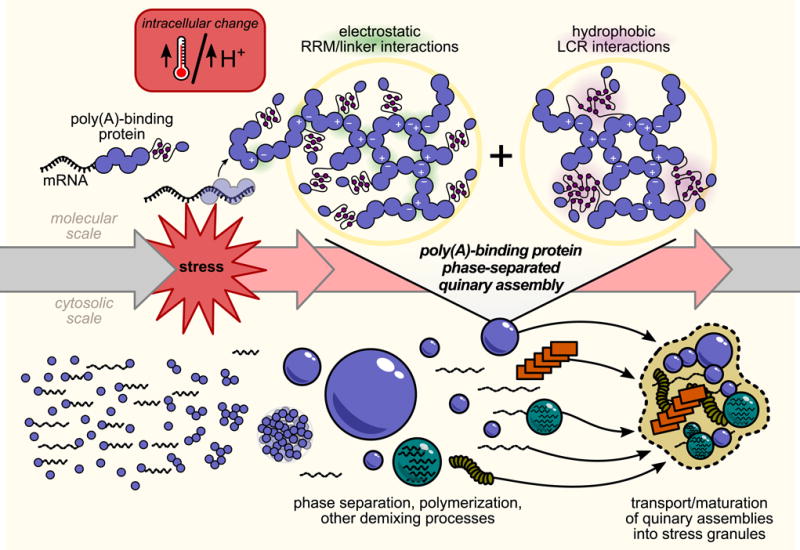
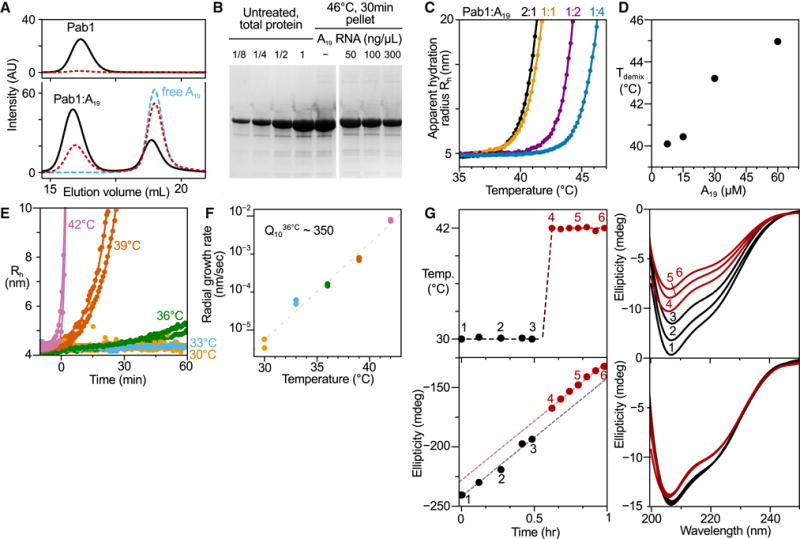
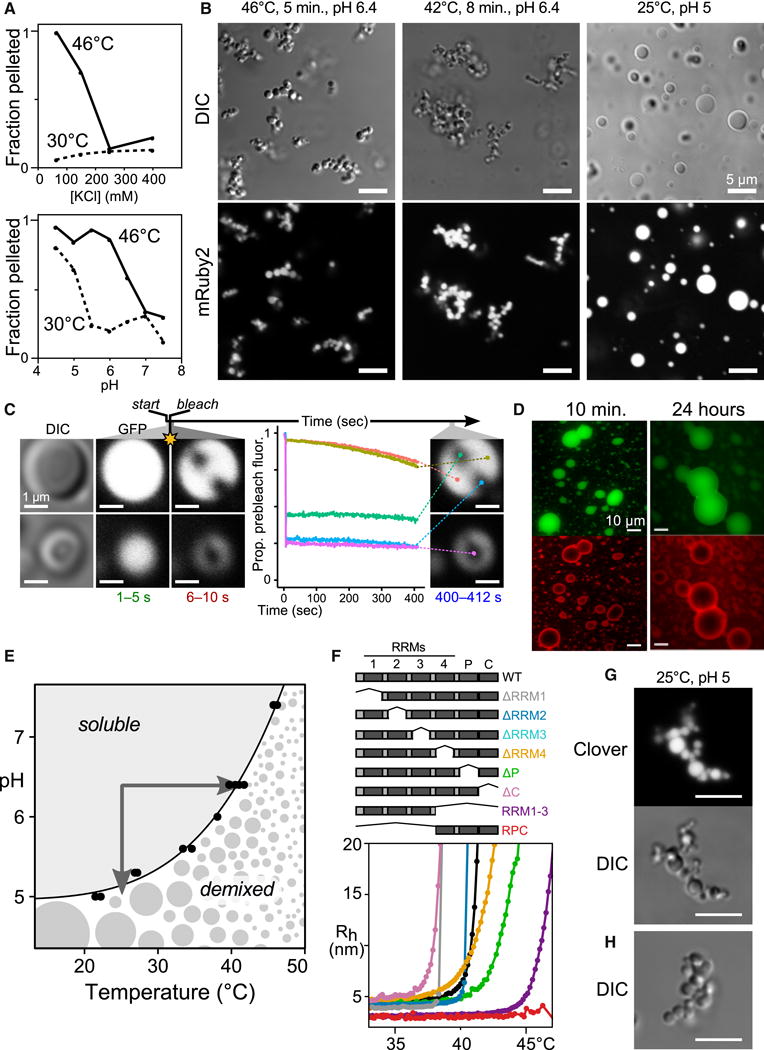
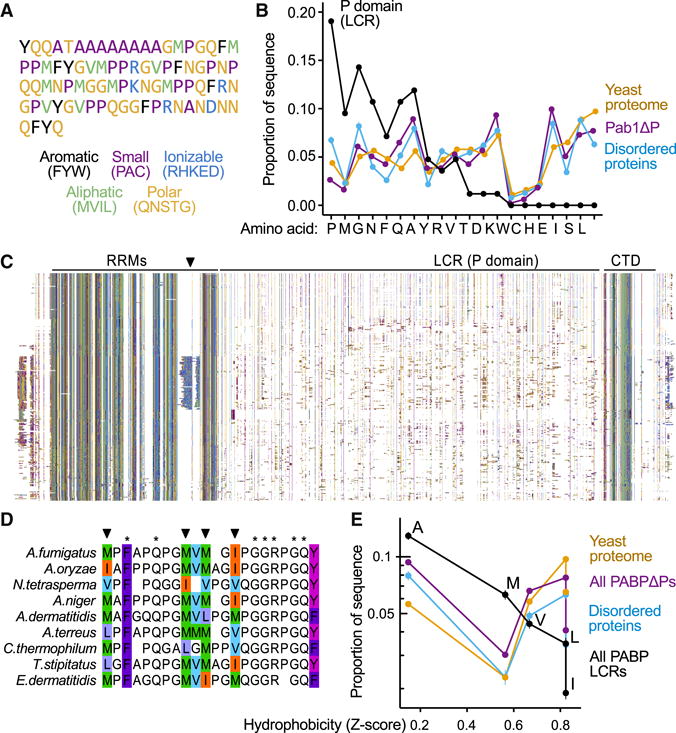
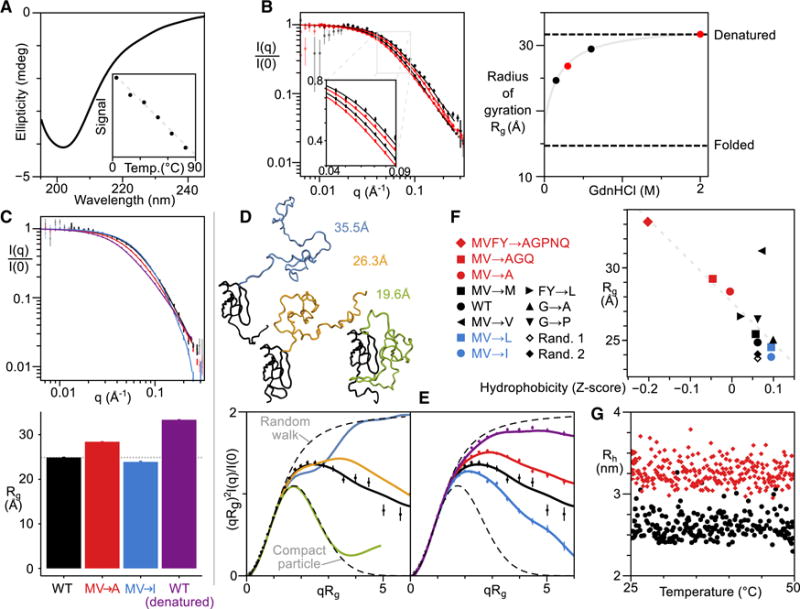
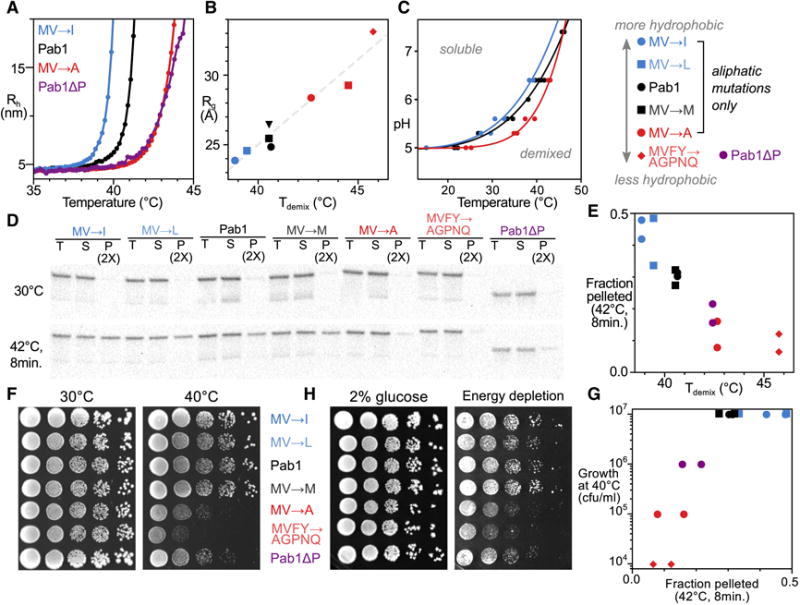
In eukaryotic cells, diverse stresses trigger coalescence of RNA-binding proteins into stress granules. In vitro, stress-granule-associated proteins can demix to form liquids, hydrogels, and other assemblies lacking fixed stoichiometry. Observing these phenomena has generally required conditions far removed from physiological stresses. We show that poly(A)-binding protein (Pab1 in yeast), a defining marker of stress granules, phase separates and forms hydrogels in vitro upon exposure to physiological stress conditions. Other RNA-binding proteins depend upon low-complexity regions (LCRs) or RNA for phase separation, whereas Pab1's LCR is not required for demixing, and RNA inhibits it. Based on unique evolutionary patterns, we create LCR mutations, which systematically tune its biophysical properties and Pab1 phase separation in vitro and in vivo. Mutations that impede phase separation reduce organism fitness during prolonged stress. Poly(A)-binding protein thus acts as a physiological stress sensor, exploiting phase separation to precisely mark stress onset, a broadly generalizable mechanism.
在真核细胞中,多种应激会触发RNA结合蛋白聚集成应激颗粒。在体外,与应激颗粒相关的蛋白质可以分离形成液体、水凝胶和其他缺乏固定化学计量的聚集体。观察这些现象通常需要远离生理应激的条件。我们发现,聚腺苷酸结合蛋白(酵母中的Pab1)是应激颗粒的一个标志性蛋白,在暴露于生理应激条件下时会在体外发生相分离并形成水凝胶。其他RNA结合蛋白的相分离依赖于低复杂性区域(LCRs)或RNA,而Pab1的相分离不需要其LCR,并且RNA会抑制其相分离。基于独特的进化模式,我们创建了LCR突变,这些突变可以系统地调节其生物物理特性以及Pab1在体外和体内的相分离。阻碍相分离的突变会降低生物体在长期应激期间的适应性。因此,聚腺苷酸结合蛋白作为一种生理应激传感器,利用相分离精确标记应激的开始,这是一种具有广泛普遍性的机制。