Department of Pathology and Immunology, Baylor College of Medicine, Texas Children's Hospital, Houston, TX, USA.
Exp Mol Med. 2020 Oct;52(10):1663-1672. doi: 10.1038/s12276-020-00515-5. Epub 2020 Oct 16.
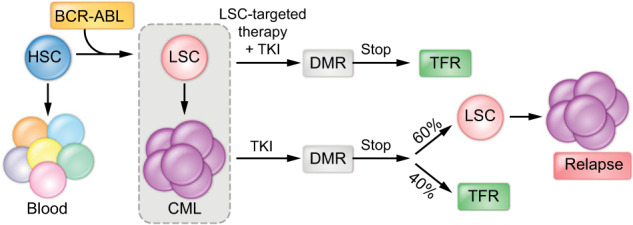
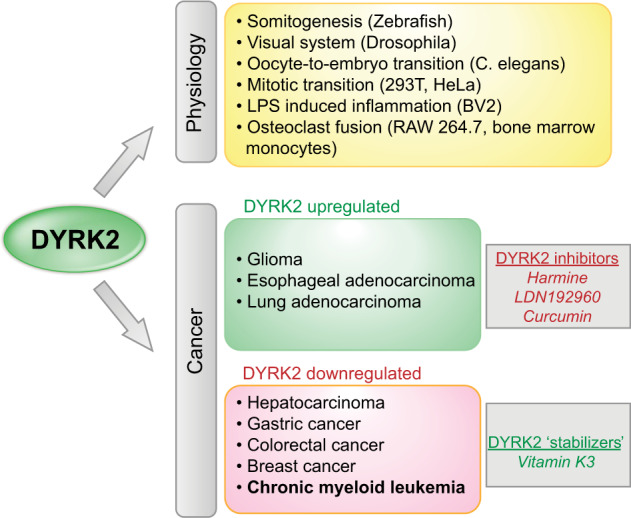
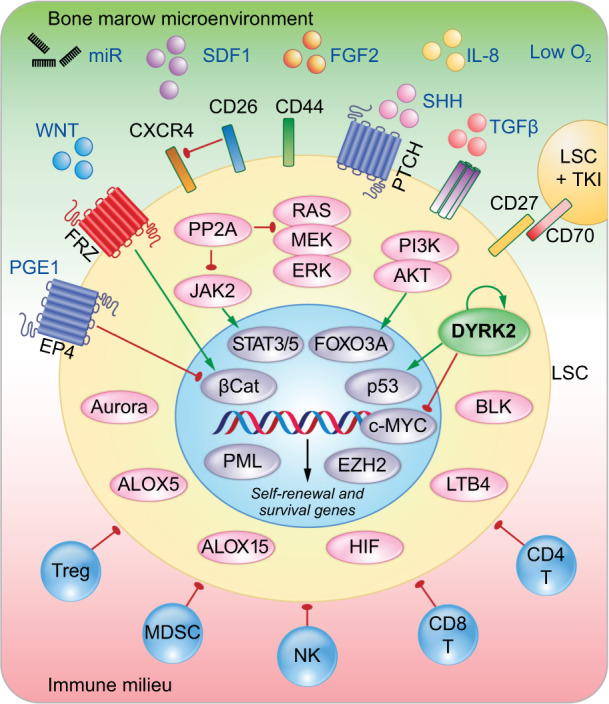
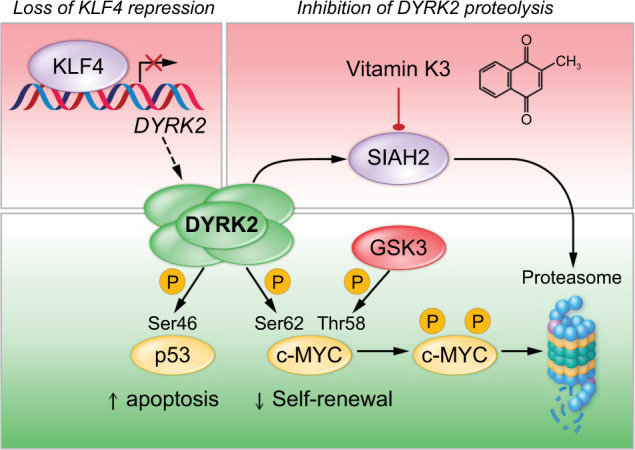
Chronic myeloid leukemia is a hematological cancer driven by the oncoprotein BCR-ABL1, and lifelong treatment with tyrosine kinase inhibitors extends patient survival to nearly the life expectancy of the general population. Despite advances in the development of more potent tyrosine kinase inhibitors to induce a durable deep molecular response, more than half of patients relapse upon treatment discontinuation. This clinical finding supports the paradigm that leukemia stem cells feed the neoplasm, resist tyrosine kinase inhibition, and reactivate upon drug withdrawal depending on the fitness of the patient's immune surveillance. This concept lends support to the idea that treatment-free remission is not achieved solely with tyrosine kinase inhibitors and that new molecular targets independent of BCR-ABL1 signaling are needed in order to develop adjuvant therapy to more efficiently eradicate the leukemia stem cell population responsible for chemoresistance and relapse. Future efforts must focus on the identification of new targets to support the discovery of potent and safe small molecules able to specifically eradicate the leukemic stem cell population. In this review, we briefly discuss molecular maintenance in leukemia stem cells in chronic myeloid leukemia and provide a more in-depth discussion of the dual-specificity kinase DYRK2, which has been identified as a novel actionable checkpoint in a critical leukemic network. DYRK2 controls the activation of p53 and proteasomal degradation of c-MYC, leading to impaired survival and self-renewal of leukemia stem cells; thus, pharmacological activation of DYRK2 as an adjuvant to standard therapy has the potential to induce treatment-free remission.
慢性髓性白血病是一种由癌蛋白 BCR-ABL1 驱动的血液系统癌症,终身接受酪氨酸激酶抑制剂治疗可将患者的生存时间延长至接近普通人群的预期寿命。尽管开发了更有效的酪氨酸激酶抑制剂来诱导持久的深度分子反应,但超过一半的患者在停药后会复发。这一临床发现支持这样一种观点,即白血病干细胞为肿瘤提供养分,抵抗酪氨酸激酶抑制,并在药物撤出后根据患者免疫监测的适应性重新激活。这一概念支持这样一种观点,即无治疗缓解不仅仅是通过酪氨酸激酶抑制剂实现的,为了开发辅助治疗以更有效地消除负责化疗耐药和复发的白血病干细胞群体,需要独立于 BCR-ABL1 信号的新分子靶点。未来的努力必须集中在确定新的靶点上,以支持发现能够特异性根除白血病干细胞群体的有效和安全的小分子。在这篇综述中,我们简要讨论了慢性髓性白血病中白血病干细胞的分子维持,并更深入地讨论了双特异性激酶 DYRK2,它已被确定为关键白血病网络中的一个新的可操作检查点。DYRK2 控制着 p53 的激活和 c-MYC 的蛋白酶体降解,导致白血病干细胞的存活和自我更新受损;因此,作为标准治疗的辅助药物,药理学激活 DYRK2 有可能诱导无治疗缓解。