Department of Neurosurgery, Second Affiliated Hospital, School of Medicine, Zhejiang University, Hangzhou, China.
Department of Emergency Medicine, Bursa Yuksek Ihtisas Training and Research Hospital, University of Health Sciences, 16310, Bursa, Turkey.
Cell Mol Life Sci. 2021 Feb;78(4):1369-1392. doi: 10.1007/s00018-020-03667-9. Epub 2020 Oct 16.
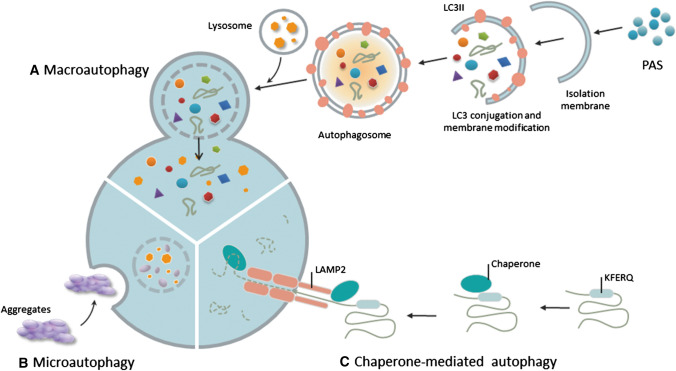
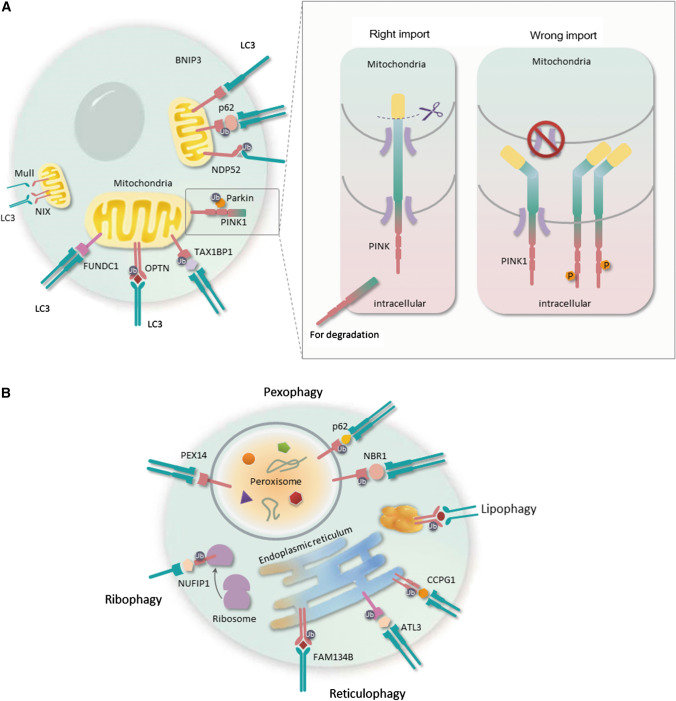
The neurological diseases primarily include acute injuries, chronic neurodegeneration, and others (e.g., infectious diseases of the central nervous system). Autophagy is a housekeeping process responsible for the bulk degradation of misfolded protein aggregates and damaged organelles through the lysosomal machinery. Recent studies have suggested that autophagy, particularly selective autophagy, such as mitophagy, pexophagy, ER-phagy, ribophagy, lipophagy, etc., is closely implicated in neurological diseases. These forms of selective autophagy are controlled by a group of important proteins, including PTEN-induced kinase 1 (PINK1), Parkin, p62, optineurin (OPTN), neighbor of BRCA1 gene 1 (NBR1), and nuclear fragile X mental retardation-interacting protein 1 (NUFIP1). This review highlights the characteristics and underlying mechanisms of different types of selective autophagy, and their implications in various forms of neurological diseases.
神经退行性疾病主要包括急性损伤、慢性神经退行性变和其他疾病(如中枢神经系统感染性疾病)。自噬是一个管家过程,通过溶酶体机制负责大量降解错误折叠的蛋白聚集体和受损的细胞器。最近的研究表明,自噬,特别是选择性自噬,如线粒体自噬、过氧化物酶体自噬、内质网自噬、核糖体自噬、脂滴自噬等,与神经退行性疾病密切相关。这些形式的选择性自噬受一组重要蛋白的控制,包括 PTEN 诱导的激酶 1(PINK1)、Parkin、p62、视神经萎缩症 1 基因(OPTN)、BRCA1 基因 1 相邻蛋白(NBR1)和核脆弱 X 智力迟钝相互作用蛋白 1(NUFIP1)。本综述强调了不同类型选择性自噬的特征和潜在机制,以及它们在各种形式的神经退行性疾病中的意义。