Honvo Germain, Lengelé Laetitia, Charles Alexia, Reginster Jean-Yves, Bruyère Olivier
Division of Public Health, Epidemiology and Health Economics, University of Liège, Liège, Belgium.
World Health Organization (WHO) Collaborating Center for Public Health Aspects of Musculoskeletal Health and Aging, University of Liège, Liège, Belgium.
Rheumatol Ther. 2020 Dec;7(4):703-740. doi: 10.1007/s40744-020-00240-5. Epub 2020 Oct 17.
There is currently no disease-modifying drug for osteoarthritis (OA), and some safety concerns have been identified about the leading traditional drugs. Therefore, research efforts have focused on alternatives such as supplementation with collagen derivatives. The objective of this scoping review is to examine the extent, range, and nature of research, and to summarize and disseminate research findings on the effects of collagen derivatives in OA and cartilage repair. The purpose is to identify gaps in the current body of evidence in order to further help progress research in this setting.
The databases Medline, Scopus, CENTRAL, TOXLINE, and CDSR were comprehensively searched from inception to search date. After studies selection against eligibility criteria, following recommended methods, data were charted from the retrieved articles and these were subsequently synthesized. Numerical and graphical descriptive statistical methods were used to show trends in publications and geographical distribution of studies.
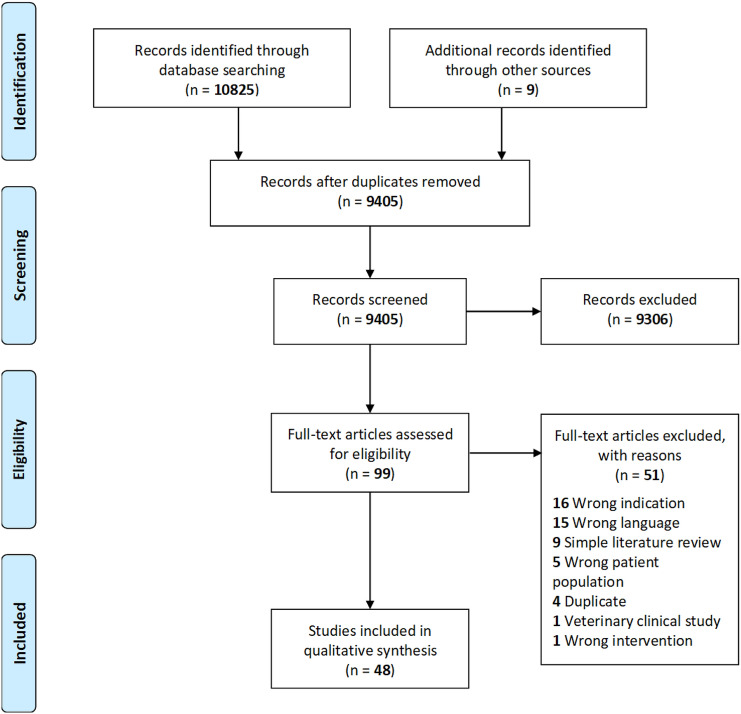
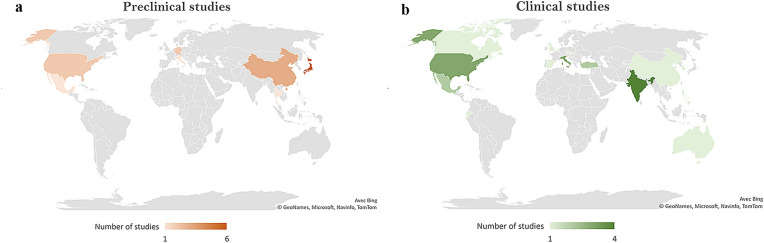
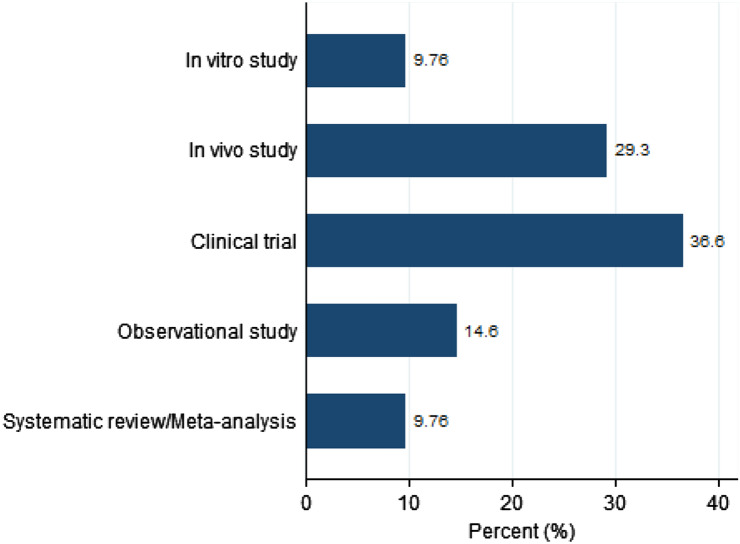
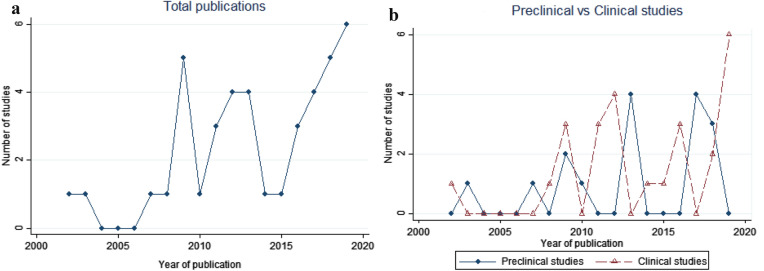
The systematic literature search identified a total of 10,834 records. Forty-one published studies were ultimately included in the review, 16 of which were preclinical studies and 25 were clinical studies (including four systematic reviews/meta-analyses). Collagen hydrolysate (CH) and undenatured collagen (UC) were the two types of collagen derivatives studied, with a total of 28 individual studies on CH and nine on UC. More than a third of studies originated from Asia, and most of them have been published after 2008. Oral forms of collagen derivatives were mainly studied; three in vivo preclinical studies and three clinical trials investigated intra-articularly injected CH. In most of the clinical trials, treatment durations varied between 3 and 6 months, with the shortest being 1.4 months and the longest 11 months. All in vivo preclinical studies and clinical trials, regardless of their quality, concluded on beneficial effects of collagen derivatives in OA and cartilage repair, whether used as nutritional supplement or delivered intra-articularly, and whatever the manufacturers of the products, the doses and the outcomes considered in each study.
Although current evidence shows some potential for the use of CH and UC as an option for management of patients with OA, there is still room for progress in terms of laboratory and clinical research before any definitive conclusion can be made. Harmonization of outcomes in preclinical studies and longer randomized placebo-controlled trials in larger populations with the use of recommended and validated endpoints are warranted before collagen derivatives can be recommended by large scientific societies.
目前尚无用于治疗骨关节炎(OA)的疾病改善药物,并且已发现一些关于主要传统药物的安全性问题。因此,研究工作集中在诸如补充胶原蛋白衍生物等替代方法上。本范围综述的目的是考察研究的范围、广度和性质,并总结和传播关于胶原蛋白衍生物对OA和软骨修复作用的研究结果。目的是找出当前证据体系中的空白,以进一步推动该领域的研究进展。
全面检索了从建库至检索日期的Medline、Scopus、CENTRAL、TOXLINE和CDSR数据库。根据纳入标准筛选研究后,按照推荐方法,从检索到的文章中提取数据并进行综合分析。使用数值和图形描述性统计方法展示出版物的趋势和研究的地理分布。
系统文献检索共识别出10834条记录。最终纳入综述的已发表研究有41项,其中16项为临床前研究,25项为临床研究(包括4项系统评价/荟萃分析)。水解胶原蛋白(CH)和未变性胶原蛋白(UC)是研究的两种胶原蛋白衍生物,对CH的单独研究共有28项,对UC的有9项。超过三分之一的研究来自亚洲,且大多数研究发表于2008年之后。主要研究了胶原蛋白衍生物的口服形式;三项体内临床前研究和三项临床试验研究了关节腔内注射CH。在大多数临床试验中,治疗持续时间在3至6个月之间,最短为1.4个月,最长为11个月。所有体内临床前研究和临床试验,无论其质量如何,均得出结论,即胶原蛋白衍生物在OA和软骨修复中具有有益作用,无论作为营养补充剂使用还是关节腔内给药,也无论产品的制造商、每项研究中使用的剂量和所考虑的结果如何。
尽管目前的证据表明使用CH和UC作为OA患者管理的一种选择具有一定潜力,但在得出任何明确结论之前,实验室和临床研究仍有进步空间。在大型科学协会推荐胶原蛋白衍生物之前,有必要在临床前研究中统一结果,并在更大规模人群中进行更长时间的随机安慰剂对照试验,使用推荐的和经过验证的终点指标。