Dias Teresa, Pimentel Vívian, Cogo Antônio Jesus Dorighetto, Costa Raquel, Bertolazi Amanda Azevedo, Miranda Camila, de Souza Sávio Bastos, Melo Juliana, Carolino Manuela, Varma Ajit, Eutrópio Frederico, Olivares Fábio Lopes, Ramos Alessandro Coutinho, Cruz Cristina
Centre for Ecology, Evolution and Environmental Changes, Faculdade de Ciências, Universidade de Lisboa, Lisbon, Portugal.
Laboratory of Physiology and Biochemistry of Microorganisms, Universidade Estadual do Norte Fluminense, Campos dos Goytacazes, Brazil.
Front Microbiol. 2020 Sep 22;11:562238. doi: 10.3389/fmicb.2020.562238. eCollection 2020.
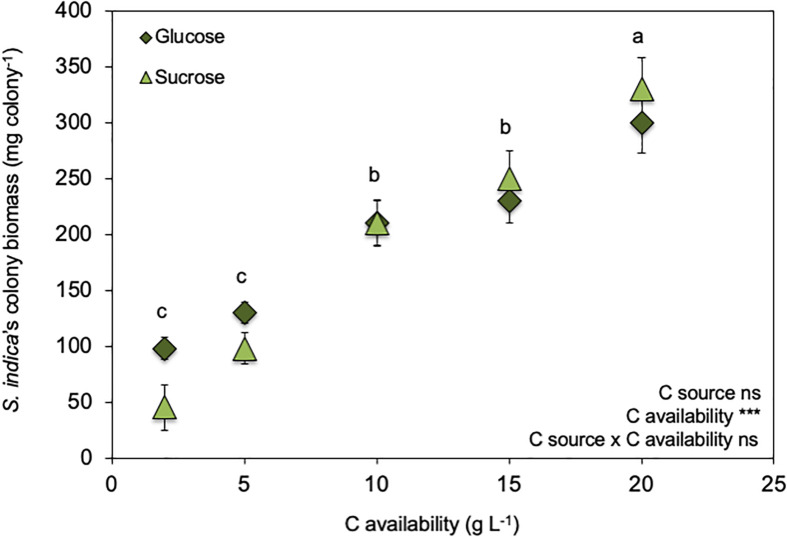
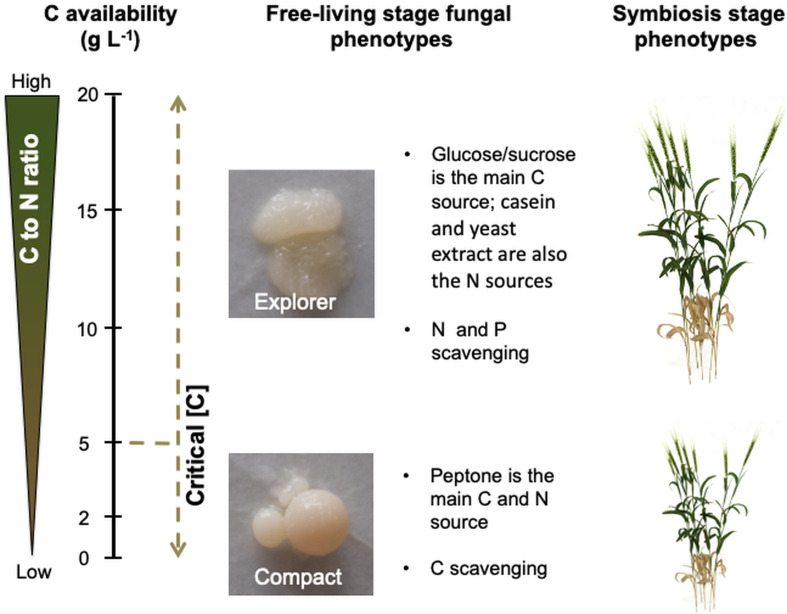
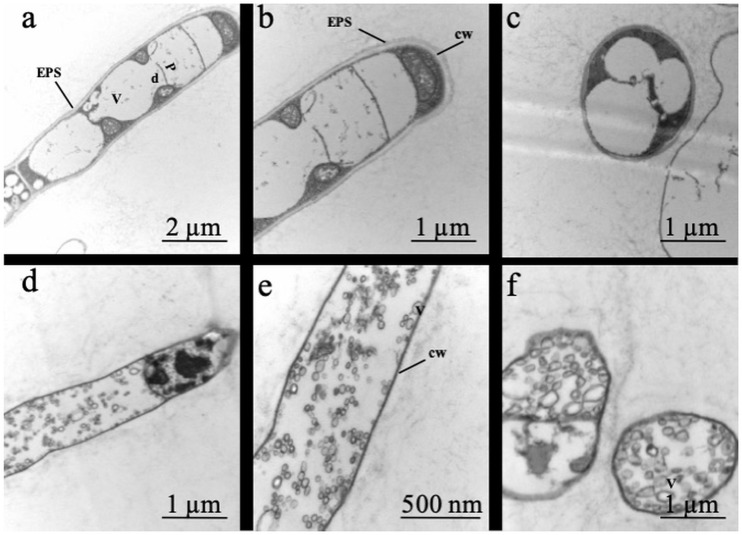
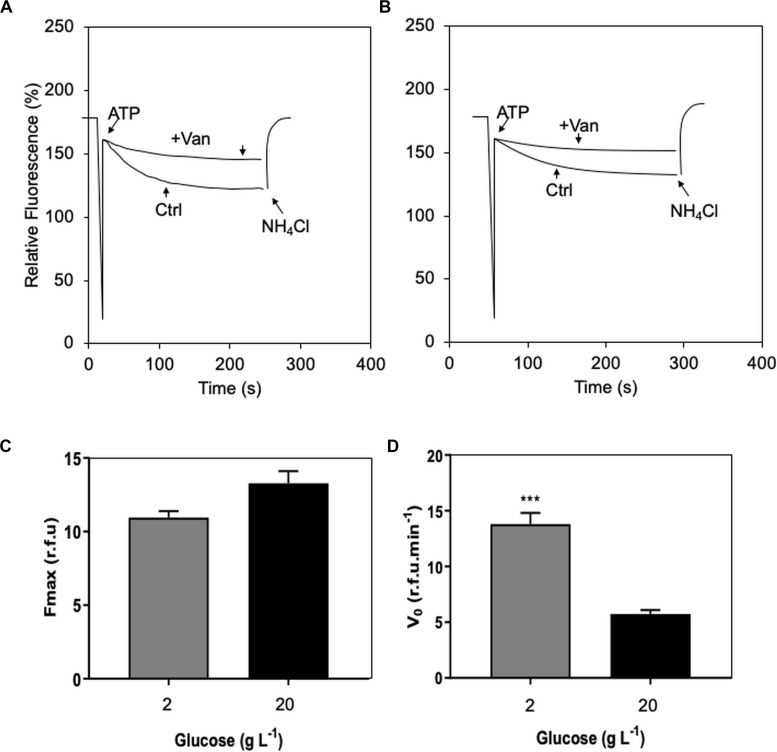
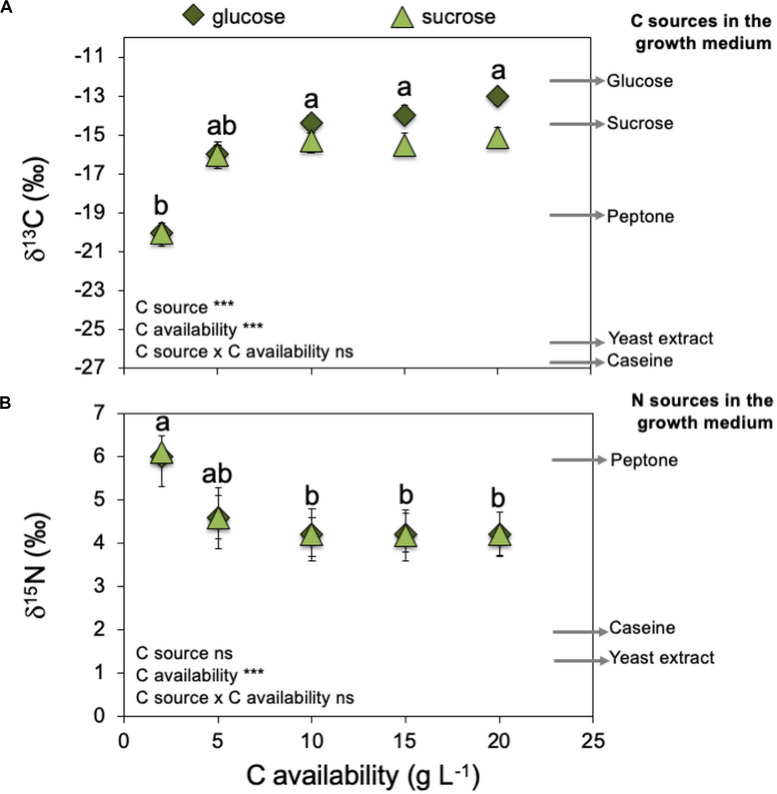
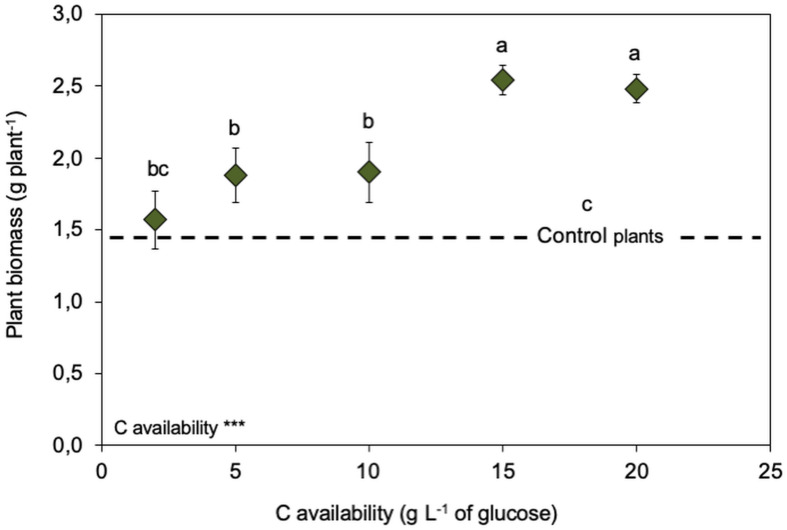
(former ) is a non-obligate endophytic fungus and generally a plant growth and defence promoter with high potential to be used in agriculture. However, may switch from biotrophy to saprotrophy losing its plant growth promoting traits. Our aim was to understand if the free-living stage growth conditions (namely C availability) regulate 's phenotype, and its potential as plant-growth-promoting-microbe (PGPM). We grew in its free-living stage under increasing C availabilities (2-20 g L of glucose or sucrose). We first characterised the effect of C availability during free-living stage growth on fungal phenotype: colonies growth and physiology (plasma membrane proton pumps, stable isotopic signatures, and potential extracellular decomposing enzymes). The effect of the C availability during the free-living stage of the PGPM was evaluated on wheat. We observed that C availability during the free-living stage regulated 's growth, ultrastructure and physiology, resulting in two distinct colony phenotypes: compact and explorer. The compact phenotype developed at low C, used peptone as the major C and N source, and displayed higher decomposing potential for C providing substrates; while the explorer phenotype developed at high C, used glucose and sucrose as major C sources and casein and yeast extract as major N sources, and displayed higher decomposing potential for N and P providing substrates. The C availability, or the C/N ratio, during the free-living stage left a legacy to the symbiosis stage, regulating 's potential to promote plant growth: wheat growth promotion by the explorer phenotype was ± 40% higher than that by the compact phenotype. Our study highlights the importance of considering microbial ecology in designing PGPM/biofertilizers. Further studies are needed to test the phenotypes under more extreme conditions, and to understand if the acquired characteristics persist under field conditions.
(前者)是一种兼性内生真菌,通常是一种植物生长和防御促进剂,在农业中具有很高的应用潜力。然而,它可能会从活体营养型转变为腐生营养型,从而失去其促进植物生长的特性。我们的目的是了解自由生活阶段的生长条件(即碳可用性)是否会调节其表型以及作为植物生长促进微生物(PGPM)的潜力。我们在碳可用性不断增加(2 - 20 g/L葡萄糖或蔗糖)的条件下培养处于自由生活阶段的它。我们首先表征了自由生活阶段生长过程中碳可用性对真菌表型的影响:菌落生长和生理学(质膜质子泵、稳定同位素特征以及潜在的细胞外分解酶)。我们评估了PGPM自由生活阶段的碳可用性对小麦的影响。我们观察到自由生活阶段的碳可用性调节了它的生长、超微结构和生理学,产生了两种不同的菌落表型:致密型和探索型。致密型表型在低碳条件下形成,以蛋白胨作为主要碳源和氮源,并对提供碳的底物表现出更高的分解潜力;而探索型表型在高碳条件下形成,以葡萄糖和蔗糖作为主要碳源,以酪蛋白和酵母提取物作为主要氮源,并对提供氮和磷的底物表现出更高的分解潜力。自由生活阶段的碳可用性或碳氮比给共生阶段留下了影响,调节了它促进植物生长的潜力:探索型表型对小麦生长的促进作用比致密型表型高约40%。我们的研究强调了在设计PGPM/生物肥料时考虑微生物生态学的重要性。需要进一步的研究来在更极端的条件下测试这些表型,并了解所获得的特征在田间条件下是否持续存在。