Hoquet Thierry, Bridges William C, Gowaty Patricia Adair
Department of Philosophy University Paris Nanterre France.
Department of Mathematical Sciences Clemson University Clemson SC USA.
Ecol Evol. 2020 Sep 14;10(19):10325-10342. doi: 10.1002/ece3.6420. eCollection 2020 Oct.
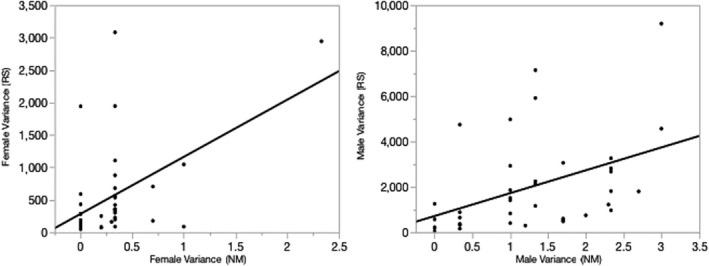
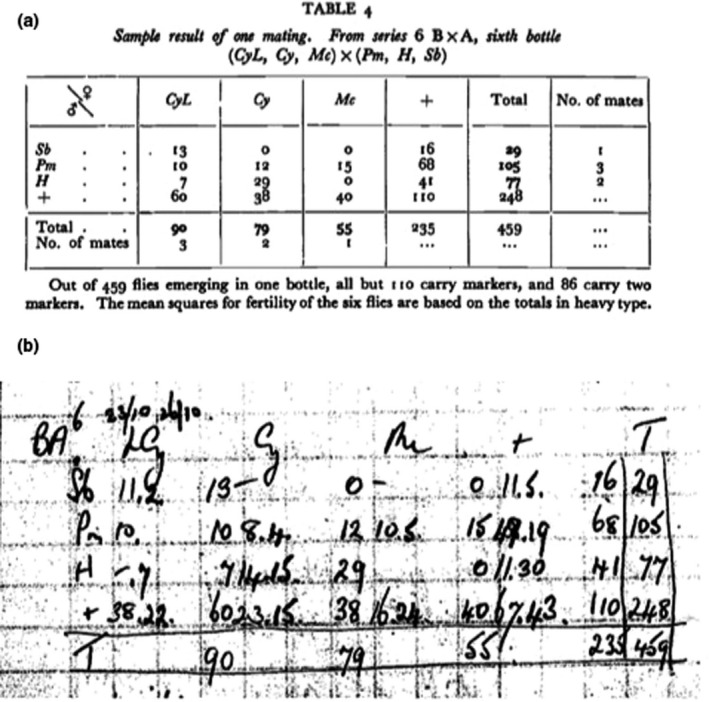
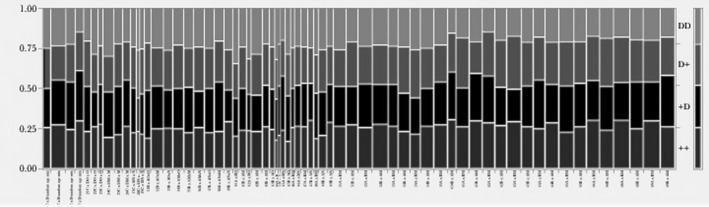
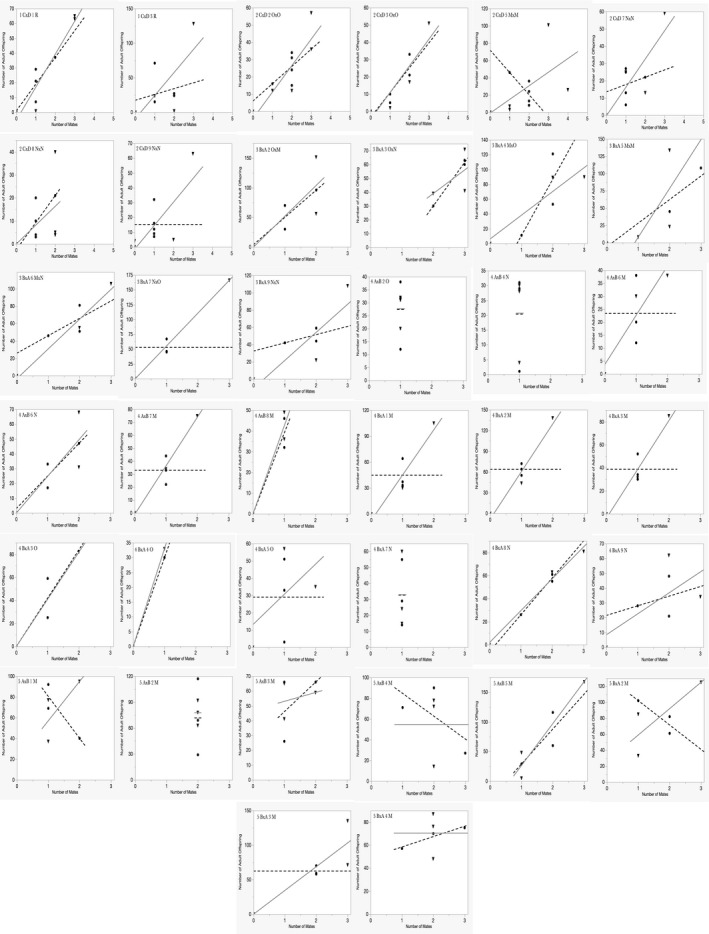
A.J. Bateman (1948) hypothesized that a metric of sexual selection is in sex differences of intrasexual variance in number of mates ( ). AJB predicted that (a) males have greater variance in reproductive success ( ) than females; (b) males have greater than females; and (c) a positive relationship between and is stronger among males. AJB used phenotypically observable mutations in offspring to identify parents and to count subjects' NM and RS. AJB's conclusions matched his predictions, later called "Bateman's Principles." Empirical challenges to his conclusions guided analyses herein. (a) AJB's analysis pseudo-replicated sample sizes, violating a sexual selection assumption: , individuals must be in the same population to choose and compete. (b) AJB's methods overestimated subjects with no mates while underestimating subjects with one or more. (c) A replication (Gowaty et al., 2012) showed that offspring inheriting nametags from both parents often died before expressing adult phenotypes, proving some of AJB's methods produced biased data. Science historian Thierry Hoquet located AJB's archived, handwritten laboratory notes, photocopied, and transcribed them. We tested each of the 65 unique populations for expected combinations in offspring of parental mutations: 41.5% failed Punnett's tests: Offspring carrying nametags simultaneously from both parents were missing showing estimates of parents' NM and were undercounted. 58.5% of populations met Punnett's expectations providing an unparalleled opportunity to re-evaluate AJB's predictions. 34 unbiased populations had no sex differences in ; 37 had no sex differences in . No sex differences in slopes of RS and NM occurred in any unbiased population. Regressions showed weak, positive, significant associations between and for females and males, contrary to AJB's prediction that the relationship would be positive in males but not in females. AJB's laboratory data are inconsistent with "Bateman's Principles."
A.J. 贝特曼(1948年)提出,性选择的一个衡量标准在于两性在配偶数量的同性差异方面( )。AJB预测:(a)雄性在生殖成功率( )方面的差异大于雌性;(b)雄性的 大于雌性;(c)雄性中 与 之间的正相关关系更强。AJB利用后代中表型可观察到的突变来识别亲本,并统计研究对象的配偶数量(NM)和生殖成功率(RS)。AJB的结论与他的预测相符,这些预测后来被称为“贝特曼原理”。对其结论的实证挑战为本文的分析提供了指导。(a)AJB的分析对样本量进行了伪重复,违反了性选择的一个假设: ,个体必须处于同一群体中才能进行选择和竞争。(b)AJB的方法高估了没有配偶的研究对象,同时低估了有一个或多个配偶的研究对象。(c)一项重复研究(戈瓦蒂等人,2012年)表明,从双亲继承识别标签的后代在表现出成年表型之前往往就死亡了,这证明AJB的一些方法产生了有偏差的数据。科学史学家蒂埃里·奥凯找到了AJB存档的手写实验室笔记,进行了复印并转录。我们对65个独特群体中的每一个都测试了亲本突变后代的预期组合:41.5%未通过庞尼特检验:同时携带双亲识别标签的后代缺失,这表明对亲本NM和 的估计被低估了。58.5%的群体符合庞尼特预期,这为重新评估AJB的预测提供了前所未有的机会。34个无偏差群体在 方面没有性别差异;37个群体在 方面没有性别差异。在任何无偏差群体中,RS和NM的斜率都没有性别差异。回归分析表明,雌性和雄性的 与 之间存在微弱、正向且显著的关联,这与AJB的预测相反,即这种关系在雄性中为正而在雌性中不为正。AJB的实验室数据与“贝特曼原理”不一致。