Graham Nancy R, Whitaker Annalis N, Strother Camilla A, Miles Ashley K, Grier Dore, McElvany Benjamin D, Bruce Emily A, Poynter Matthew E, Pierce Kristen K, Kirkpatrick Beth D, Stapleton Renee D, An Gary, van den Broek-Altenburg Eline, Botten Jason W, Crothers Jessica W, Diehl Sean A
Department of Microbiology and Molecular Genetics Larner College of Medicine, University of Vermont Burlington VT USA.
Vaccine Testing Center Larner College of Medicine, University of Vermont Burlington VT USA.
Clin Transl Immunology. 2020 Oct 7;9(10):e1189. doi: 10.1002/cti2.1189. eCollection 2020.
There is an incomplete understanding of the host humoral immune response to severe acute respiratory syndrome (SARS)-coronavirus (CoV)-2, which underlies COVID-19, during acute infection. Host factors such as age and sex as well as the kinetics and functionality of antibody responses are important factors to consider as vaccine development proceeds. The receptor-binding domain of the CoV spike (RBD-S) protein mediates host cell binding and infection and is a major target for vaccine design to elicit neutralising antibodies.
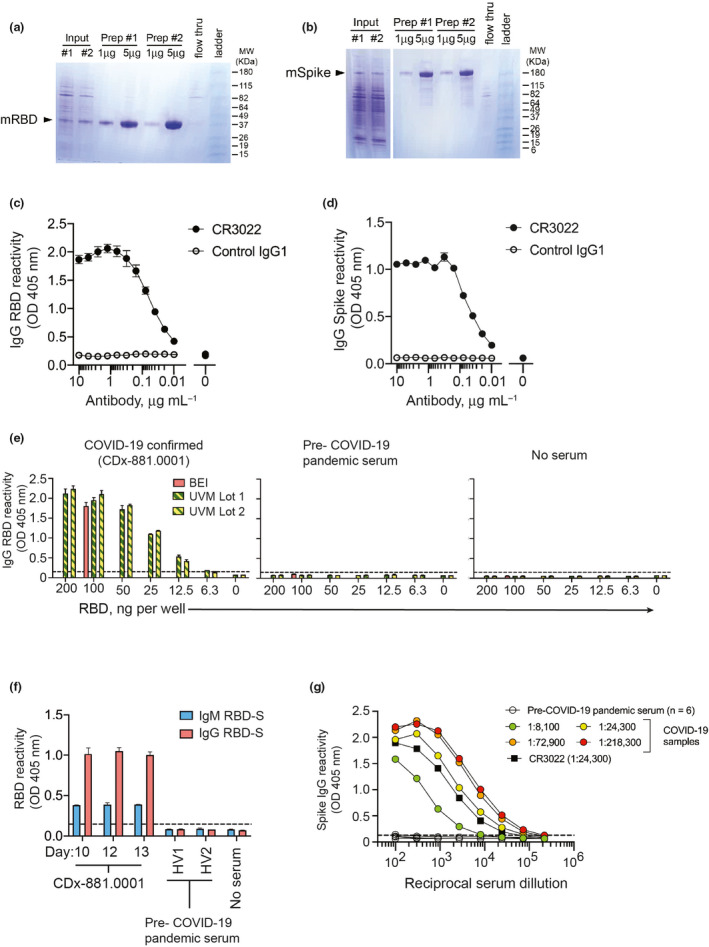
We assessed serum anti-SARS-CoV-2 RBD-S IgG, IgM and IgA antibodies by a two-step ELISA and neutralising antibodies in a cross-sectional study of hospitalised COVID-19 patients of varying disease severities. Anti-RBD-S IgG levels were also determined in asymptomatic seropositives.
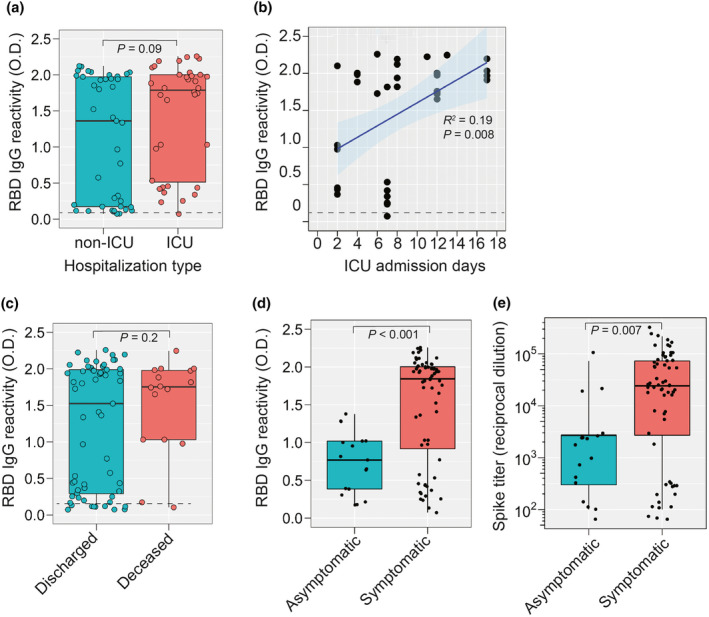
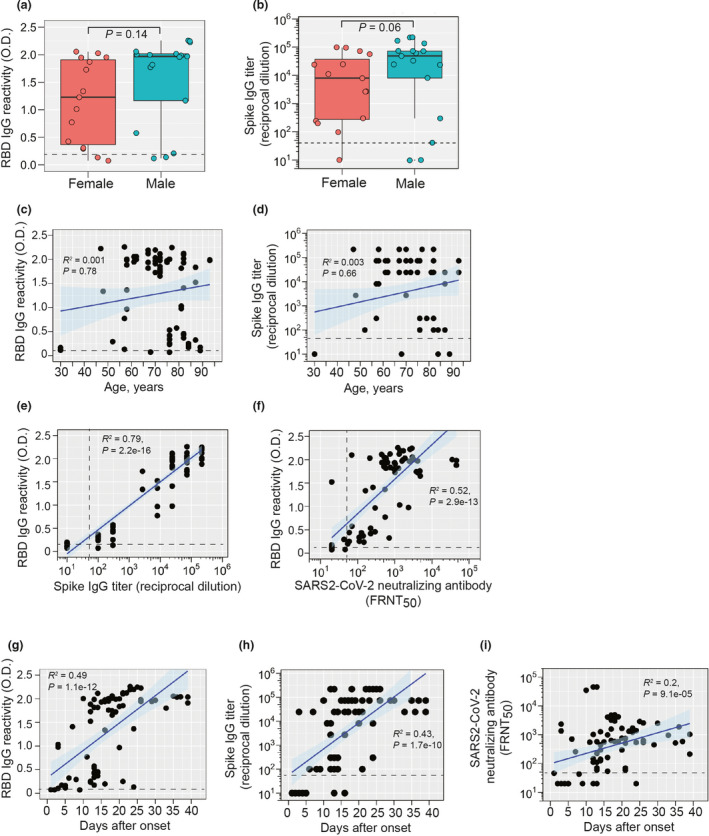
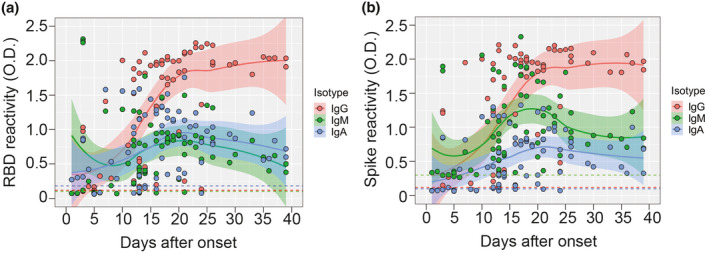
We found equivalent levels of anti-RBD-S antibodies in male and female patients and no age-related deficiencies even out to 93 years of age. The anti-RBD-S response was evident as little as 6 days after onset of symptoms and for at least 5 weeks after symptom onset. Anti-RBD-S IgG, IgM and IgA responses were simultaneously induced within 10 days after onset, with anti-RBD-S IgG sustained over a 5-week period. Anti-RBD-S antibodies strongly correlated with neutralising activity. Lastly, anti-RBD-S IgG responses were higher in symptomatic COVID-19 patients during acute infection compared with asymptomatic seropositive donors.
Our results suggest that anti-RBD-S IgG reflect functional immune responses to SARS-CoV-2, but do not completely explain age- and sex-related disparities in COVID-19 fatalities.
在急性感染期间,人们对导致2019冠状病毒病(COVID-19)的严重急性呼吸综合征冠状病毒2(SARS-CoV-2)的宿主体液免疫反应的认识尚不完整。随着疫苗研发的推进,年龄和性别等宿主因素以及抗体反应的动力学和功能是需要考虑的重要因素。冠状病毒刺突蛋白的受体结合域(RBD-S)介导宿主细胞结合和感染,是疫苗设计中引发中和抗体的主要靶点。
我们通过两步酶联免疫吸附测定法(ELISA)评估了住院的不同疾病严重程度的COVID-19患者血清中的抗SARS-CoV-2 RBD-S IgG、IgM和IgA抗体,并检测了中和抗体。还测定了无症状血清阳性者的抗RBD-S IgG水平。
我们发现男性和女性患者的抗RBD-S抗体水平相当,甚至在93岁的患者中也没有与年龄相关的抗体缺陷。抗RBD-S反应在症状出现后6天就很明显,并且在症状出现后至少持续5周。抗RBD-S IgG、IgM和IgA反应在发病后10天内同时诱导产生,抗RBD-S IgG在5周内持续存在。抗RBD-S抗体与中和活性密切相关。最后,与无症状血清阳性供体相比,有症状的COVID-19患者在急性感染期间的抗RBD-S IgG反应更高。
我们的结果表明,抗RBD-S IgG反映了对SARS-CoV-2的功能性免疫反应,但不能完全解释COVID-19死亡病例中与年龄和性别相关的差异。