Ivanisenko Nikita V, Seyrek Kamil, Kolchanov Nikolay A, Ivanisenko Vladimir A, Lavrik Inna N
The Federal Research Center Institute of Cytology and Genetics SB RAS, Novosibirsk, Russia.
Novosibirsk State University, Novosibirsk, Russia.
Cell Death Discov. 2020 Oct 10;6(1):101. doi: 10.1038/s41420-020-00331-w. eCollection 2020.
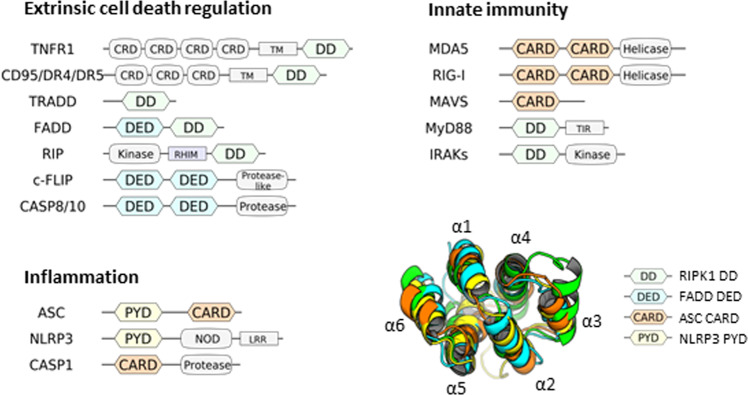
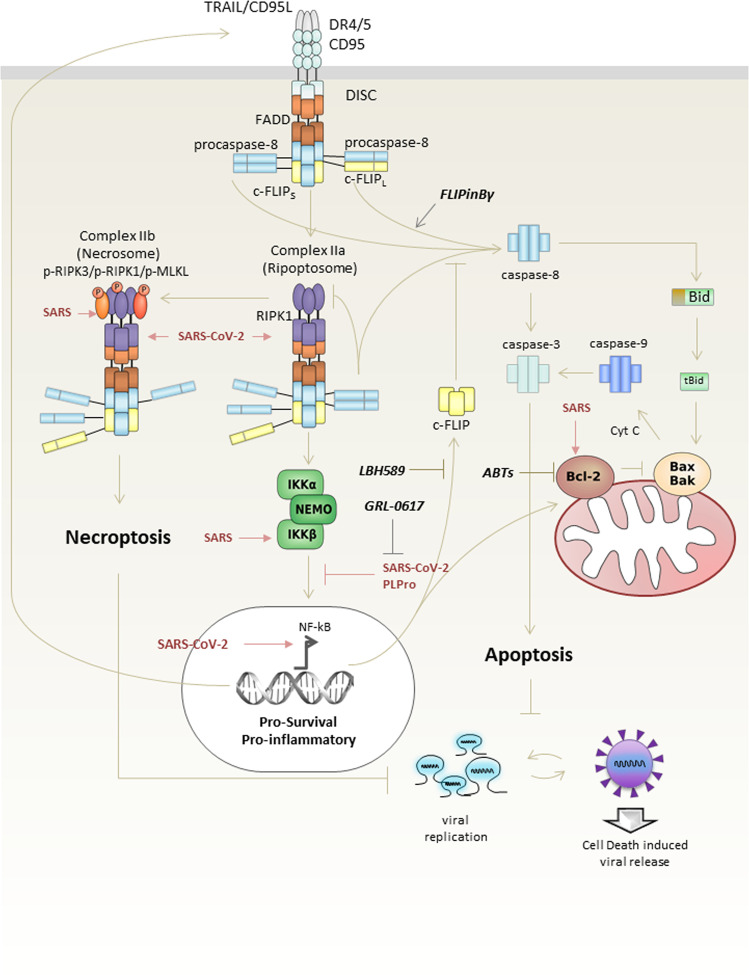
The current pandemic of novel severe acute respiratory syndrome coronavirus (SARS-CoV-2) poses a significant global public health threat. While urgent regulatory measures in control of the rapid spread of this virus are essential, scientists around the world have quickly engaged in this battle by studying the molecular mechanisms and searching for effective therapeutic strategies against this deadly disease. At present, the exact mechanisms of programmed cell death upon SARS-CoV-2 infection remain to be elucidated, though there is increasing evidence suggesting that cell death pathways play a key role in SARS-CoV-2 infection. There are several types of programmed cell death, including apoptosis, pyroptosis, and necroptosis. These distinct programs are largely controlled by the proteins of the death domain (DD) superfamily, which play an important role in viral pathogenesis and host antiviral response. Many viruses have acquired the capability to subvert the program of cell death and evade the host immune response, mainly by virally encoded gene products that control cell signaling networks. In this mini-review, we will focus on SARS-CoV-2, and discuss the implication of restraining the DD-mediated signaling network to potentially suppress viral replication and reduce tissue damage.
新型严重急性呼吸综合征冠状病毒(SARS-CoV-2)引发的当前大流行对全球公共卫生构成了重大威胁。虽然采取紧急监管措施控制这种病毒的快速传播至关重要,但世界各地的科学家已迅速投入这场战斗,通过研究分子机制并寻找针对这种致命疾病的有效治疗策略。目前,SARS-CoV-2感染后程序性细胞死亡的确切机制仍有待阐明,不过越来越多的证据表明细胞死亡途径在SARS-CoV-2感染中起关键作用。程序性细胞死亡有几种类型,包括凋亡、焦亡和坏死性凋亡。这些不同的程序在很大程度上由死亡结构域(DD)超家族的蛋白质控制,它们在病毒发病机制和宿主抗病毒反应中起重要作用。许多病毒已经获得了颠覆细胞死亡程序并逃避宿主免疫反应的能力,主要是通过控制细胞信号网络的病毒编码基因产物。在这篇小型综述中,我们将聚焦于SARS-CoV-2,并讨论抑制DD介导的信号网络对潜在抑制病毒复制和减少组织损伤的意义。