Han Jiayi, Sun Wu, Liu Rui, Zhou Zhen, Zhang Haiyang, Chen Xi, Ba Yi
Key Laboratory of Cancer Prevention and Therapy, National Clinical Research Center for Cancer, Tianjin's Clinical Research Center for Cancer, Tianjin Medical University Cancer Institute and Hospital, Tianjin Medical University, Tianjin, China.
The Comprehensive Cancer Centre of Drum Tower Hospital, Medical School of Nanjing University and Clinical Cancer Institute of Nanjing University, Nanjing, China.
Front Oncol. 2020 Sep 18;10:1495. doi: 10.3389/fonc.2020.01495. eCollection 2020.
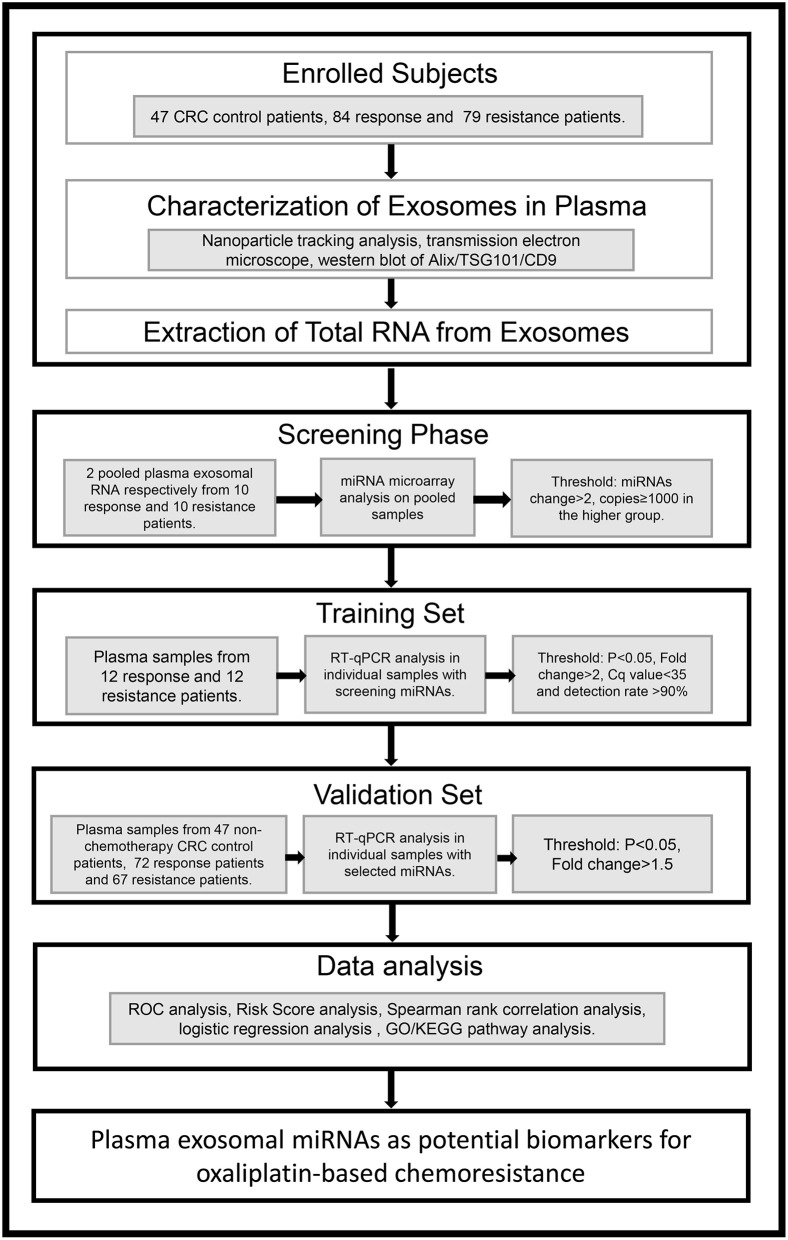
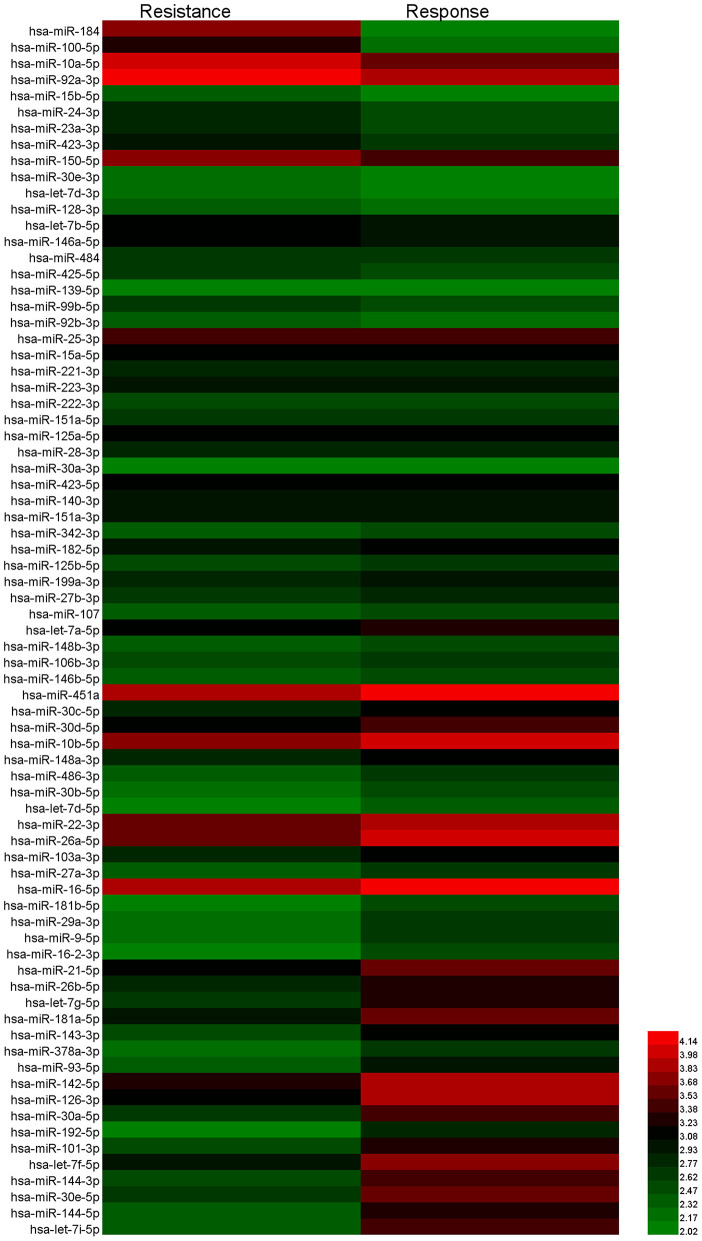
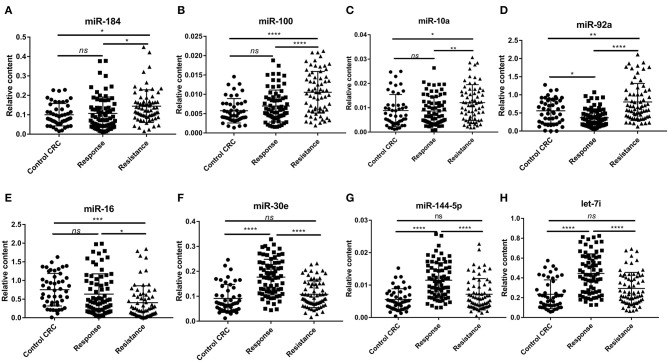
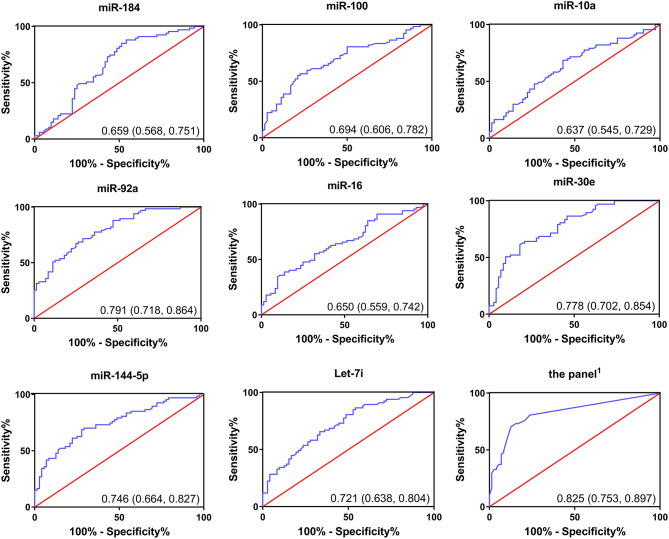
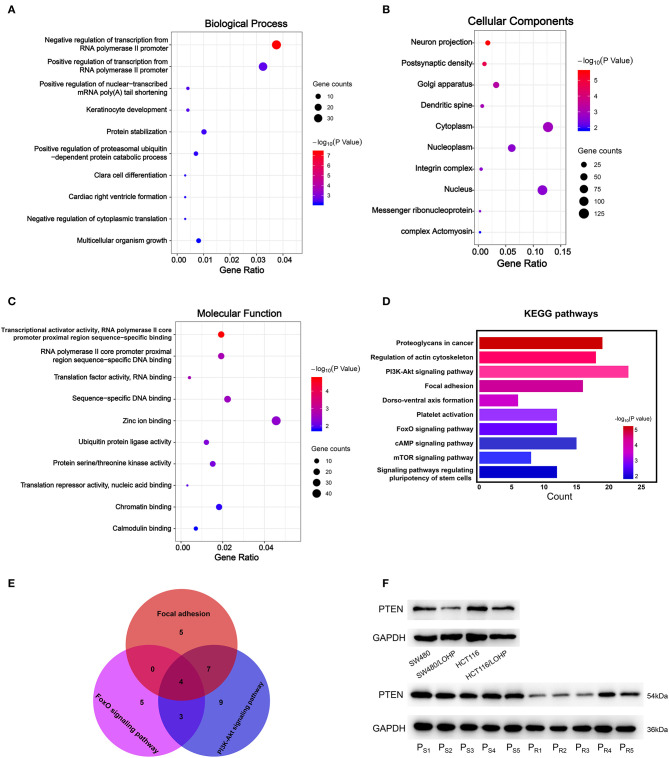
Chemotherapy is one of the most common therapies used in the treatment of colorectal cancer (CRC), but chemoresistance inevitably occurs. It is challenging to obtain an immediate and accurate diagnosis of chemoresistance. The potential of circulating exosomal miRNAs as oxaliplatin-based chemoresistant biomarkers in CRC patients was investigated in this study. Plasma exosomal miRNAs in sensitive and resistant patients were analyzed by miRNA microarray analysis, followed by verification with a quantitative reverse-transcription polymerase chain reaction (RT-qPCR) assay in two independent cohorts. The diagnostic accuracy was determined by ROC curve analysis. Logistic regression analysis and Spearman's rank correlation test were also performed. Finally, bioinformatics was used to preliminarily explore the potential molecular mechanism of the selected miRNAs in chemoresistance. miRNA microarray analysis identified four upregulated miRNAs and 20 downregulated miRNAs in chemoresistant patients compared to chemosensitive patients. Twelve markedly dysregulated miRNAs were selected for further investigation, of which six (miR-100, miR-92a, miR-16, miR-30e, miR-144-5p, and let-7i) were verified to be significantly and consistently dysregulated (>1.5-fold, < 0.05). The combination of the six miRNAs had the highest AUC (0.825, 95% CI, 0.753-0.897). The expression level of these 6 miRNAs was not correlated with tumor location, stage, or chemotherapy program. Only miR-100 was significantly upregulated in low histological grade. GO analysis and KEGG pathway analysis showed that miRNAs were related to RNA polymerase II transcription and enriched in the PI3K-AKT signaling pathway, AMPK signaling pathway, and FoxO signaling pathway. We identified a panel of plasma exosomal miRNAs, containing miR-100, miR-92a, miR-16, miR-30e, miR-144-5p, and let-7i, that could significantly distinguish chemoresistant patients from chemosensitive patients. The detection of circulating exosomal miRNAs may serve as an effective way to monitor CRC patient responses to chemotherapy. Targeting these miRNAs may also be a promising strategy for CRC treatment.
化疗是治疗结直肠癌(CRC)最常用的疗法之一,但不可避免会出现化疗耐药性。对化疗耐药性进行即时、准确的诊断具有挑战性。本研究调查了循环外泌体微小RNA(miRNA)作为CRC患者基于奥沙利铂的化疗耐药生物标志物的潜力。通过miRNA微阵列分析对敏感和耐药患者的血浆外泌体miRNA进行分析,随后在两个独立队列中用定量逆转录聚合酶链反应(RT-qPCR)检测进行验证。通过ROC曲线分析确定诊断准确性。还进行了逻辑回归分析和Spearman等级相关检验。最后,利用生物信息学初步探索所选miRNA在化疗耐药中的潜在分子机制。与化疗敏感患者相比,miRNA微阵列分析在化疗耐药患者中鉴定出4种上调的miRNA和20种下调的miRNA。选择12种明显失调的miRNA进行进一步研究,其中6种(miR-100、miR-92a、miR-16、miR-30e、miR-144-5p和let-7i)被验证为显著且一致失调(>1.5倍,<0.05)。这6种miRNA的组合具有最高的AUC(0.825,95%CI,0.753 - 0.897)。这6种miRNA的表达水平与肿瘤位置、分期或化疗方案无关。仅miR-100在低组织学分级中显著上调。基因本体(GO)分析和京都基因与基因组百科全书(KEGG)通路分析表明,miRNA与RNA聚合酶II转录相关,并在PI3K-AKT信号通路、AMPK信号通路和FoxO信号通路中富集。我们鉴定出一组血浆外泌体miRNA,包括miR-100、miR-92a、miR-16、miR-30e、miR-144-5p和let-7i,它们可以显著区分化疗耐药患者和化疗敏感患者。检测循环外泌体miRNA可能是监测CRC患者化疗反应的有效方法。针对这些miRNA也可能是CRC治疗的一种有前景的策略。