Digiacomo Graziana, Fumarola Claudia, La Monica Silvia, Bonelli Mara A, Cretella Daniele, Alfieri Roberta, Cavazzoni Andrea, Galetti Maricla, Bertolini Patrizia, Missale Gabriele, Petronini Pier Giorgio
Department of Medicine and Surgery, University of Parma, Parma, Italy.
Istituto Nazionale per l'Assicurazione contro gli Infortuni sul Lavoro (INAIL) Research, Department of Occupational and Environmental Medicine, Epidemiology and Hygiene, Rome, Italy.
Front Oncol. 2020 Sep 23;10:563249. doi: 10.3389/fonc.2020.563249. eCollection 2020.
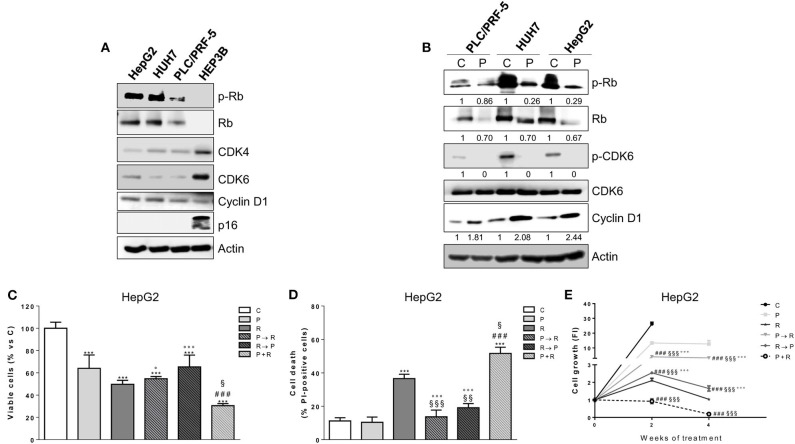
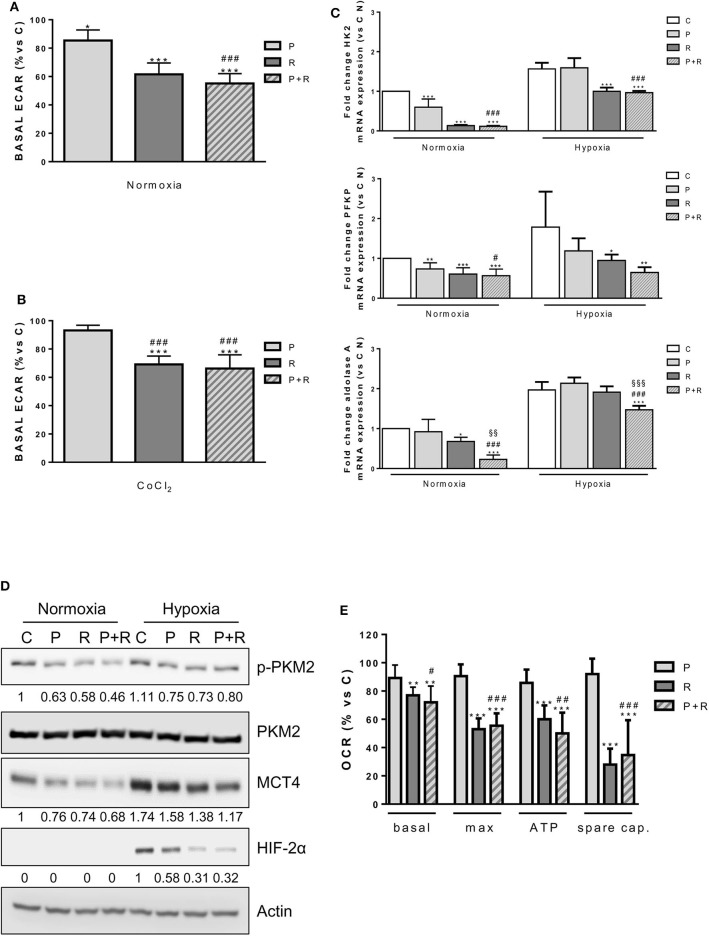
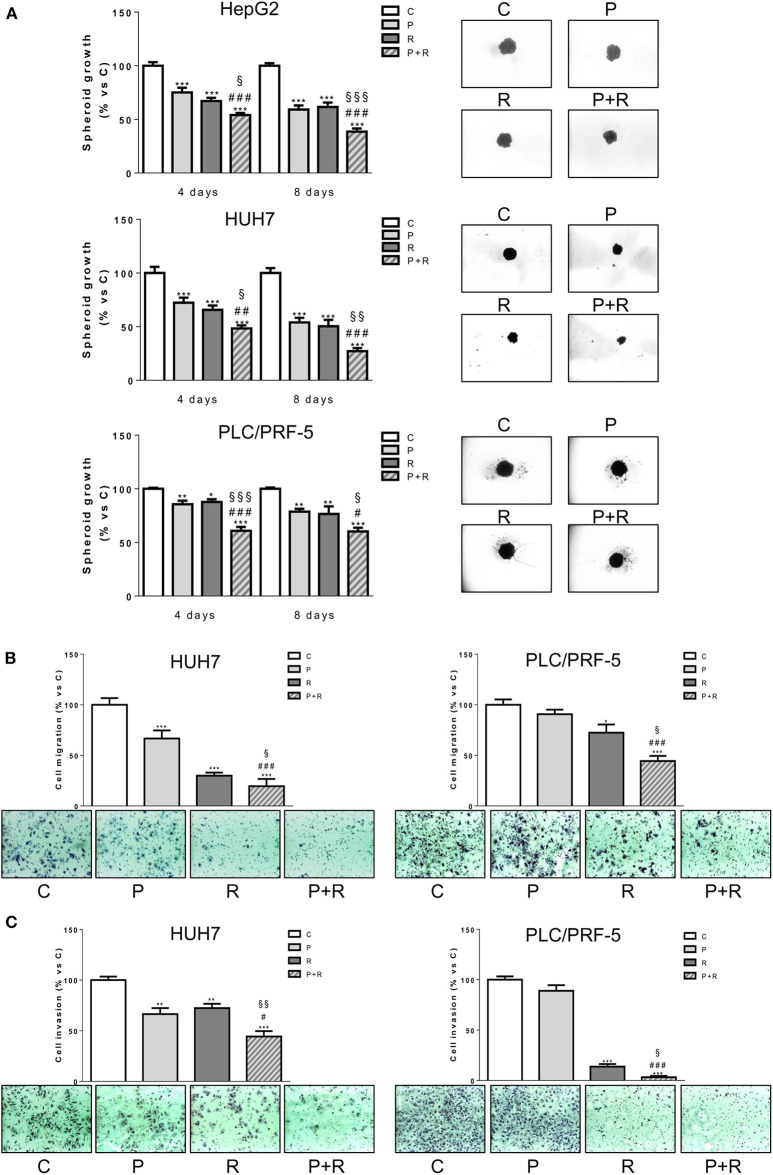
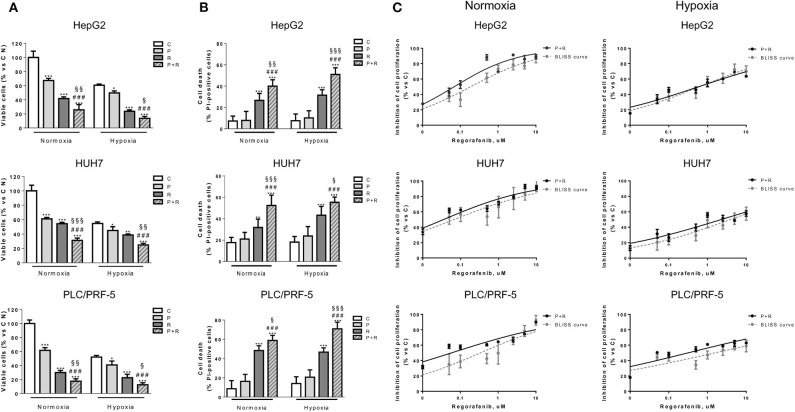
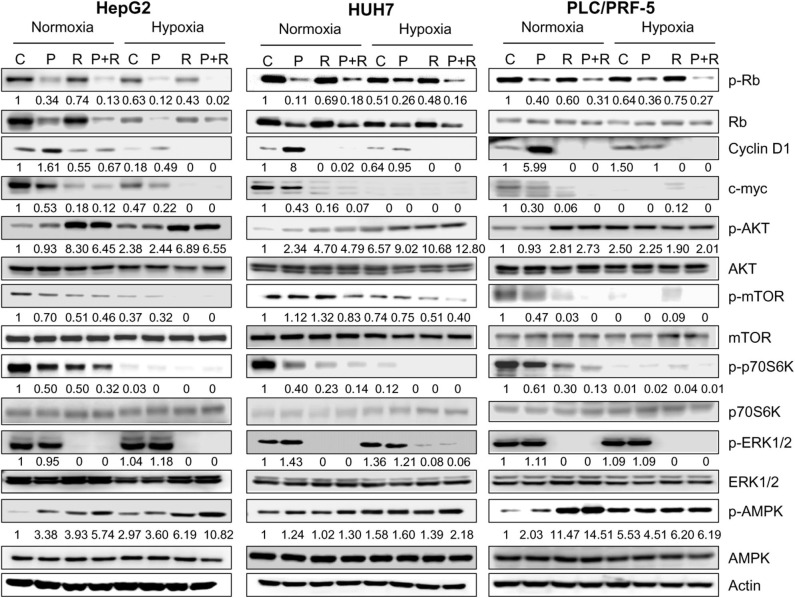
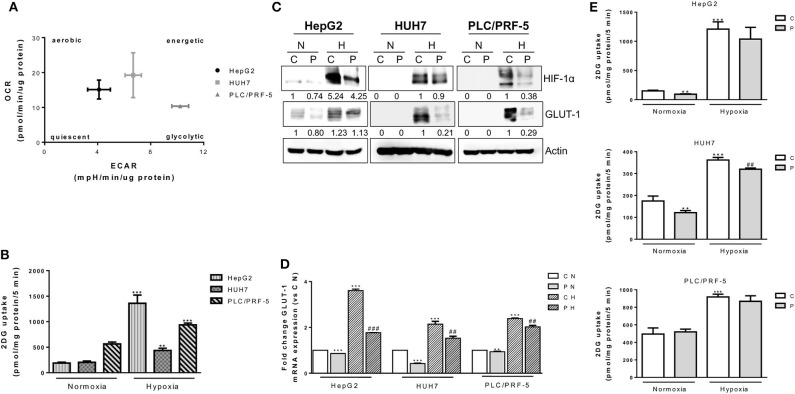
Advanced hepatocarcinoma (HCC) is an aggressive malignancy with poor prognosis and limited treatment options. Alterations of the cyclin D-CDK4/6-Rb pathway occur frequently in HCC, providing the rationale for its targeting at least in a molecular subset of HCC. In a panel of HCC cell lines, we investigated whether the CDK4/6 inhibitor palbociclib might improve the efficacy of regorafenib, a powerful multi-kinase inhibitor approved as second-line treatment for advanced HCC after sorafenib failure and currently under clinical investigation as first-line therapy in combination with immunotherapy. In Rb-proficient cells, the simultaneous drug combination, but not the sequential schedules, inhibited cell proliferation, either in short or in long-term experiments, and induced cell death more strongly than individual treatments. Moreover, the combination significantly reduced spheroid cell growth and inhibited cell migration/invasion. The superior efficacy of palbociclib plus regorafenib emerged also under hypoxia and was associated with a significant down-regulation of CDK4/6-Rb-myc and mTORC1/p70S6K signaling. Moreover, regorafenib suppressed palbociclib-induced expression of cyclin D1 contributing to the cytotoxic effects of the combination. Besides these inhibitory effects on cell viability/proliferation, palbociclib and regorafenib reduced glucose uptake, although this effect was dependent on the cell model and on the oxygen availability (normoxia or hypoxia). Palbociclib and regorafenib combination impaired glucose uptake and utilization, down-regulating basal and hypoxia-induced expression of HIF-1α, HIF-2α, GLUT-1, and MCT4 proteins as well as the activity/expression of glycolytic enzymes (HK2, PFKP, aldolase A, PKM2). In addition, regorafenib alone reduced mitochondrial respiration. The combined treatment impaired glucose metabolism and respiration without enhancing the effects of the single agents. Our findings provide pre-clinical evidence for the effectiveness of palbociclib and regorafenib combination in HCC cell models.
晚期肝癌(HCC)是一种侵袭性恶性肿瘤,预后较差且治疗选择有限。细胞周期蛋白D-CDK4/6-Rb通路的改变在HCC中频繁发生,这为至少在一部分HCC分子亚群中靶向该通路提供了理论依据。在一组HCC细胞系中,我们研究了CDK4/6抑制剂哌柏西利是否能提高瑞戈非尼的疗效。瑞戈非尼是一种强大的多激酶抑制剂,已被批准作为索拉非尼治疗失败后晚期HCC的二线治疗药物,目前正在作为一线治疗与免疫疗法联合进行临床研究。在Rb功能正常的细胞中,无论是短期还是长期实验,同时联合用药而非序贯给药方案均能抑制细胞增殖,且比单独治疗更强烈地诱导细胞死亡。此外,联合用药显著降低了球体细胞的生长,并抑制了细胞迁移/侵袭。哌柏西利联合瑞戈非尼在缺氧条件下也显示出卓越的疗效,且与CDK4/6-Rb-myc和mTORC1/p70S6K信号通路的显著下调有关。此外,瑞戈非尼抑制了哌柏西利诱导的细胞周期蛋白D1表达,这有助于联合用药产生细胞毒性作用。除了对细胞活力/增殖的这些抑制作用外,哌柏西利和瑞戈非尼还降低了葡萄糖摄取,尽管这种作用取决于细胞模型和氧供应情况(常氧或缺氧)。哌柏西利和瑞戈非尼联合用药损害了葡萄糖摄取和利用,下调了HIF-1α、HIF-2α、GLUT-1和MCT4蛋白的基础表达以及缺氧诱导表达,以及糖酵解酶(HK2、PFKP、醛缩酶A、PKM2)的活性/表达。此外,单独使用瑞戈非尼可降低线粒体呼吸作用。联合治疗损害了葡萄糖代谢和呼吸作用,且未增强单一药物的作用效果。我们的研究结果为哌柏西利和瑞戈非尼联合用药在HCC细胞模型中的有效性提供了临床前证据。