Al Theyab Ahmad, Almutairi Turki, Al-Suwaidi Abdulla M, Bendriss Ghizlane, McVeigh Clare, Chaari Ali
Premedical Division, Weill Cornell Medicine Qatar, Doha, Qatar.
Front Nutr. 2020 Sep 24;7:563605. doi: 10.3389/fnut.2020.563605. eCollection 2020.
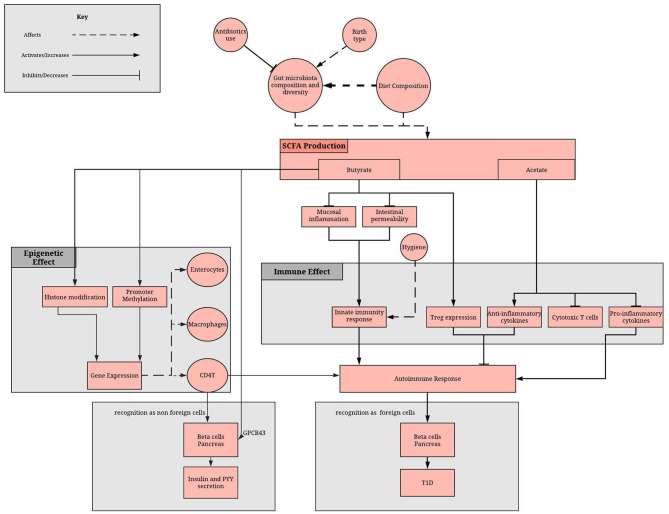
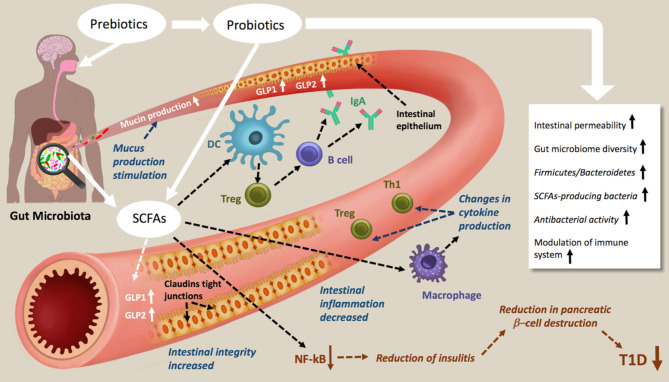
Type 1 diabetes (T1D) has increased over the past half century and has now become the second most frequent autoimmune disease in childhood and one of major public health concern worldwide. Evidence suggests that modern lifestyles and rapid environmental changes are driving factors that underlie this increase. The integration of these two factors brings about changes in food intake. This, in turn, alters epigenetic regulations of the genome and intestinal microbiota composition, which may ultimately play a role in pathogenesis of T1D. Recent evidence shows that dysbiosis of the gut microbiota is closely associated with T1D and that a dietary intervention can influence epigenetic changes associated with this disease and may modify gene expression patterns through epigenetic mechanisms. In this review focus on how a diet can shape the gut microbiome, its effect on the epigenome in T1D, and the future of T1D management by microbiome therapy.
在过去半个世纪中,1型糖尿病(T1D)发病率呈上升趋势,现已成为儿童期第二常见的自身免疫性疾病,也是全球主要的公共卫生问题之一。有证据表明,现代生活方式和快速的环境变化是导致这种发病率上升的驱动因素。这两个因素的综合作用导致了食物摄入的变化。反过来,这又改变了基因组的表观遗传调控和肠道微生物群组成,这最终可能在T1D的发病机制中发挥作用。最近的证据表明,肠道微生物群失调与T1D密切相关,饮食干预可以影响与该疾病相关的表观遗传变化,并可能通过表观遗传机制改变基因表达模式。在这篇综述中,我们将重点关注饮食如何塑造肠道微生物群、其对T1D表观基因组的影响以及通过微生物群疗法管理T1D的未来。