Vitorino Philip, Chuang Chen-Hua, Iannello Alexandre, Zhao Xi, Anderson Wade, Ferrando Ronald, Zhang Zhaomei, Madhavan Shravanthi, Karsunky Holger, Saunders Laura R
AbbVie LLC, 450 E Jamie Court, South San Francisco, CA 94080, USA.
AMGEN, 1120 Veterans Boulevard, South San Francisco, CA 94087, USA.
Transl Oncol. 2021 Jan;14(1):100883. doi: 10.1016/j.tranon.2020.100883. Epub 2020 Oct 15.
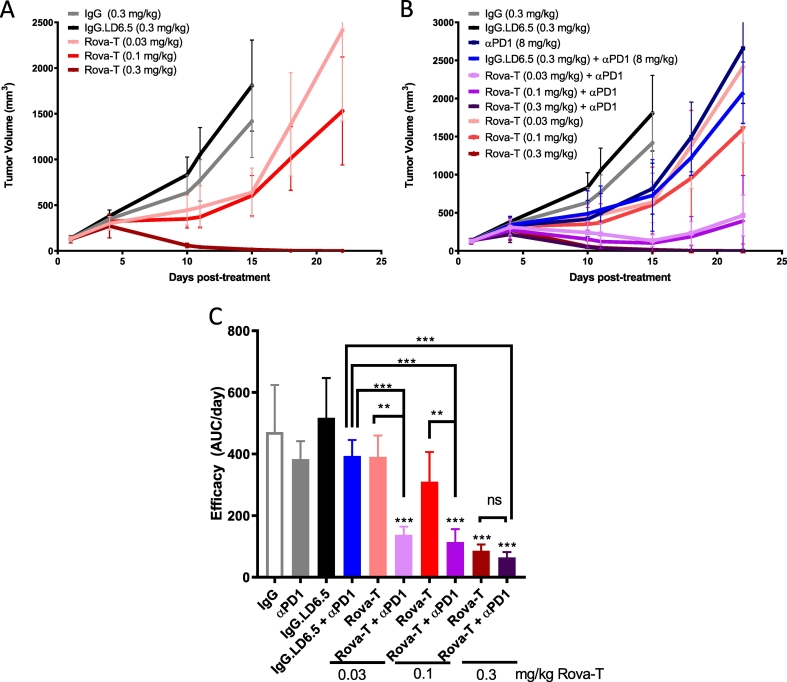
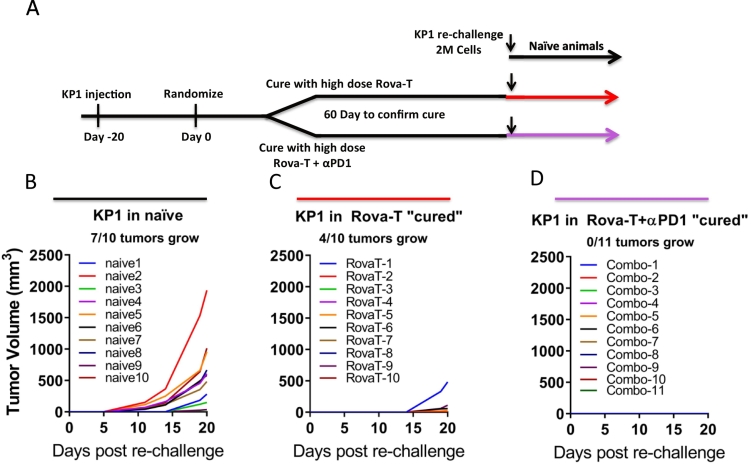
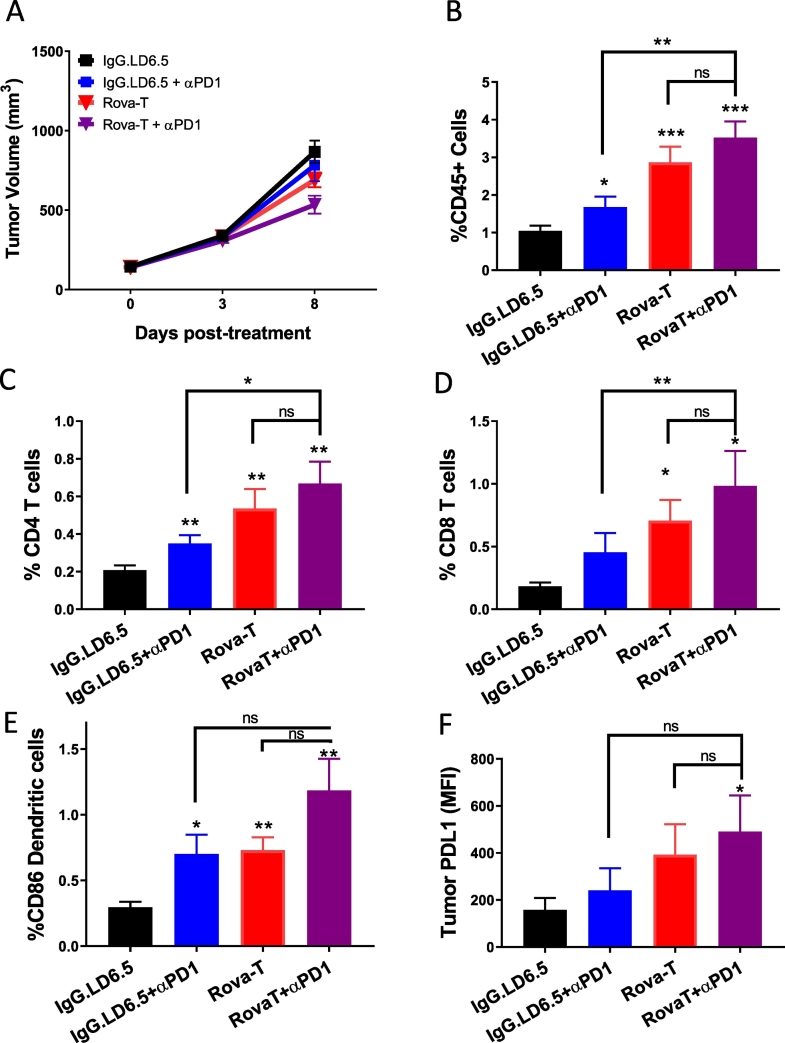
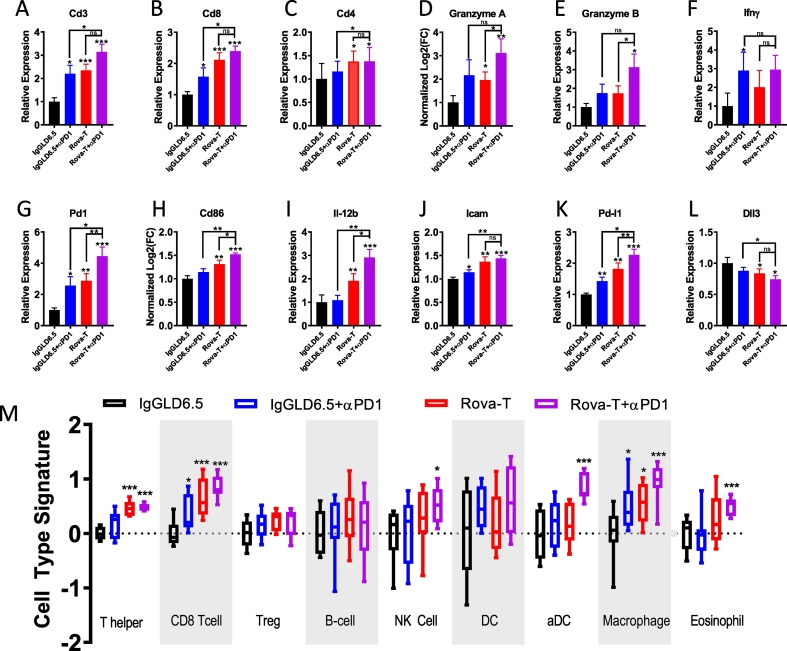
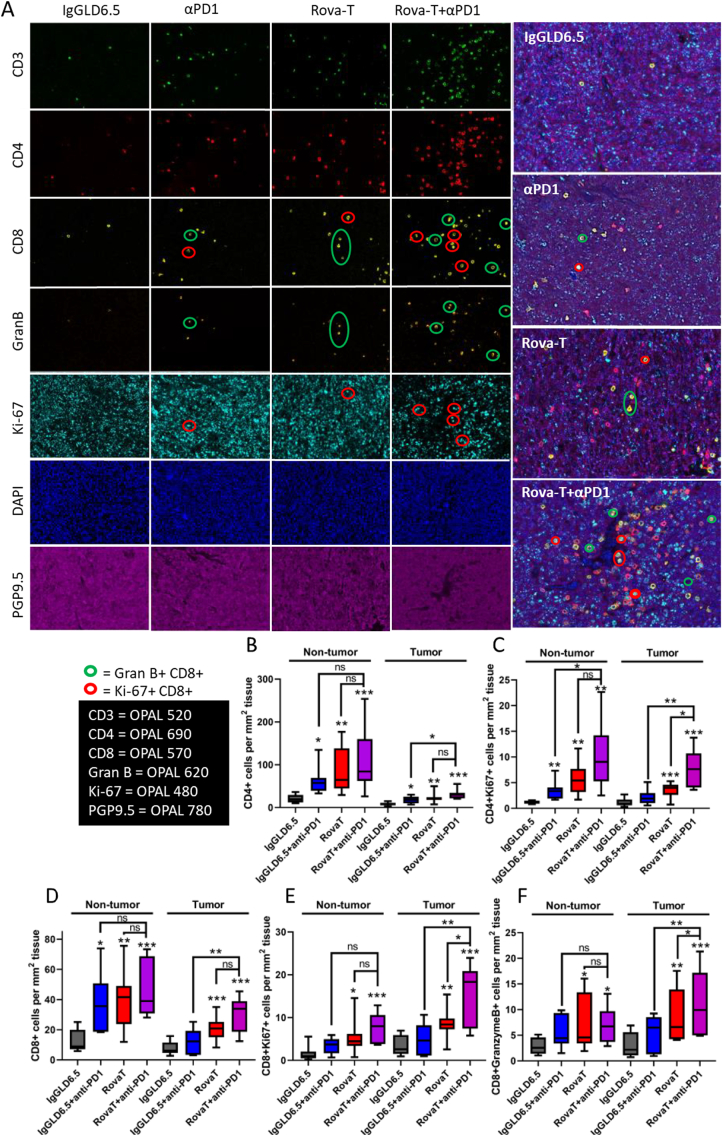
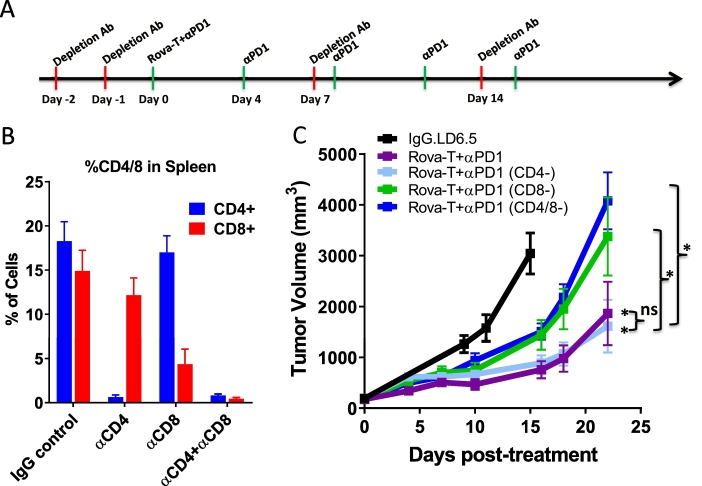
Rovalpituzumab tesirine (Rova-T) offers a targeted therapy for ~85% of SCLC patients whose tumors express DLL3, but clinical dosing is limited due to off-target toxicities. We hypothesized that a sub-efficacious dose of Rova-T combined with anti-PD1, which alone shows a clinical benefit to ~15% of SCLC patients, might elicit a novel mechanism of action and extend clinical utility. Using a pre-clinical murine SCLC tumor model that expresses Dll3 and has an intact murine immune system, we found that sub-efficacious doses of Rova-T with anti-PD1 resulted in enhanced anti-tumor activity, compared to either monotherapy. Multiplex immunohistochemistry (IHC) showed CD4 and CD8 T-cells primarily in normal tissue immediately adjacent to the tumor. Combination treatment, but not anti-PD1 alone, increased Ki67+/CD8 T-cells and Granzyme B+/CD8 in tumors by flow cytometry and IHC. Antibody depletion of T-cell populations showed CD8+ T-cells are required for in vivo anti-tumor efficacy. Whole transcriptome analysis as well as flow cytometry and IHC showed that Rova-T activates dendritic cells and increases Ccl5, Il-12, and Icam more than anti-PD1 alone. Increased tumor expression of PDL1 and MHC1 following Rova-T treatment also supports combination with anti-PD1. Mice previously treated with Rova-T + anti-PD1 withstood tumor re-challenge, demonstrating sustained anti-tumor immunity. Collectively our pre-clinical data support clinical combination of sub-efficacious Rova-T with anti-PD1 to extend the benefit of immune checkpoint inhibitors to more SCLC patients.
罗伐匹妥珠单抗替西瑞林(Rova-T)为约85%肿瘤表达DLL3的小细胞肺癌(SCLC)患者提供了一种靶向治疗方法,但由于脱靶毒性,临床给药受到限制。我们假设,亚有效剂量的Rova-T与抗PD1联合使用(抗PD1单独使用时对约15%的SCLC患者显示出临床益处)可能会引发一种新的作用机制并扩大临床应用范围。使用表达Dll3且具有完整小鼠免疫系统的临床前小鼠SCLC肿瘤模型,我们发现与单一疗法相比,亚有效剂量的Rova-T与抗PD1联合使用可增强抗肿瘤活性。多重免疫组织化学(IHC)显示CD4和CD8 T细胞主要存在于紧邻肿瘤的正常组织中。联合治疗而非单独使用抗PD1,通过流式细胞术和IHC增加了肿瘤中Ki67+/CD8 T细胞和颗粒酶B+/CD8细胞。T细胞群体的抗体清除显示CD8+ T细胞是体内抗肿瘤疗效所必需的。全转录组分析以及流式细胞术和IHC显示,Rova-T比单独使用抗PD1更能激活树突状细胞并增加Ccl5、Il-12和Icam。Rova-T治疗后肿瘤中PDL1和MHC1表达增加也支持与抗PD1联合使用。先前用Rova-T +抗PD1治疗的小鼠能够抵抗肿瘤再次攻击,证明了持续的抗肿瘤免疫力。总的来说,我们的临床前数据支持亚有效剂量的Rova-T与抗PD1的临床联合使用,以将免疫检查点抑制剂的益处扩展到更多SCLC患者。