de Graaff Danny R, van Loosdrecht Mark C M, Pronk Mario
Department of Biotechnology, Delft University of Technology, van der Maasweg 9, 2629 HZ, Delft, The Netherlands.
Royal HaskoningDHV, Laan1914 35, 3800 AL, Amersfoort, The Netherlands.
Appl Microbiol Biotechnol. 2021 Jan;105(1):379-388. doi: 10.1007/s00253-020-10947-8. Epub 2020 Oct 19.
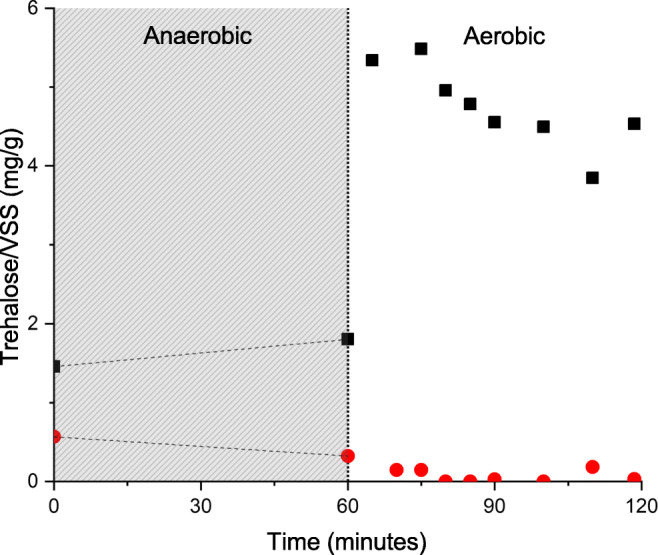
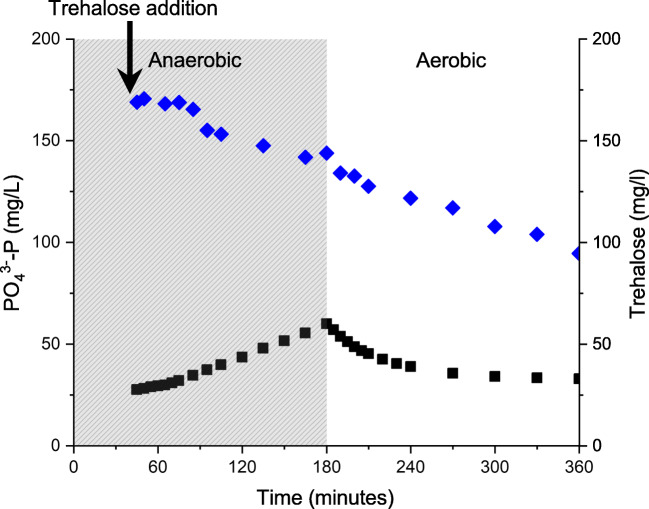
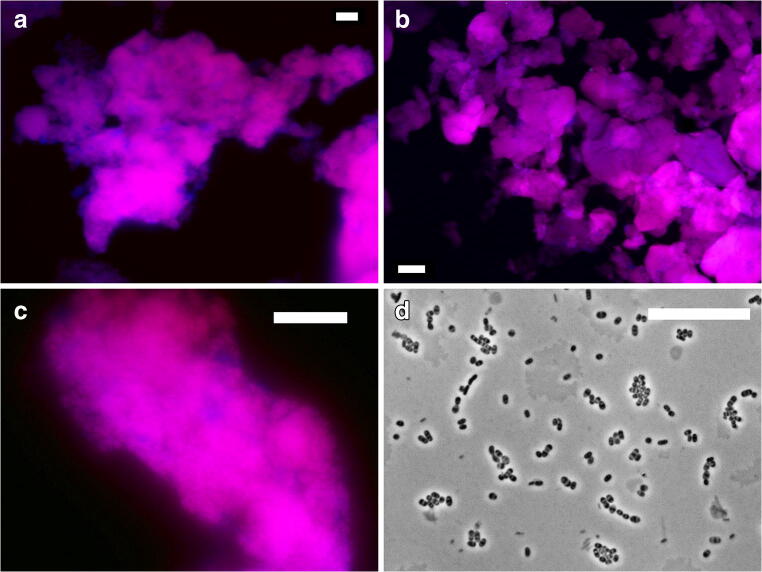
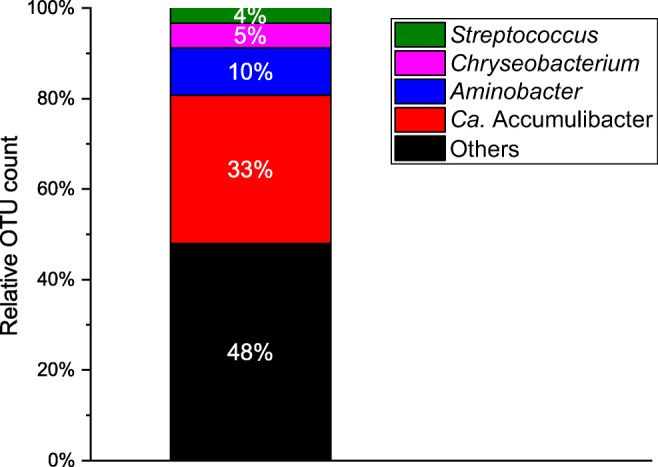
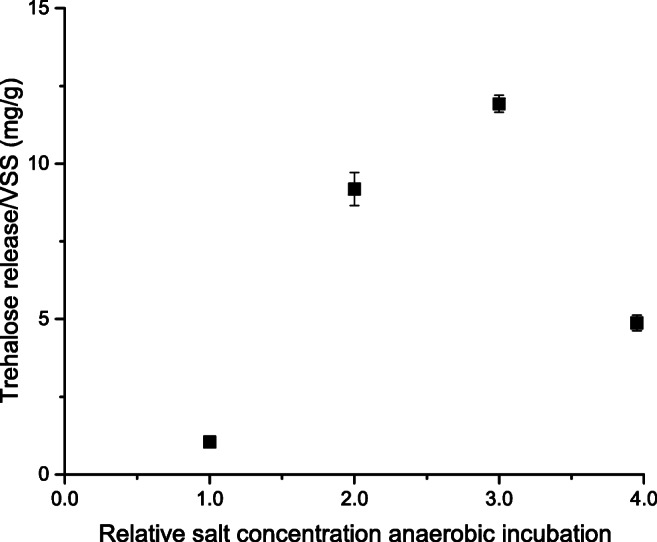
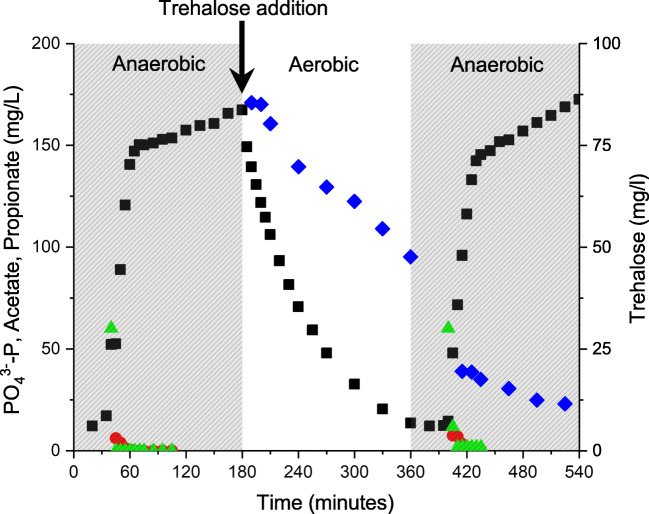
Candidatus Accumulibacter phosphatis is an important microorganism for enhanced biological phosphorus removal (EBPR). In a previous study, we found a remarkable flexibility regarding salinity, since this same microorganism could thrive in both freshwater- and seawater-based environments, but the mechanism for the tolerance to saline conditions remained unknown. Here, we identified and described the role of trehalose as an osmolyte in Ca. Accumulibacter phosphatis. A freshwater-adapted culture was exposed to a single batch cycle of hyperosmotic and hypo-osmotic shock, which led to the release of trehalose up to 5.34 mg trehalose/g volatile suspended solids (VSS). Long-term adaptation to 30% seawater-based medium in a sequencing batch reactor (SBR) gave a stable operation with complete anaerobic uptake of acetate and propionate along with phosphate release of 0.73 Pmol/Cmol, and complete aerobic uptake of phosphate. Microbial analysis showed Ca. Accumulibacter phosphatis clade I as the dominant organism in both the freshwater- and seawater-adapted cultures (> 90% presence). Exposure of the seawater-adapted culture to a single batch cycle of hyperosmotic incubation and hypo-osmotic shock led to an increase in trehalose release upon hypo-osmotic shock when higher salinity is used for the hyperosmotic incubation. Maximum trehalose release upon hypo-osmotic shock was achieved after hyperosmotic incubation with 3× salinity increase relative to the salinity in the SBR adaptation reactor, resulting in the release of 11.9 mg trehalose/g VSS. Genome analysis shows the possibility of Ca. Accumulibacter phosphatis to convert glycogen into trehalose by the presence of treX, treY, and treZ genes. Addition of trehalose to the reactor led to its consumption, both during anaerobic and aerobic phases. These results indicate the flexibility of the metabolism of Ca. Accumulibacter phosphatis towards variations in salinity. KEY POINTS: • Trehalose is identified as an osmolyte in Candidatus Accumulibacter phosphatis. • Ca. Accumulibacter phosphatis can convert glycogen into trehalose. • Ca. Accumulibacter phosphatis clade I is present and active in both seawater and freshwater.
聚磷菌(Candidatus Accumulibacter phosphatis)是强化生物除磷(EBPR)过程中的一种重要微生物。在之前的一项研究中,我们发现这种微生物在盐度方面具有显著的适应性,因为它能够在淡水和海水环境中均良好生长,但耐盐机制仍不清楚。在此,我们鉴定并描述了海藻糖作为聚磷菌(Ca. Accumulibacter phosphatis)中一种渗透调节物质的作用。将一种适应淡水的培养物暴露于一个高渗和低渗冲击的单批次循环中,这导致海藻糖释放量高达5.34毫克海藻糖/克挥发性悬浮固体(VSS)。在序批式反应器(SBR)中对30%海水培养基进行长期适应,实现了稳定运行,在厌氧阶段完全吸收乙酸盐和丙酸盐,同时释放0.73微摩尔磷/毫摩尔碳,并在好氧阶段完全吸收磷。微生物分析表明,聚磷菌(Ca. Accumulibacter phosphatis)I型分支是适应淡水和海水的培养物中的优势微生物(占比>90%)。将适应海水的培养物暴露于高渗培养和低渗冲击的单批次循环中,当高渗培养采用更高盐度时,低渗冲击会导致海藻糖释放量增加。相对于SBR适应反应器中的盐度,在盐度增加3倍的条件下进行高渗培养后,低渗冲击时海藻糖释放量达到最大值,为11.9毫克海藻糖/克VSS。基因组分析表明,聚磷菌(Ca. Accumulibacter phosphatis)有可能通过treX、treY和treZ基因的存在将糖原转化为海藻糖。向反应器中添加海藻糖会导致其在厌氧和好氧阶段均被消耗。这些结果表明聚磷菌(Ca. Accumulibacter phosphatis)的代谢对盐度变化具有适应性。要点:• 海藻糖被鉴定为聚磷菌(Candidatus Accumulibacter phosphatis)中的一种渗透调节物质。• 聚磷菌(Ca. Accumulibacter phosphatis)能够将糖原转化为海藻糖。• 聚磷菌(Ca. Accumulibacter phosphatis)I型分支在海水和淡水中均存在且活跃。