Clinical Pharmacy Unit and Research team, Department of Pharmacy, College of Health Sciences, Debre Tabor University, Debre Tabor, Amhara, Ethiopia.
Department of Pharmacology and Clinical Pharmacy, School of Pharmacy, College of Health Sciences, Addis Ababa University, Addis Ababa, Ethiopia.
Clin Appl Thromb Hemost. 2020 Jan-Dec;26:1076029620967083. doi: 10.1177/1076029620967083.
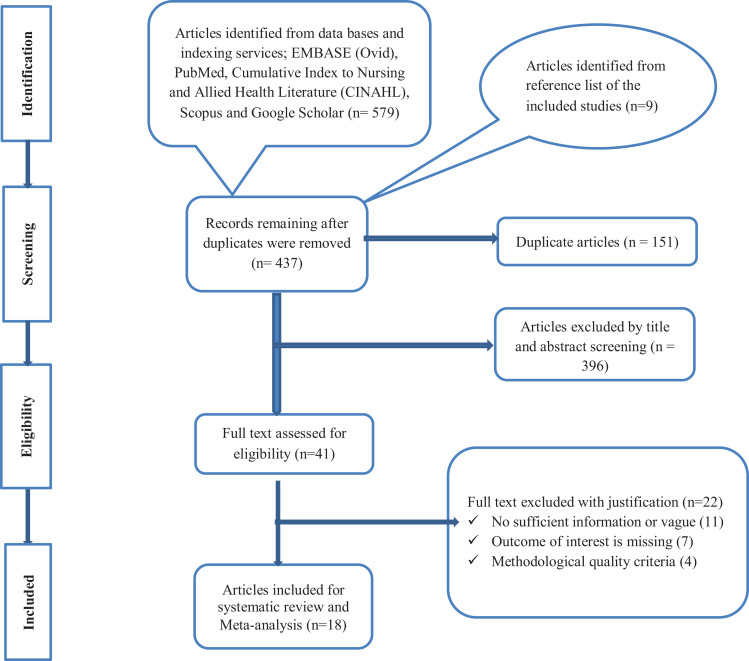
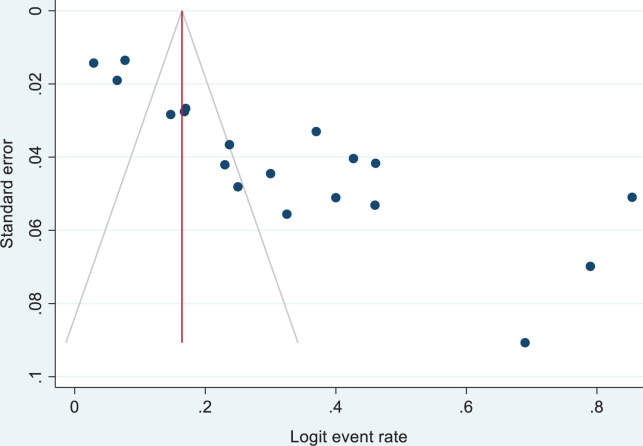
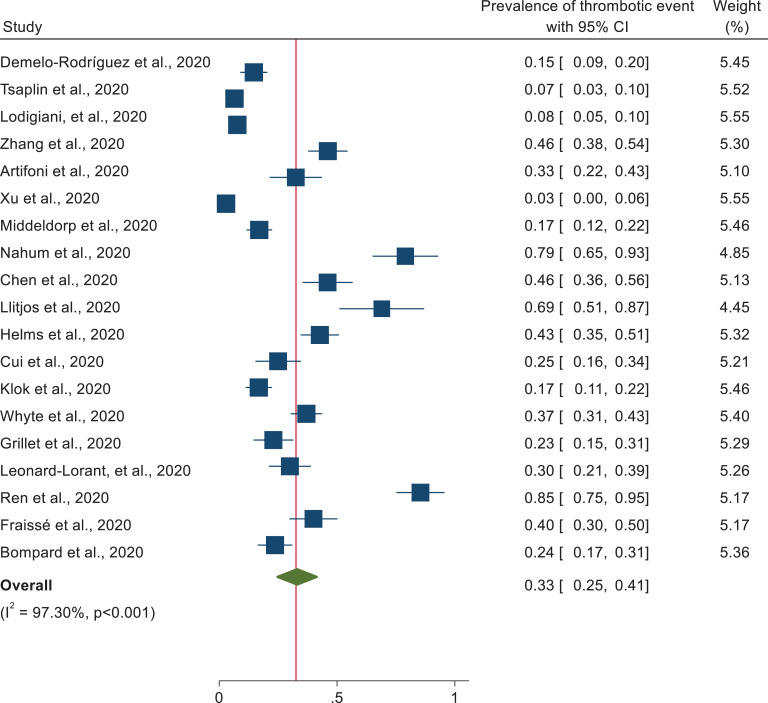
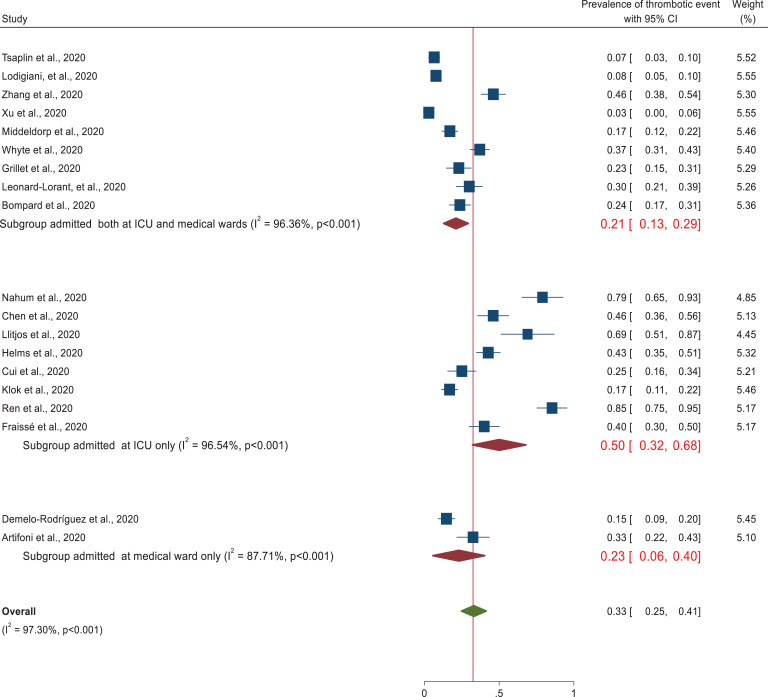
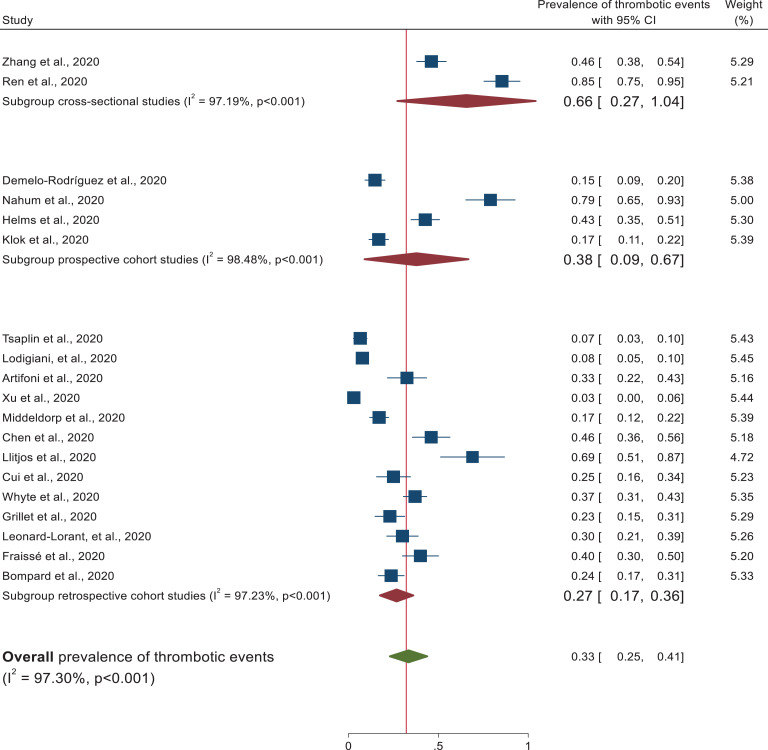
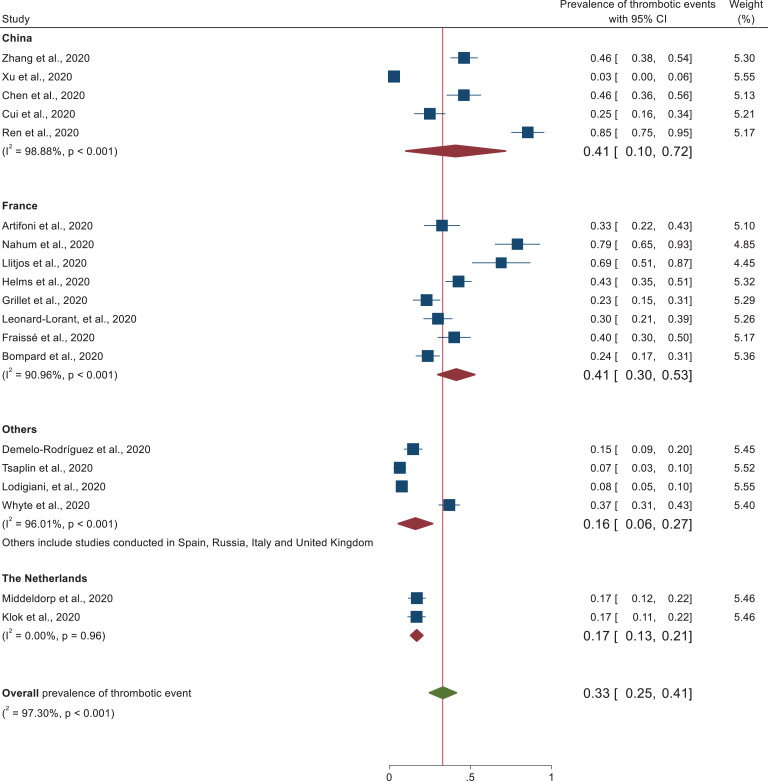
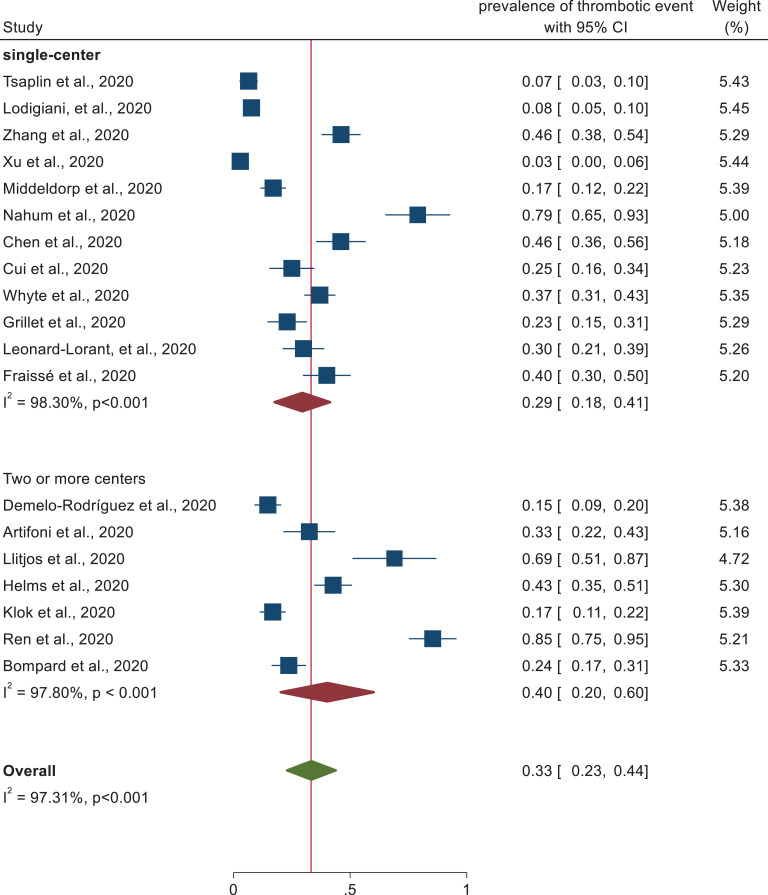
Emerging evidence shows that the recent pandemic of coronavirus disease 19 (COVID-19) is characterized by coagulation activation and endothelial dysfunction. This increases the risk of morbidity, mortality and economic loss among COVID-19 patients. Therefore, there was an urgent need to investigate the extent and risk factors of thromboembolism among COVID-19 patients. English-language based databases (PubMed, Cumulative Index to Nursing and Allied Health Literature, EMBASE, and Cochrane library) were exhaustively searched to identify studies related to prevalence of thromboembolism among hospitalized COVID-19 patients. A random-effects model was employed to estimate the pooled prevalence of thromboembolism. The pooled prevalence of thrombotic events was computed using STATA 16.0 software. Heterogeneity analysis was reported using I. A total of 19 studies with 2,520 patients with COVID-19 were included. The pooled prevalence of thrombotic events of hospitalized patients with COVID-19 was 33% (95% CI: 25-41%, I = 97.30%, p < 0.001) with a high degree of heterogeneity across studies. Elevated D-dimer hospitalized in the intensive care unit and being under mechanical ventilation were the most frequently associated factors for the development of thrombotic events. The pooled prevalence of thrombotic events in COVID-19 patients was 33%. The prevalence of thrombotic event is variables on the basis of study design and study centers. Several risk factors such as, elevated D-dimer, hospitalized in the intensive care unit and being under mechanical ventilation, were the most frequently reported risk factors identified. Therefore, healthcare professionals should consider these risk factors to optimally manage thromboembolism in COVID-19 patients.
新出现的证据表明,2019 年冠状病毒病(COVID-19)的最近大流行的特征是凝血激活和内皮功能障碍。这增加了 COVID-19 患者发病、死亡和经济损失的风险。因此,迫切需要调查 COVID-19 患者中血栓栓塞的程度和危险因素。我们彻底检索了基于英文的数据库(PubMed、护理与联合健康文献累积索引、EMBASE 和 Cochrane 图书馆),以确定与住院 COVID-19 患者血栓栓塞患病率相关的研究。采用随机效应模型估计血栓栓塞的总患病率。使用 STATA 16.0 软件计算血栓性事件的总患病率。使用 I 报告异质性分析。共纳入了 19 项研究,涉及 2520 例 COVID-19 患者。住院 COVID-19 患者血栓性事件的总患病率为 33%(95%CI:25-41%,I = 97.30%,p < 0.001),各研究之间存在高度异质性。在重症监护病房住院且接受机械通气的患者中 D-二聚体升高是最常与血栓性事件相关的因素。COVID-19 患者中血栓性事件的总患病率为 33%。血栓性事件的患病率是基于研究设计和研究中心的变量。一些危险因素,如 D-二聚体升高、在重症监护病房住院和接受机械通气,是最常报告的确定的危险因素。因此,医护人员应考虑这些危险因素,以优化 COVID-19 患者的血栓栓塞管理。