Business School, Hohai University, Nanjing 211100, China.
Office of Informatization Construction Management, Nanjing University of Finance and Economics, Nanjing 210023, China.
Int J Environ Res Public Health. 2020 Oct 15;17(20):7518. doi: 10.3390/ijerph17207518.
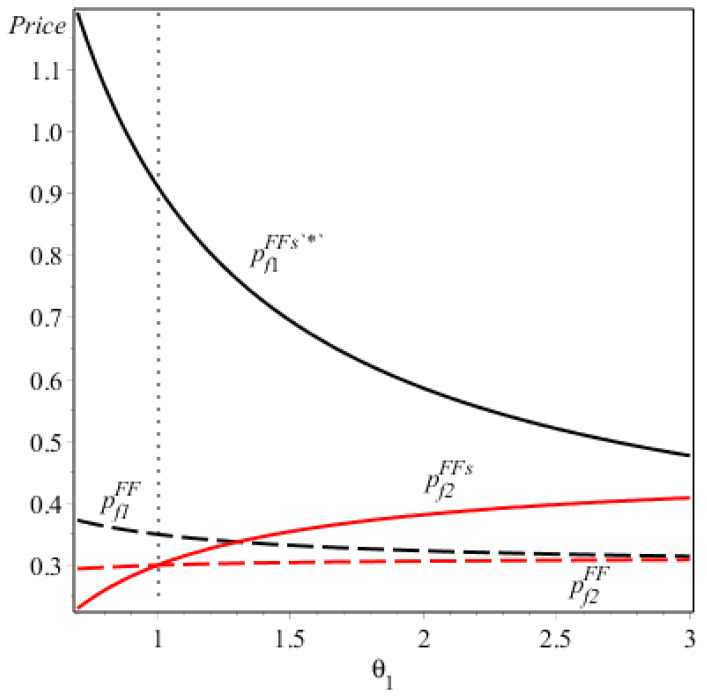
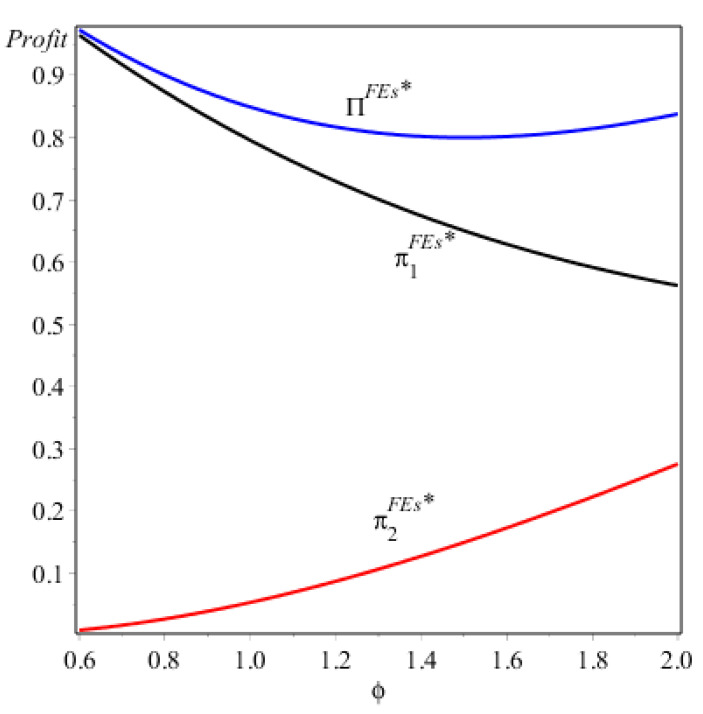
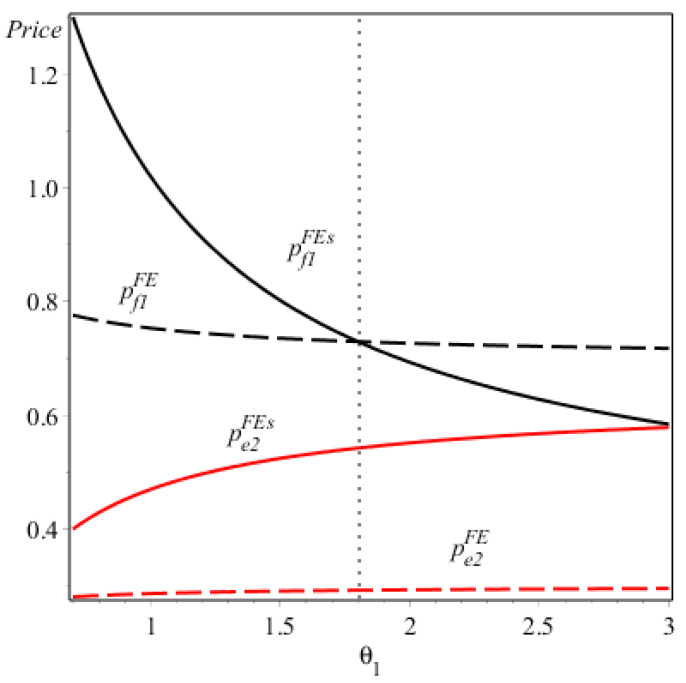
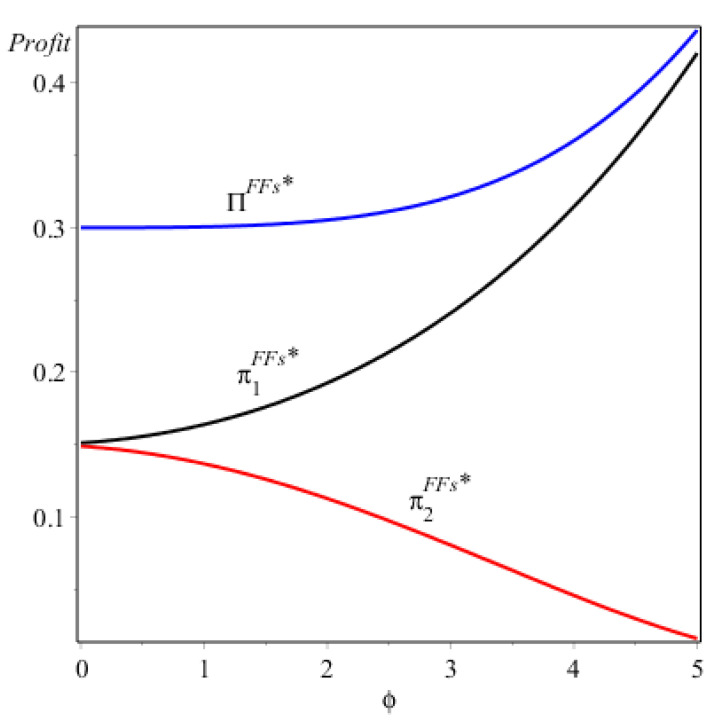
In the pressure of excessive resource consumption and serious environmental pollution, governments provide various consumer subsidies to promote sales of energy-saving vehicles, including the energy-saving fuel vehicle (FV) and the pure electric vehicle (EV) in the automobile industry. Utilizing a Hotelling model, this paper explores two competing firms' decisions on the selection of green technology innovations for vehicles, namely producing either the energy-saving FV or the pure EV, while the two vehicles are different from each other on not only the energy-saving level but also the consumer's acceptance. We further explore the impact of the government's consumer subsidy on the profits, environment, and consumer surplus. We find that the two competing firms' equilibrium selections of green technology innovations for vehicles change as the variable manufacturing cost of the pure EV varies. In particular, when the variable manufacturing cost of the pure EV is moderate, the firm with a lower technology capacity for improving the energy-saving level of the FV (i.e., firm 2) will produce the pure EV while the other firm (i.e., firm 1) produces the energy-saving FV, and the converse is not true. In this case, the decreasing variable manufacturing cost of the pure EV will benefit firm 2 and make firm 1 lose in a competing context. In particular, both firms would charge lower retail prices as the variable manufacturing cost of the EV decreases. In addition, we find that although the consumer subsidy could reduce the purchasing cost for the consumer and promote both firms to produce higher energy-saving level vehicles, a firm can still reduce its retail price under certain conditions because of the competition between the two firms. Finally, we prove that the consumer subsidy can be always beneficial to the environment, while it may hurt the consumer surplus and the firms' profits under certain conditions. The results provide suggestions for governments to adopt an appropriate consumer subsidy program from perspectives of the consumer, environment, and economy.
在资源消耗过度和环境污染严重的压力下,政府提供各种消费者补贴,以促进节能汽车的销售,包括汽车行业的节能汽车(FV)和纯电动汽车(EV)。本文利用豪泰林模型,探讨了两家竞争企业在选择车辆绿色技术创新方面的决策,即生产节能 FV 或纯电动汽车,而这两种车辆不仅在节能水平上而且在消费者接受程度上也存在差异。我们进一步探讨了政府消费者补贴对利润、环境和消费者剩余的影响。我们发现,随着纯电动汽车可变制造成本的变化,两家竞争企业对车辆绿色技术创新的均衡选择也会发生变化。特别是当纯电动汽车的可变制造成本适中时,提高 FV 节能水平技术能力较低的企业(即企业 2)将生产纯电动汽车,而另一家企业(即企业 1)则生产节能 FV,反之则不然。在这种情况下,纯电动汽车可变制造成本的降低将使企业 2 受益,使企业 1 在竞争环境中处于劣势。特别是,随着电动汽车可变制造成本的降低,两家企业都将降低零售价格。此外,我们发现,尽管消费者补贴可以降低消费者的购买成本,并促进两家企业生产更高节能水平的汽车,但在某些条件下,由于两家企业之间的竞争,企业仍可以降低其零售价格。最后,我们证明消费者补贴总是有利于环境的,而在某些条件下,它可能会损害消费者剩余和企业的利润。研究结果从消费者、环境和经济的角度为政府制定适当的消费者补贴计划提供了建议。