School of Life Sciences, Gwangju Institute of Science and Technology, Gwangju, Korea.
Korean J Intern Med. 2021 May;36(3):479-490. doi: 10.3904/kjim.2020.415. Epub 2021 Mar 18.
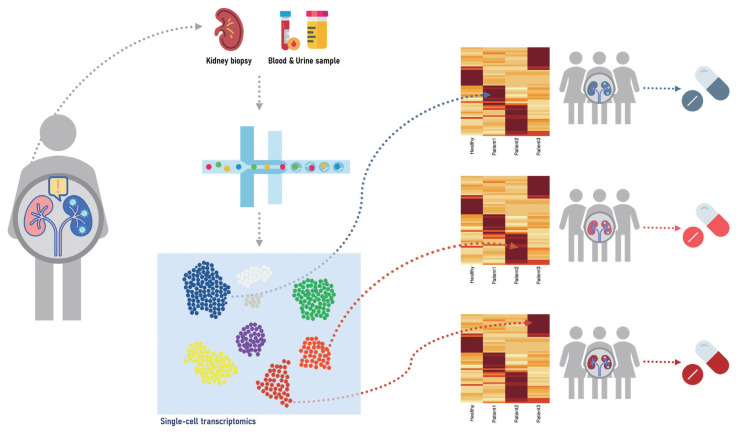
Due to the complex structure and function of the kidneys, the mechanism of kidney disease is unclear. In particular, transcriptomics approaches at the bulk level are unable to differentiate primary autonomous responses, which lead to disease development, from secondary cell non-autonomous responses. Single-cell analysis techniques can overcome the limitations inherent in the measurement of heterogeneous cell populations and clarify the central issues in kidney biology and disease pathogenesis. Single-cell sequencing helps in identifying disease-related biomarkers and pathways, stratifying patients, and deciding on appropriate treatment methods. Here we review a variety of single-cell analysis techniques and single-cell transcriptomics studies performed in the field of nephrology. Moreover, we discuss the future prospects of single-cell analysis-based precision medicine in nephrology.
由于肾脏的结构和功能复杂,肾脏疾病的发病机制尚不清楚。特别是,在批量水平上的转录组学方法无法区分导致疾病发展的原发性自主反应与继发性非自主细胞反应。单细胞分析技术可以克服对异质细胞群体进行测量所固有的局限性,并阐明肾脏生物学和疾病发病机制中的核心问题。单细胞测序有助于鉴定与疾病相关的生物标志物和途径,对患者进行分层,并决定适当的治疗方法。在这里,我们回顾了肾脏病学领域中使用的各种单细胞分析技术和单细胞转录组学研究。此外,我们还讨论了基于单细胞分析的精准医学在肾脏病学中的未来前景。