He Qien, Ying Guanghui, Fei Xiapei, Zha Chenqin, Chen Zhaogui, Bao Yishu, Long Jiaorong, Wang Zhujun, He Xuelin, Xia Min
Department of Nephrology, Beilun People's Hospital, Ning Bo.
Kidney Disease Center, The First Affiliated Hospital, College of Medicine, Zhejiang University.
Medicine (Baltimore). 2020 Oct 16;99(42):e22509. doi: 10.1097/MD.0000000000022509.
Proton pump inhibitors (PPIs) are widely prescribed and generally well tolerated but can rarely cause severe allergic reactions, such as drug rash with eosinophilia and systemic symptoms (DRESS). We report a case of DRESS and renal injury induced by PPIs, and describe the therapeutic process.
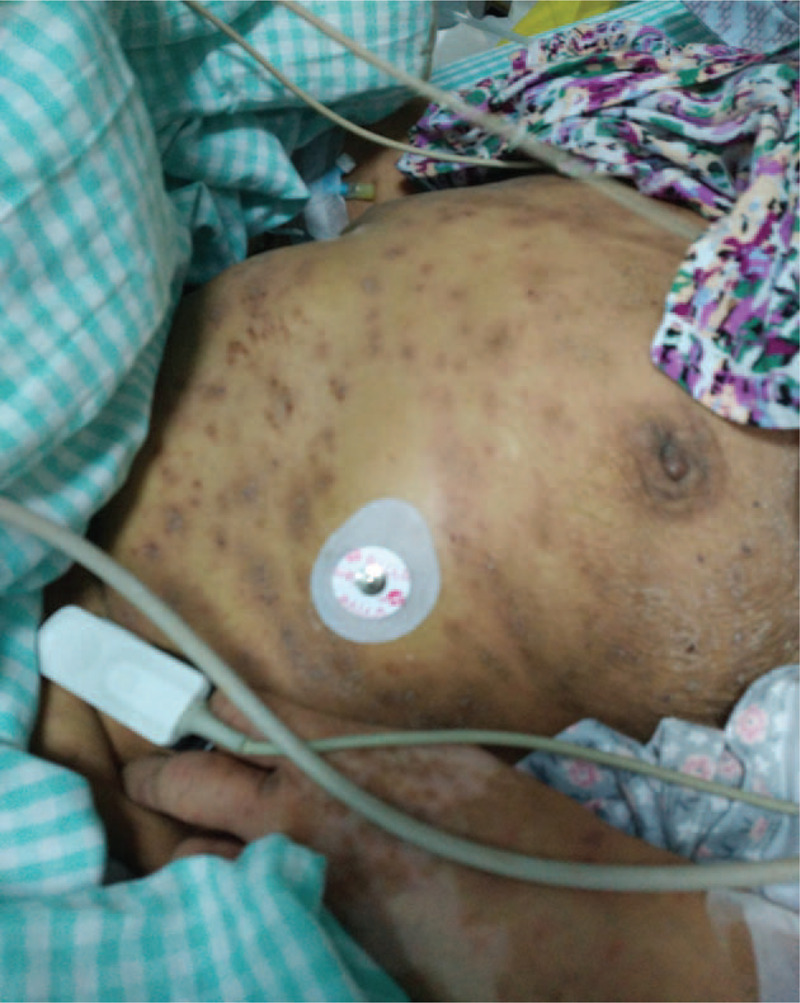
The patient was a 66-year-old female who complained of fever, pruritus, desquamation, erythema multiforme, and anuria caused by omeprazole taken for 2 weeks to treat abdominal distention.
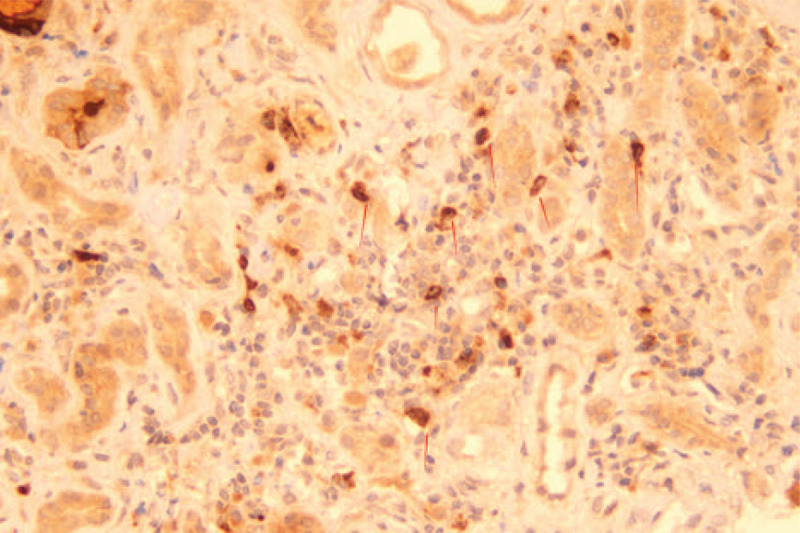
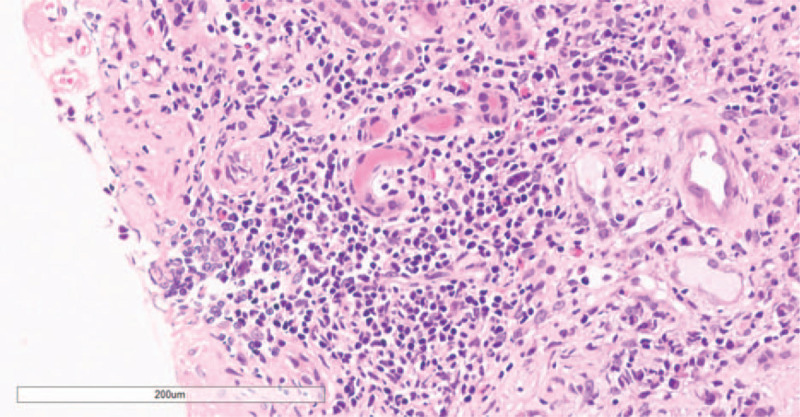
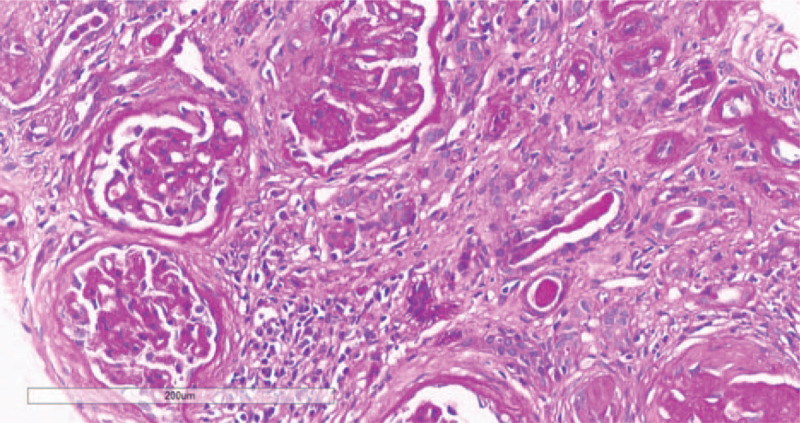
The clinical history revealed a similar episode of PPI-induced fever, eosinophilia, and acute kidney injury more than 1 year ago. The present laboratory tests revealed eosinophilia and oliguric renal failure. The renal biopsy was performed subsequently and proved the diagnosis of PPI-induced DRESS.
After the suspected diagnosis of PPI-induced DRESS, omeprazole was discontinued and methylprednisolone infusion (40 mg qd) was initiated. Because of oliguric renal failure, the patient received intermittent hemodialysis.
The patient initially responded to omeprazole discontinuation, hemodialysis, and glucocorticoids but later died from severe infection during the tapering of glucocorticoid therapy.
Clinicians should remain on high alert for potential life-threatening complications when prescribing PPIs. If unexplained renal injury develops in a patient taking a PPI, renal biopsy may help in identifying the pathogenesis and might facilitate timely intervention.
质子泵抑制剂(PPIs)被广泛应用于临床,总体耐受性良好,但极少数情况下可引发严重过敏反应,如药物性皮疹伴嗜酸性粒细胞增多和全身症状(DRESS)。我们报告1例由PPIs引起的DRESS及肾损伤病例,并描述其治疗过程。
该患者为66岁女性,因服用奥美拉唑2周治疗腹胀后出现发热、瘙痒、脱屑、多形红斑及无尿前来就诊。
临床病史显示,1年多前曾有过类似的由PPIs引起的发热、嗜酸性粒细胞增多及急性肾损伤发作。目前实验室检查显示嗜酸性粒细胞增多及少尿性肾衰竭。随后进行了肾活检,确诊为PPIs所致的DRESS。
在疑似诊断为PPIs引起的DRESS后,停用奥美拉唑,并开始静脉输注甲泼尼龙(40mg,每日1次)。由于出现少尿性肾衰竭,患者接受了间歇性血液透析。
患者最初对停用奥美拉唑、血液透析及糖皮质激素治疗有反应,但后来在糖皮质激素减量治疗期间死于严重感染。
临床医生在开具PPIs处方时应高度警惕潜在的危及生命的并发症。如果服用PPIs的患者出现不明原因的肾损伤,肾活检可能有助于明确发病机制,并可能促进及时干预。