Nebraska Center for Virology, University of Nebraska-Lincoln, Lincoln, NE 68583-0900, USA.
Department of Plant Pathology, University of Nebraska-Lincoln, Lincoln, NE 68583-0833, USA.
Viruses. 2020 Oct 16;12(10):1173. doi: 10.3390/v12101173.
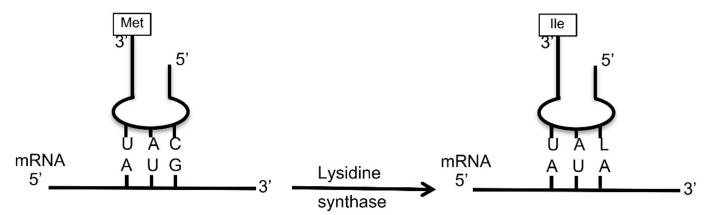
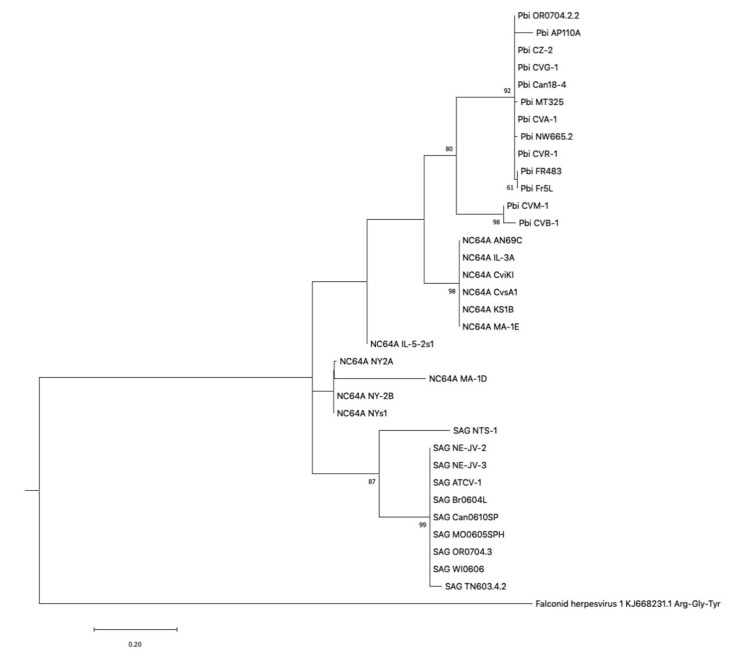
Viruses rely on their host's translation machinery for the synthesis of their own proteins. Problems belie viral translation when the host has a codon usage bias (CUB) that is different from an infecting virus due to differences in the GC content between the host and virus genomes. Here, we examine the hypothesis that chloroviruses adapted to host CUB by acquisition and selection of tRNAs that at least partially favor their own CUB. The genomes of 41 chloroviruses comprising three clades, each infecting a different algal host, have been sequenced, assembled and annotated. All 41 viruses not only encode tRNAs, but their tRNA genes are located in clusters. While differences were observed between clades and even within clades, seven tRNA genes were common to all three clades of chloroviruses, including the tRNA gene, which was found in all 41 chloroviruses. By comparing the codon usage of one chlorovirus algal host, in which the genome has been sequenced and annotated (67% GC content), to that of two of its viruses (40% GC content), we found that the viruses were able to at least partially overcome the host's CUB by encoding tRNAs that recognize AU-rich codons. Evidence presented herein supports the hypothesis that a chlorovirus tRNA cluster was present in the most recent common ancestor (MRCA) prior to divergence into three clades. In addition, the MRCA encoded a putative isoleucine lysidine synthase (TilS) that remains in 39/41 chloroviruses examined herein, suggesting a strong evolutionary pressure to retain the gene. TilS alters the anticodon of tRNA that normally recognizes AUG to then recognize AUA, a codon for isoleucine. This is advantageous to the chloroviruses because the AUA codon is 12-13 times more common in the chloroviruses than their host, further helping the chloroviruses to overcome CUB. Among large DNA viruses infecting eukaryotes, the presence of tRNA genes and tRNA clusters appear to be most common in the and, to a lesser extent, in the .
病毒依赖于宿主的翻译机制来合成自身的蛋白质。当宿主的密码子使用偏性(CUB)因宿主和病毒基因组之间的 GC 含量差异而与感染病毒不同时,病毒翻译就会出现问题。在这里,我们研究了这样一种假设,即氯病毒通过获得和选择至少部分偏向自身 CUB 的 tRNA 来适应宿主的 CUB。已经对包括三个分支的 41 种氯病毒的基因组进行了测序、组装和注释。所有 41 种病毒不仅编码 tRNA,而且它们的 tRNA 基因位于簇中。虽然在分支之间甚至在分支内观察到了差异,但有七个 tRNA 基因在所有三个氯病毒分支中都是共同的,包括在所有 41 种氯病毒中都发现的 tRNA 基因。通过比较一种已测序和注释的藻类宿主的氯病毒的密码子使用情况(GC 含量为 67%)与两种病毒的密码子使用情况(GC 含量为 40%),我们发现病毒至少可以通过编码识别 AU 丰富密码子的 tRNA 来部分克服宿主的 CUB。本文提供的证据支持这样一种假设,即在三个分支分化之前,氯病毒的 tRNA 簇就存在于最近的共同祖先(MRCA)中。此外,MRCA 编码了一种推定的异亮氨酸赖氨酸合酶(TilS),它仍然存在于本文检查的 41 种氯病毒中的 39 种中,这表明保留该基因存在强烈的进化压力。TilS 改变了通常识别 AUG 的 tRNA 的反密码子,使其能够识别 AUA,这是异亮氨酸的密码子。这对氯病毒有利,因为 AUA 密码子在氯病毒中的出现频率比它们的宿主高 12-13 倍,这进一步帮助氯病毒克服 CUB。在感染真核生物的大型 DNA 病毒中,tRNA 基因和 tRNA 簇的存在似乎在 和 中最为常见,在 中则较少见。