Koliarakis Ioannis, Athanasakis Elias, Sgantzos Markos, Mariolis-Sapsakos Theodoros, Xynos Evangelos, Chrysos Emmanuel, Souglakos John, Tsiaoussis John
Laboratory of Anatomy, School of Medicine, University of Crete, 70013 Heraklion, Greece.
Department of General Surgery, University Hospital of Heraklion, 71110 Heraklion, Greece.
Cancers (Basel). 2020 Oct 16;12(10):3011. doi: 10.3390/cancers12103011.
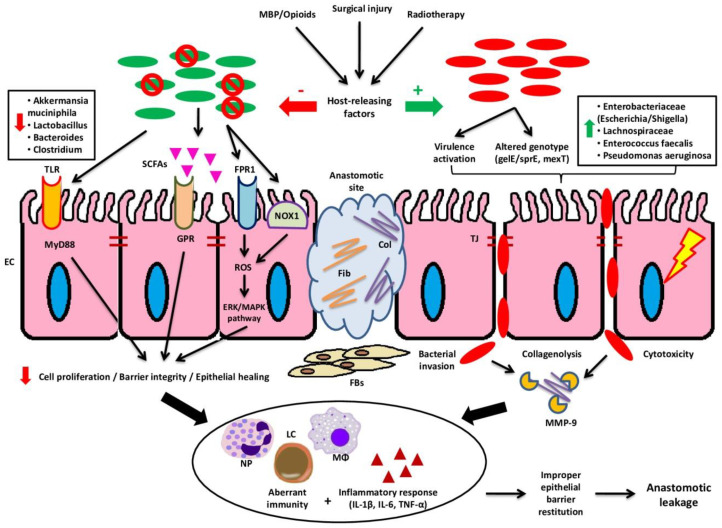
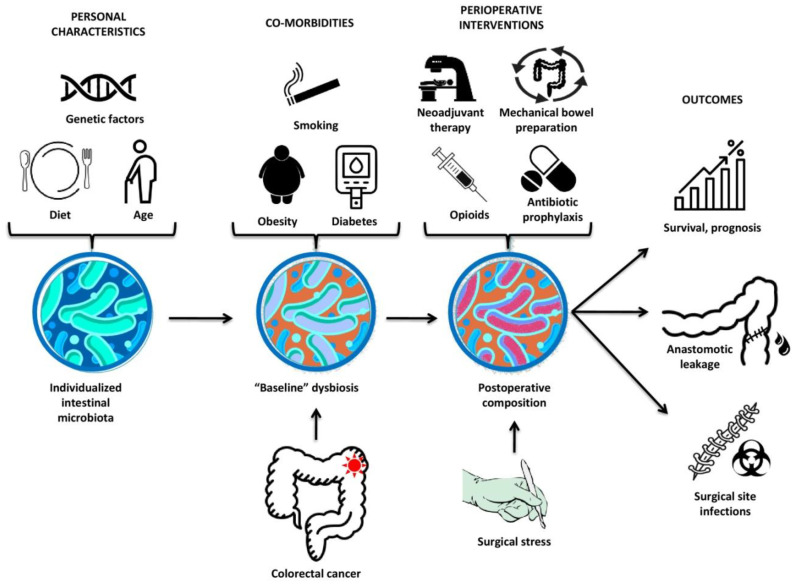
The intestinal microbiota consists of numerous microbial species that collectively interact with the host, playing a crucial role in health and disease. Colorectal cancer is well-known to be related to dysbiotic alterations in intestinal microbiota. It is evident that the microbiota is significantly affected by colorectal surgery in combination with the various perioperative interventions, mainly mechanical bowel preparation and antibiotic prophylaxis. The altered postoperative composition of intestinal microbiota could lead to an enhanced virulence, proliferation of pathogens, and diminishment of beneficial microorganisms resulting in severe complications including anastomotic leakage and surgical site infections. Moreover, the intestinal microbiota could be utilized as a possible biomarker in predicting long-term outcomes after surgical CRC treatment. Understanding the underlying mechanisms of these interactions will further support the establishment of genomic mapping of intestinal microbiota in the management of patients undergoing CRC surgery.
肠道微生物群由众多微生物物种组成,它们共同与宿主相互作用,在健康和疾病中发挥着关键作用。众所周知,结直肠癌与肠道微生物群的生态失调改变有关。显然,结直肠癌手术联合各种围手术期干预措施,主要是机械肠道准备和抗生素预防,会对微生物群产生显著影响。术后肠道微生物群组成的改变可能导致毒力增强、病原体增殖以及有益微生物减少,从而引发包括吻合口漏和手术部位感染在内的严重并发症。此外,肠道微生物群可用作预测结直肠癌手术治疗后长期预后的潜在生物标志物。了解这些相互作用的潜在机制将进一步支持在接受结直肠癌手术的患者管理中建立肠道微生物群的基因组图谱。