Department of Family and Community Medicine, University of Missouri, USA.
J Telemed Telecare. 2023 Jan;29(1):3-9. doi: 10.1177/1357633X20963893. Epub 2020 Oct 21.
The coronavirus disease 2019 (COVID-19) pandemic resulted in an unprecedented expansion in telehealth, but little is known about differential use of telehealth according to demographics, rurality, or insurance status.
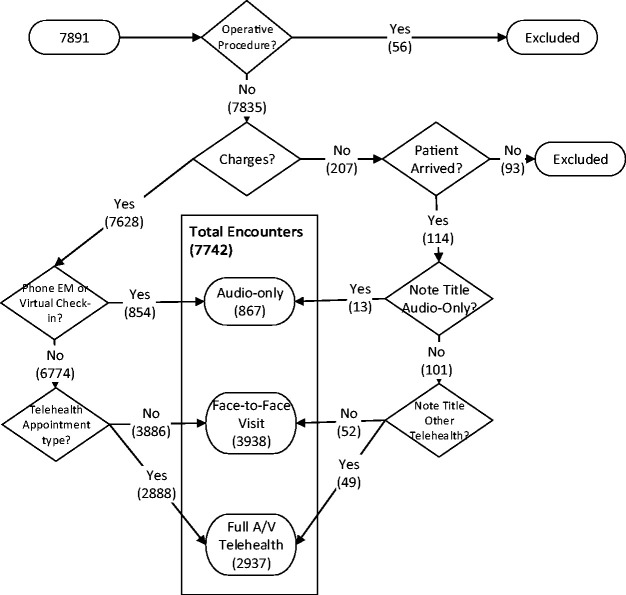
We performed a cross-sectional analysis of 7742 family medicine encounters at a single USA institution in the initial month of the COVID-19 public health emergency (PHE). We compared the demographics of those using telehealth during the PHE to those with face-to-face visits during the same time period; we also compared the demographics of those using full audio-video to those using audio-only.
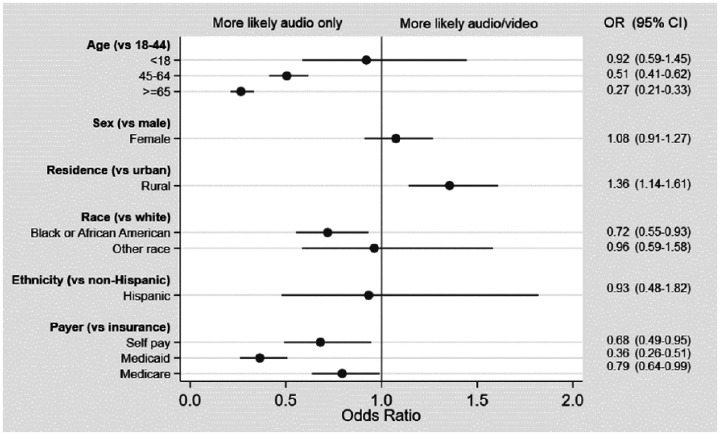
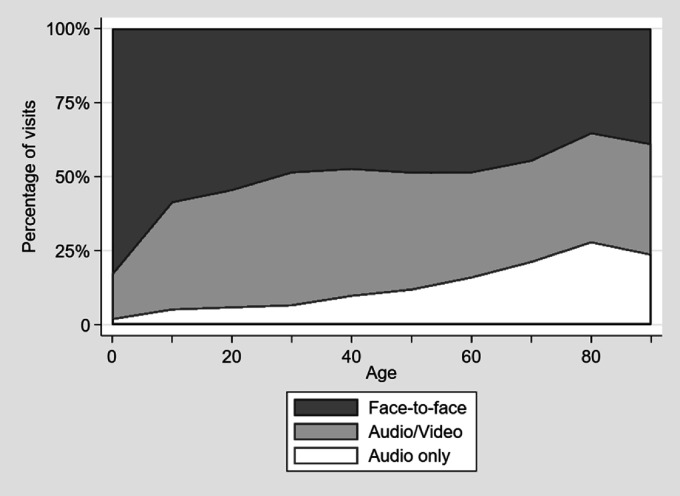
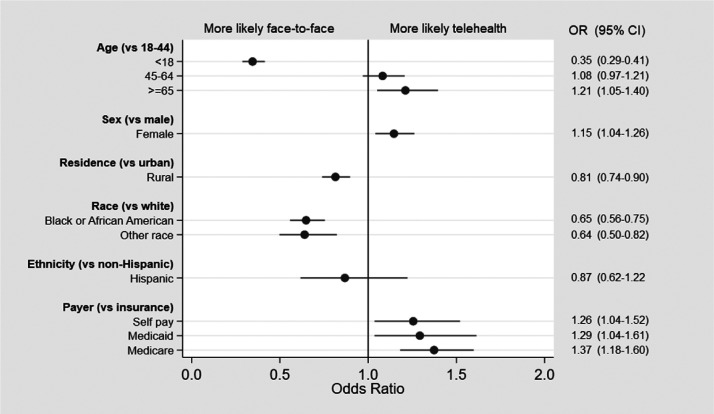
The likelihood of any telehealth visit in the first 30 days of telehealth expansion was higher for women, those age 65 years and older, self-pay patients, and those with Medicaid and Medicare as primary payers. The likelihood of a telehealth visit was reduced for rural residence and Black or other races. Among all telehealth visits, the likelihood of a full audio-video telehealth visit was reduced for patients who were older, Black, from urban areas, or who were self-pay, Medicaid, or Medicare payer status.
Significant disparities exist in telehealth use during the COVID-19 PHE by age, race, residence and payer.
2019 年冠状病毒病(COVID-19)大流行导致远程医疗空前扩张,但对于根据人口统计学、农村地区或保险状况对远程医疗的使用差异知之甚少。
我们对一家美国机构在 COVID-19 公共卫生紧急事件(PHE)的最初一个月内的 7742 次家庭医学就诊进行了横断面分析。我们将 PHE 期间使用远程医疗的患者与同一时期进行面对面就诊的患者进行了比较;我们还比较了使用全音频-视频的患者和使用音频的患者的人口统计学特征。
在远程医疗扩展的前 30 天内,任何远程医疗就诊的可能性对于女性、65 岁及以上的患者、自费患者以及以 Medicaid 和 Medicare 为主要支付者的患者更高。远程医疗就诊的可能性因农村居住和黑人和其他种族而降低。在所有远程医疗就诊中,对于年龄较大、黑人、来自城市地区或自付、 Medicaid 或 Medicare 支付者身份的患者,全音频-视频远程医疗就诊的可能性降低。
在 COVID-19 PHE 期间,远程医疗的使用存在显著的年龄、种族、居住和支付者差异。