Department of Chemical and Systems Biology, Stanford University School of Medicine, Stanford, California, USA.
Department of Microbiology and Immunology, Stanford University School of Medicine, Stanford, California, USA.
mBio. 2020 Oct 20;11(5):e01378-20. doi: 10.1128/mBio.01378-20.
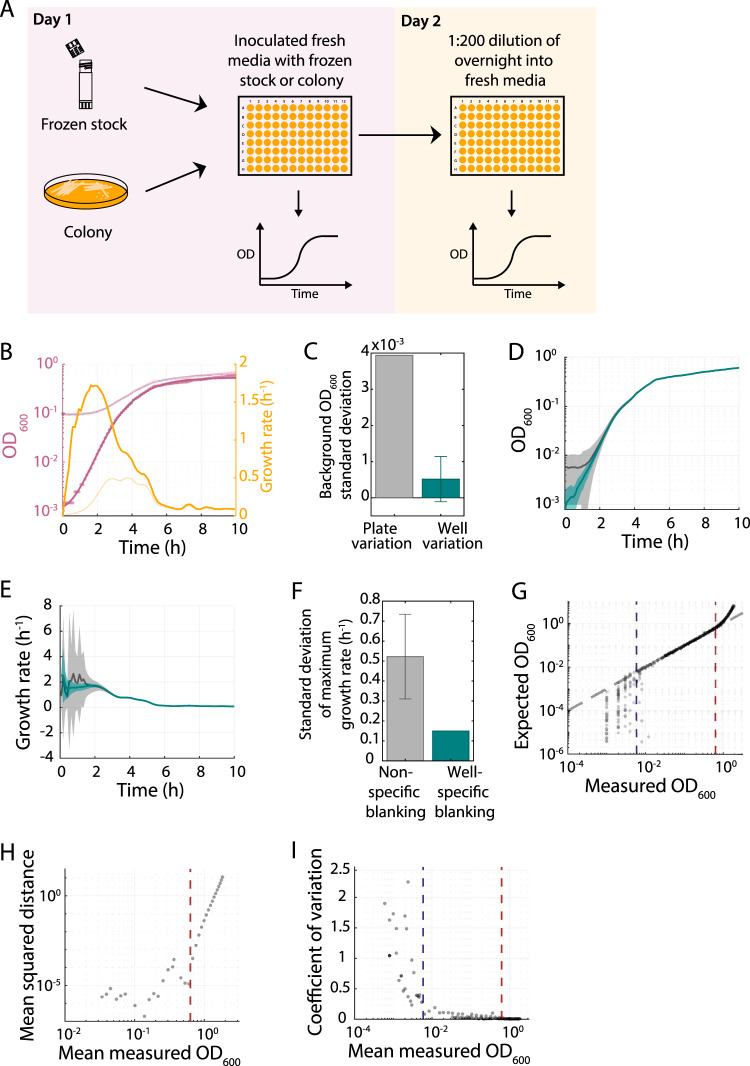
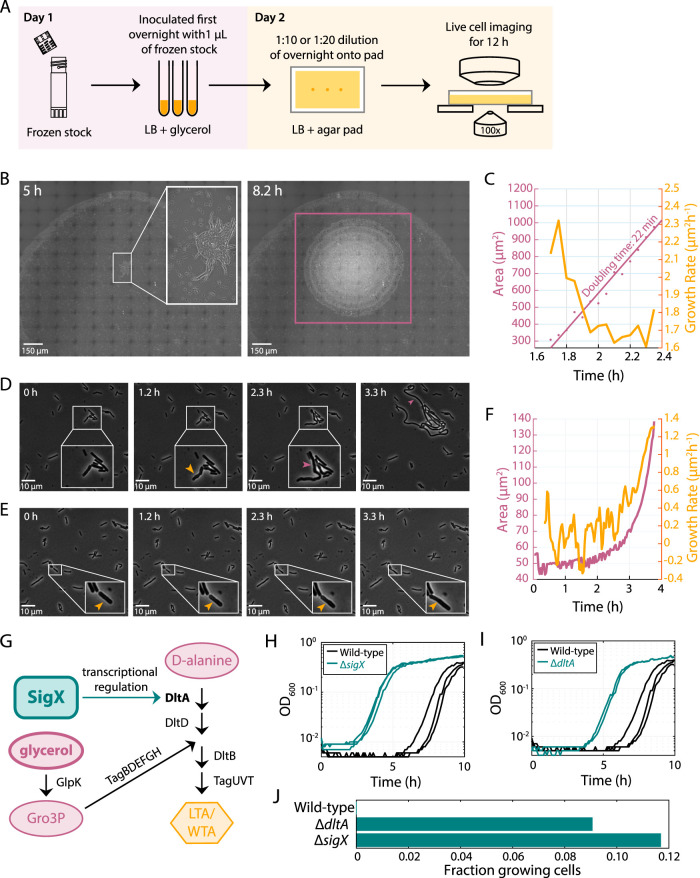
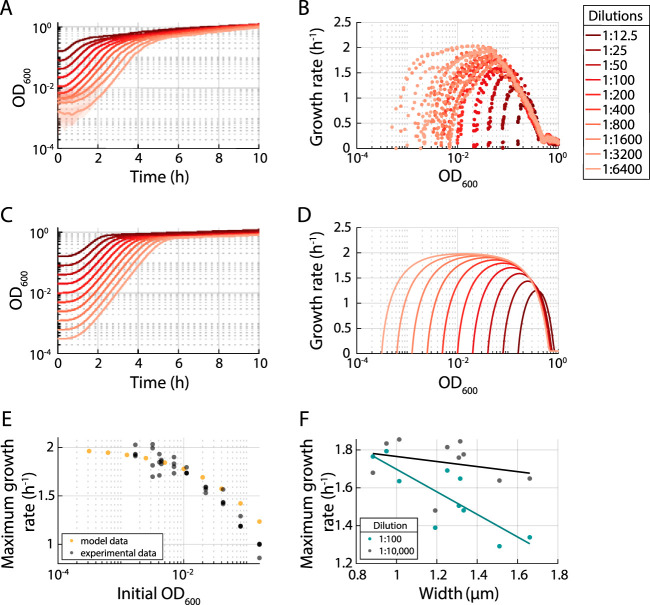
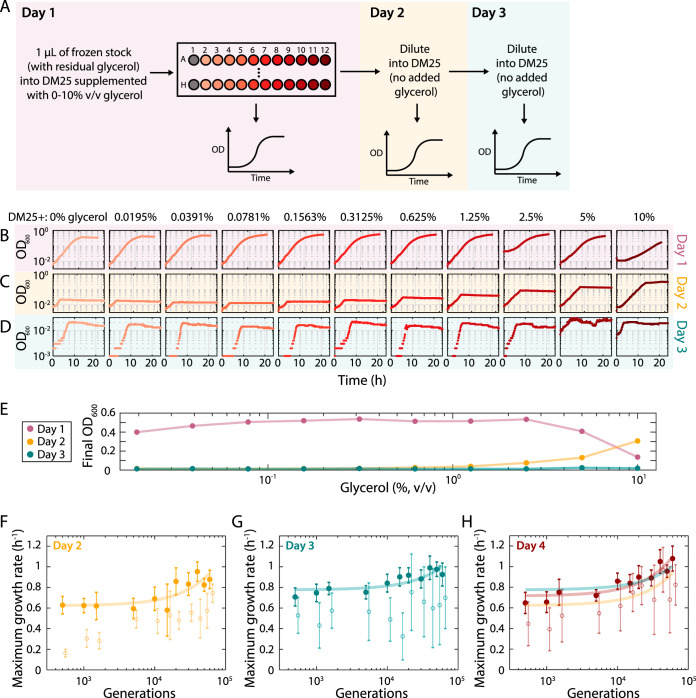
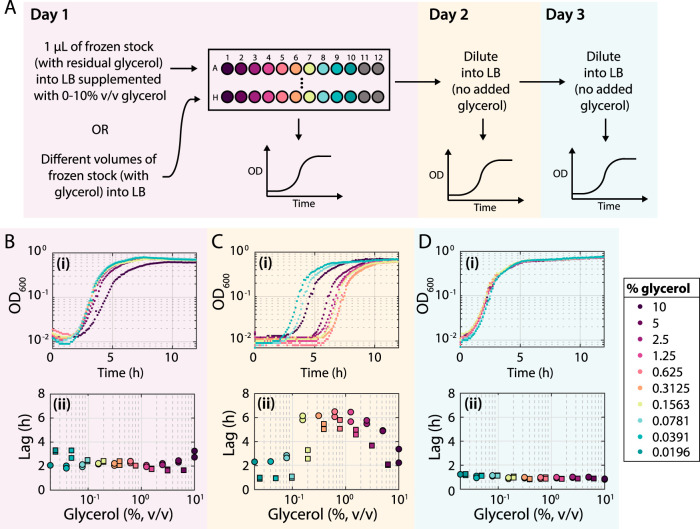
Bacterial growth under nutrient-rich and starvation conditions is intrinsically tied to the environmental history and physiological state of the population. While high-throughput technologies have enabled rapid analyses of mutant libraries, technical and biological challenges complicate data collection and interpretation. Here, we present a framework for the execution and analysis of growth measurements with improved accuracy over that of standard approaches. Using this framework, we demonstrate key biological insights that emerge from consideration of culturing conditions and history. We determined that quantification of the background absorbance in each well of a multiwell plate is critical for accurate measurements of maximal growth rate. Using mathematical modeling, we demonstrated that maximal growth rate is dependent on initial cell density, which distorts comparisons across strains with variable lag properties. We established a multiple-passage protocol that alleviates the substantial effects of glycerol on growth in carbon-poor media, and we tracked growth rate-mediated fitness increases observed during a long-term evolution of in low glucose concentrations. Finally, we showed that growth of in the presence of glycerol induces a long lag in the next passage due to inhibition of a large fraction of the population. Transposon mutagenesis linked this phenotype to the incorporation of glycerol into lipoteichoic acids, revealing a new role for these envelope components in resuming growth after starvation. Together, our investigations underscore the complex physiology of bacteria during bulk passaging and the importance of robust strategies to understand and quantify growth. How starved bacteria adapt and multiply under replete nutrient conditions is intimately linked to their history of previous growth, their physiological state, and the surrounding environment. While automated equipment has enabled high-throughput growth measurements, data interpretation and knowledge gaps regarding the determinants of growth kinetics complicate comparisons between strains. Here, we present a framework for growth measurements that improves accuracy and attenuates the effects of growth history. We determined that background absorbance quantification and multiple passaging cycles allow for accurate growth rate measurements even in carbon-poor media, which we used to reveal growth-rate increases during long-term laboratory evolution of Using mathematical modeling, we showed that maximum growth rate depends on initial cell density. Finally, we demonstrated that growth of with glycerol inhibits the future growth of most of the population, due to lipoteichoic acid synthesis. These studies highlight the challenges of accurate quantification of bacterial growth behaviors.
在营养丰富和饥饿条件下的细菌生长与种群的环境历史和生理状态密切相关。虽然高通量技术使突变文库的快速分析成为可能,但技术和生物学挑战使数据收集和解释变得复杂。在这里,我们提出了一个执行和分析生长测量的框架,与标准方法相比,该框架具有更高的准确性。使用这个框架,我们展示了从考虑培养条件和历史中得出的关键生物学见解。我们确定了在多孔板的每个孔中定量背景吸光度对于准确测量最大生长速率至关重要。使用数学建模,我们证明了最大生长速率取决于初始细胞密度,这会扭曲不同滞后特性菌株之间的比较。我们建立了一个多通道方案,缓解了在贫碳培养基中甘油对生长的显著影响,并跟踪了在低葡萄糖浓度下长期进化过程中观察到的生长率介导的适应性增加。最后,我们表明,在甘油存在下,由于大量种群被抑制,生长会导致下一次传代的长潜伏期。转座子诱变将这种表型与甘油掺入脂磷壁酸联系起来,揭示了这些包膜成分在饥饿后恢复生长中的新作用。总之,我们的研究强调了细菌在批量传代过程中的复杂生理学,以及理解和量化生长的稳健策略的重要性。在营养丰富的条件下,饥饿细菌如何适应和繁殖与它们以前的生长历史、生理状态和周围环境密切相关。虽然自动化设备使高通量生长测量成为可能,但数据解释和生长动力学决定因素的知识差距使菌株之间的比较变得复杂。在这里,我们提出了一个生长测量框架,该框架提高了准确性并减轻了生长历史的影响。我们确定背景吸光度定量和多次传代循环允许即使在贫碳培养基中也能进行准确的生长速率测量,我们使用该方法在 实验室长期进化过程中揭示了生长速率的增加。通过数学建模,我们表明最大生长速率取决于初始细胞密度。最后,我们证明了由于脂磷壁酸的合成,带有甘油的生长抑制了大部分种群的未来生长。这些研究强调了准确量化细菌生长行为的挑战。