Radiobiology Unit, Institute for Environment, Health and Safety, Belgian Nuclear Research Centre (SCK CEN), Mol 2400, Belgium.
Neural Circuit Development and Regeneration Research Group, Department of Biology, KU Leuven, Leuven 3000, Belgium.
Aging (Albany NY). 2020 Oct 20;12(20):20817-20834. doi: 10.18632/aging.104056.
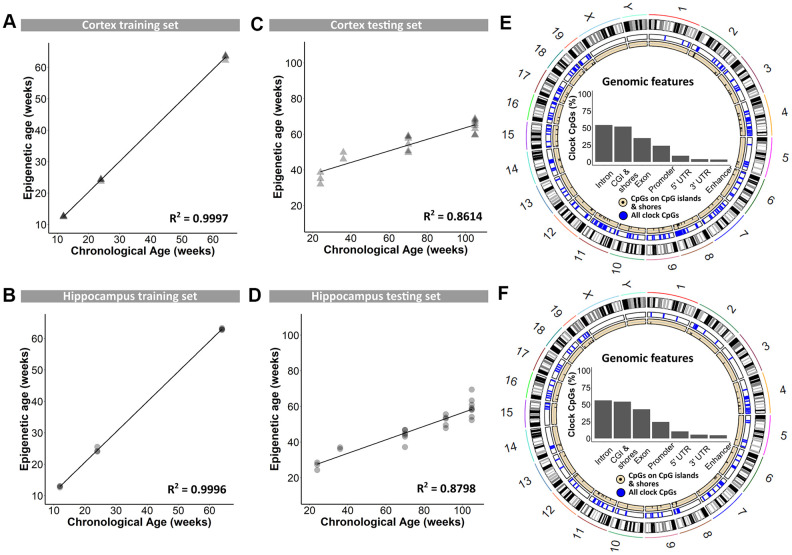
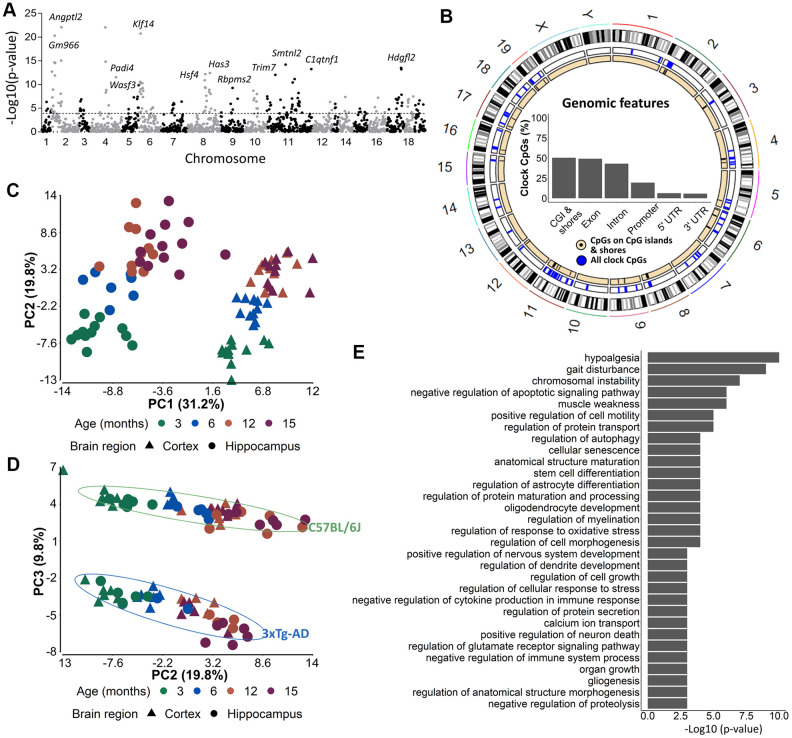
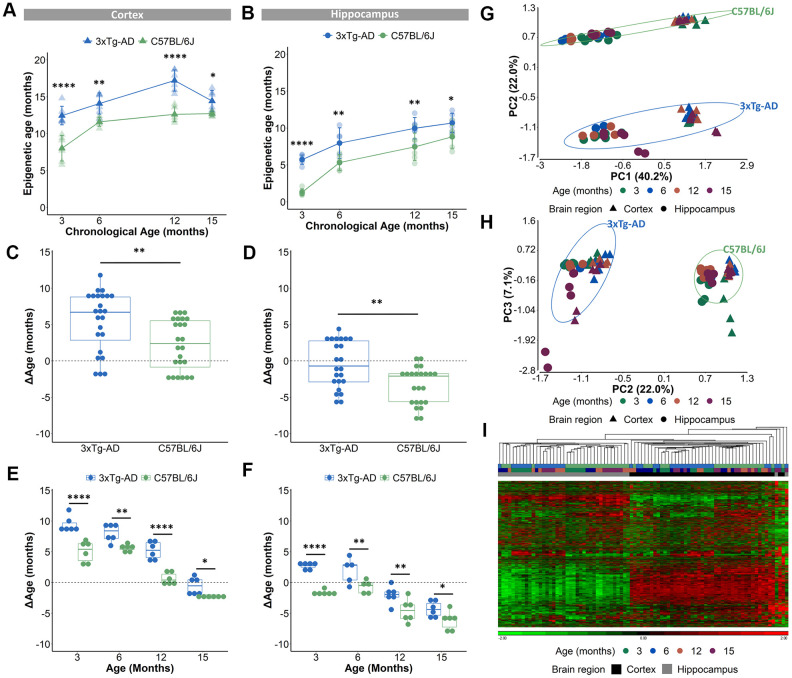
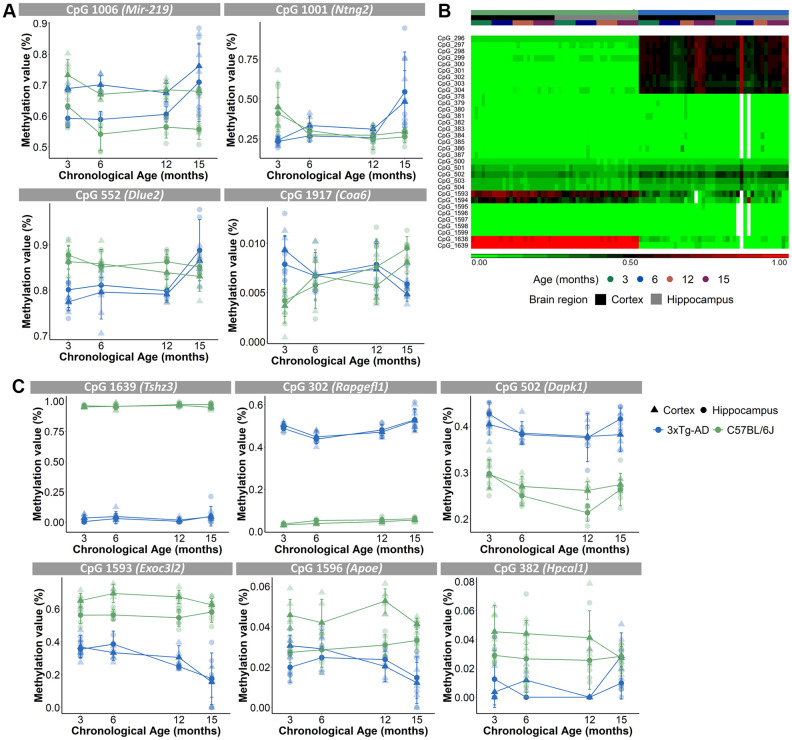
Epigenetic clocks are based on age-associated changes in DNA methylation of CpG-sites, which can accurately measure chronological age in different species. Recently, several studies have indicated that the difference between chronological and epigenetic age, defined as the age acceleration, could reflect biological age indicating functional decline and age-associated diseases. In humans, an epigenetic clock associated Alzheimer's disease (AD) pathology with an acceleration of the epigenetic age. In this study, we developed and validated two mouse brain region-specific epigenetic clocks from the C57BL/6J hippocampus and cerebral cortex. Both clocks, which could successfully estimate chronological age, were further validated in a widely used mouse model for AD, the triple transgenic AD (3xTg-AD) mouse. We observed an epigenetic age acceleration indicating an increased biological age for the 3xTg-AD mice compared to non-pathological C57BL/6J mice, which was more pronounced in the cortex as compared to the hippocampus. Genomic region enrichment analysis revealed that age-dependent CpGs were enriched in genes related to developmental, aging-related, neuronal and neurodegenerative functions. Due to the limited access of human brain tissues, these epigenetic clocks specific for mouse cortex and hippocampus might be important in further unravelling the role of epigenetic mechanisms underlying AD pathology or brain aging in general.
表观遗传时钟是基于 CpG 位点的 DNA 甲基化与年龄相关的变化,它可以准确地测量不同物种的实际年龄。最近,有几项研究表明,实际年龄与表观遗传年龄之间的差异,即年龄加速,可以反映生物年龄,表明功能下降和与年龄相关的疾病。在人类中,与阿尔茨海默病(AD)病理相关的表观遗传时钟与表观遗传年龄的加速有关。在这项研究中,我们从 C57BL/6J 海马体和大脑皮层中开发并验证了两种特定于小鼠大脑区域的表观遗传时钟。这两个时钟都可以成功地估计实际年龄,并在广泛使用的 AD 小鼠模型,即三转基因 AD(3xTg-AD)小鼠中得到进一步验证。我们观察到表观遗传年龄的加速,表明与无病理的 C57BL/6J 小鼠相比,3xTg-AD 小鼠的生物年龄增加,而在皮层中的表现比海马体更为明显。基因组区域富集分析表明,年龄相关的 CpG 富集在与发育、衰老相关、神经元和神经退行性功能相关的基因中。由于人类脑组织的获取有限,这些特定于小鼠皮层和海马体的表观遗传时钟可能在进一步揭示 AD 病理或大脑衰老的表观遗传机制的作用方面具有重要意义。