IFOM, the FIRC Institute of Molecular Oncology, via Adamello 16, 20139, Milan, Italy.
Dipartimento di Oncologia ed Emato-Oncologia, Università degli Studi di Milano, Via Festa del Perdono 7, Milan, 20122, Italy.
Nat Commun. 2020 Oct 20;11(1):5297. doi: 10.1038/s41467-020-19139-4.
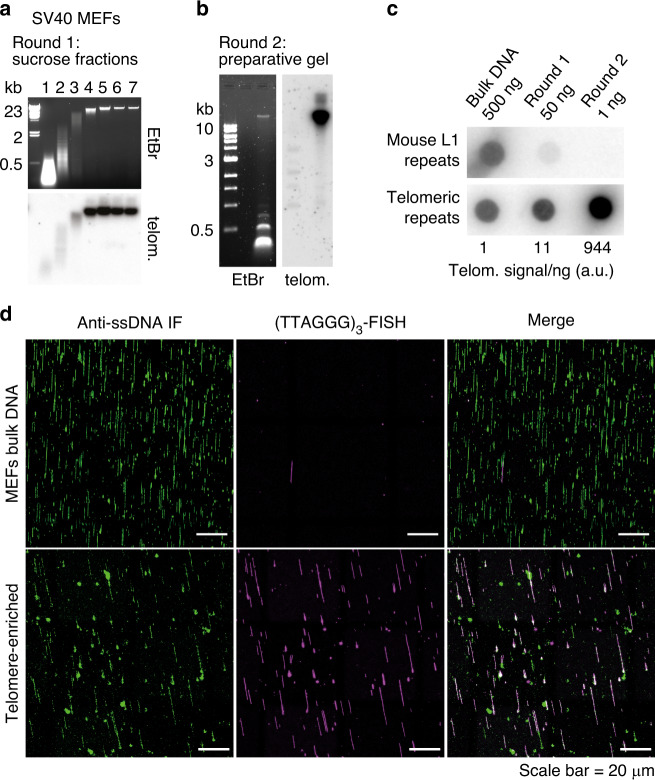
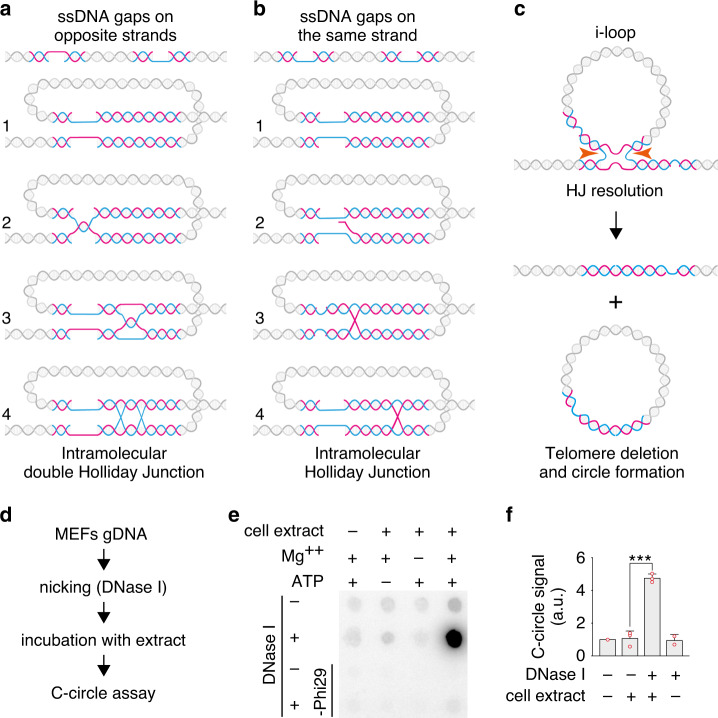
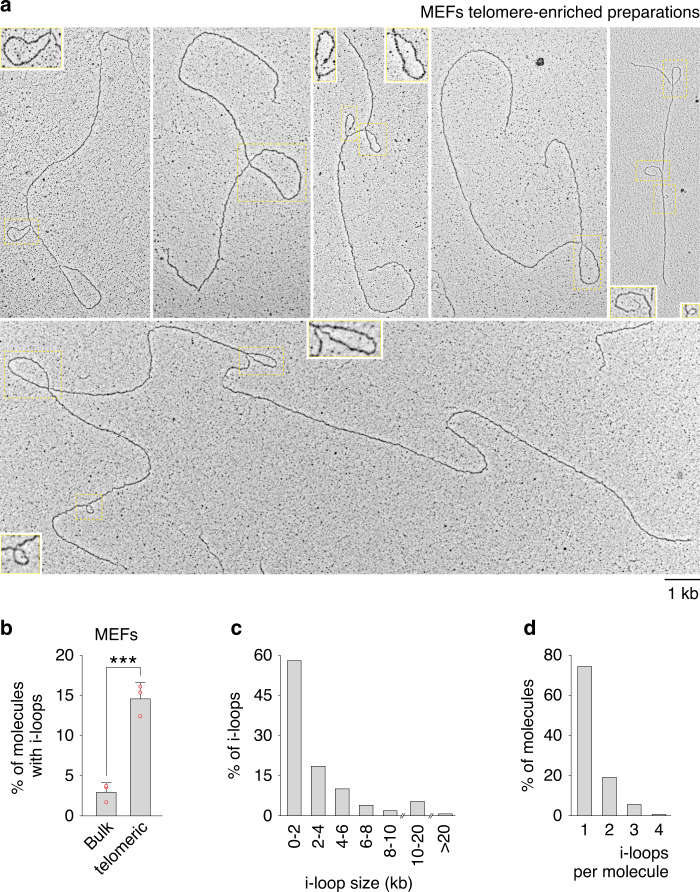
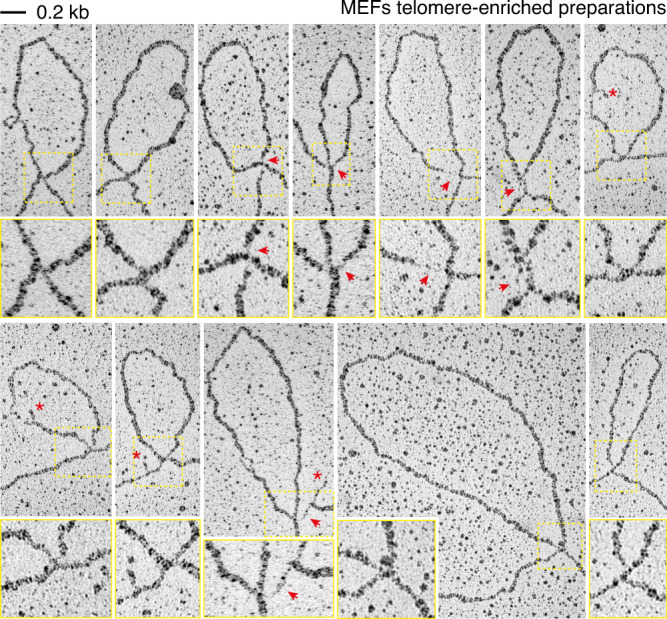
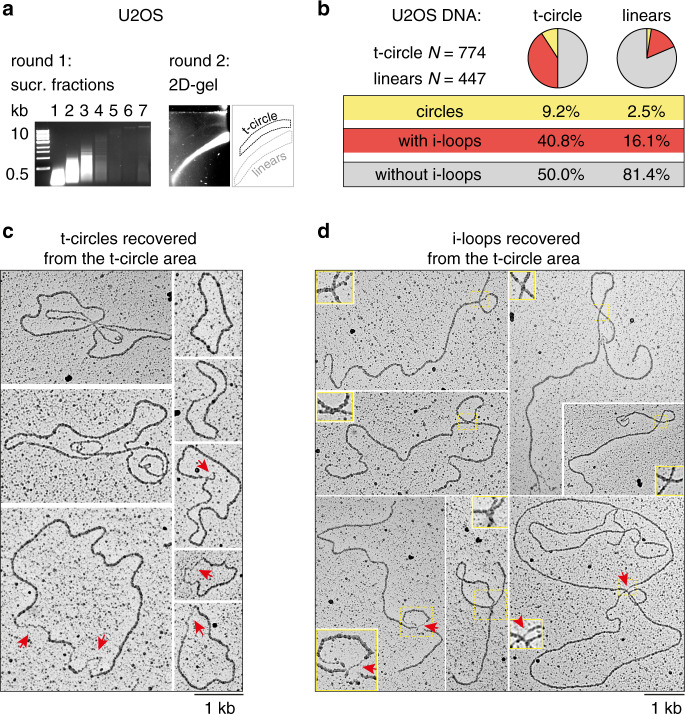
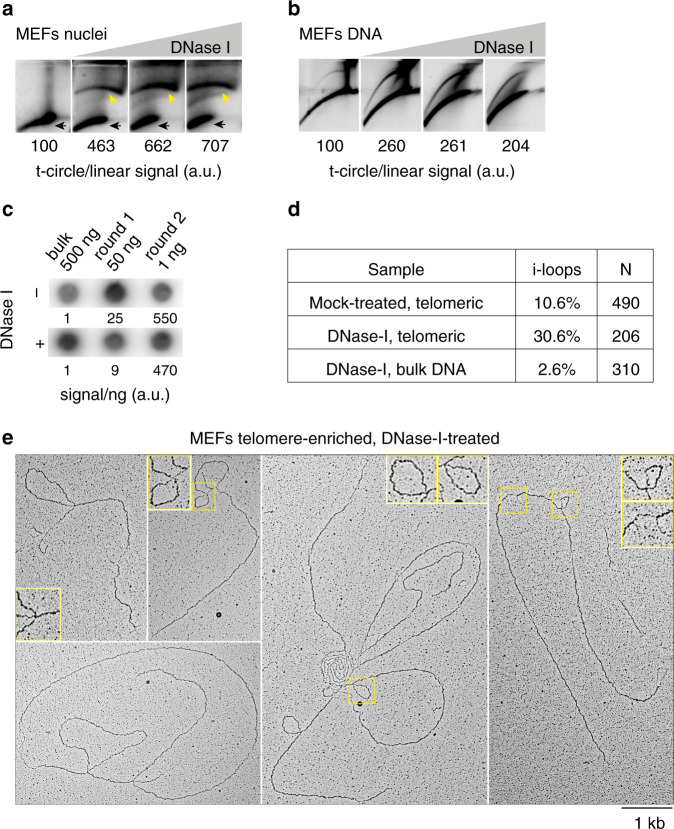
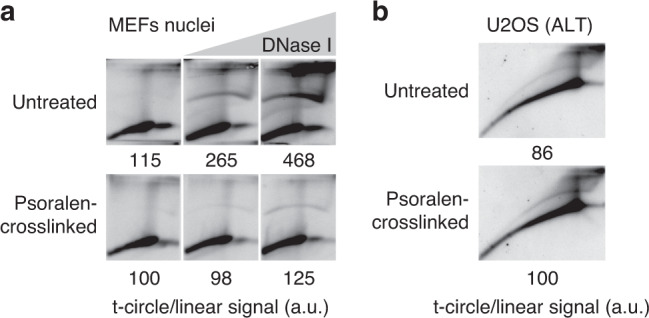
Extrachromosomal telomeric circles are commonly invoked as important players in telomere maintenance, but their origin has remained elusive. Using electron microscopy analysis on purified telomeres we show that, apart from known structures, telomeric repeats accumulate internal loops (i-loops) that occur in the proximity of nicks and single-stranded DNA gaps. I-loops are induced by single-stranded damage at normal telomeres and represent the majority of telomeric structures detected in ALT (Alternative Lengthening of Telomeres) tumor cells. Our data indicate that i-loops form as a consequence of the exposure of single-stranded DNA at telomeric repeats. Finally, we show that these damage-induced i-loops can be excised to generate extrachromosomal telomeric circles resulting in loss of telomeric repeats. Our results identify damage-induced i-loops as a new intermediate in telomere metabolism and reveal a simple mechanism that links telomere damage to the accumulation of extrachromosomal telomeric circles and to telomere erosion.
端粒外环状体通常被认为是端粒维持的重要参与者,但它们的起源一直难以捉摸。我们使用电子显微镜分析纯化的端粒,结果表明,除了已知结构外,端粒重复序列还会积累内部环(i-环),这些环发生在切口和单链 DNA 缺口附近。i-环是由正常端粒的单链损伤诱导的,它们代表了在 ALT(端粒酶的替代延长)肿瘤细胞中检测到的大多数端粒结构。我们的数据表明,i-环是端粒重复序列中单链 DNA 暴露的结果。最后,我们表明,这些损伤诱导的 i-环可以被切除,生成端粒外环状体,导致端粒重复序列丢失。我们的结果将损伤诱导的 i-环确定为端粒代谢的新中间体,并揭示了一种简单的机制,将端粒损伤与端粒外环状体的积累和端粒侵蚀联系起来。