Department of Biochemistry, Faculty of Medicine and Graduate School of Medicine, Hokkaido University, Kita 15, Nishi 7, Kita-Ku, Sapporo, Hokkaido, 060-8638, Japan.
Laboratory of Protein Metabolism, Tokyo Metropolitan Institute of Medical Science, Setagaya-Ku, Tokyo, 156-8506, Japan.
Commun Biol. 2020 Oct 20;3(1):592. doi: 10.1038/s42003-020-01328-y.
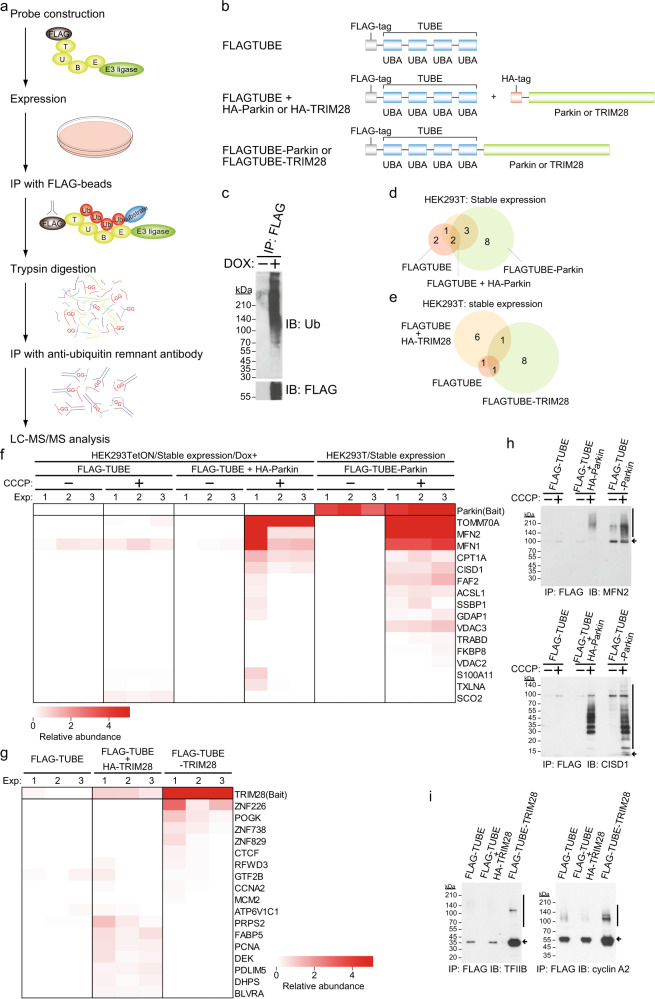
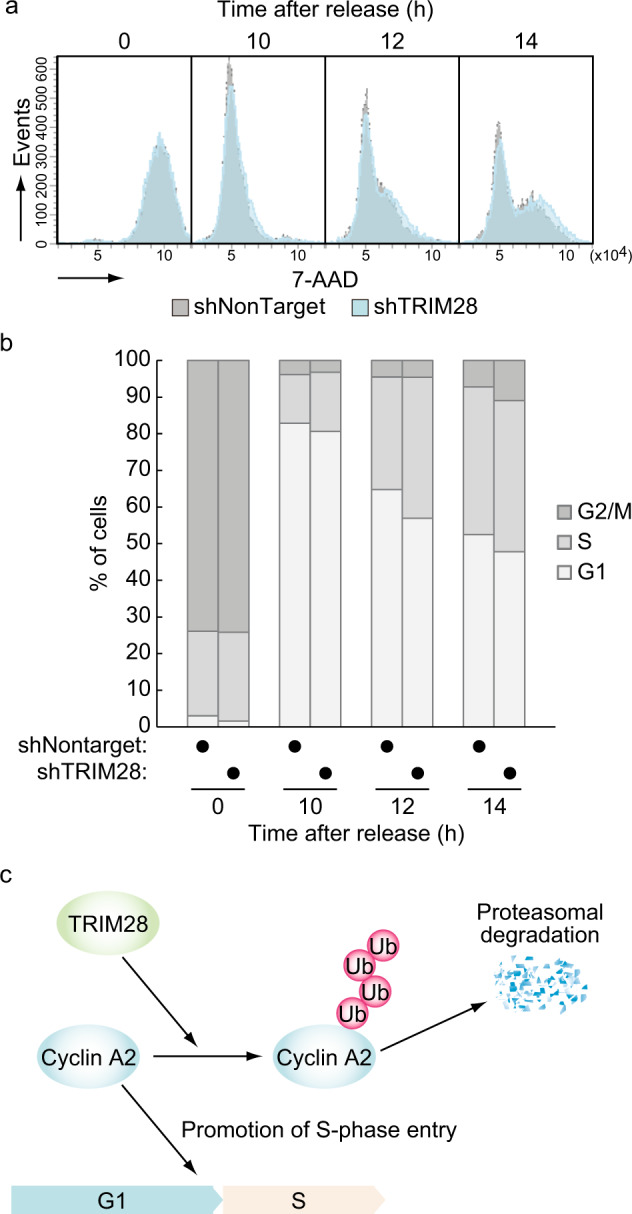
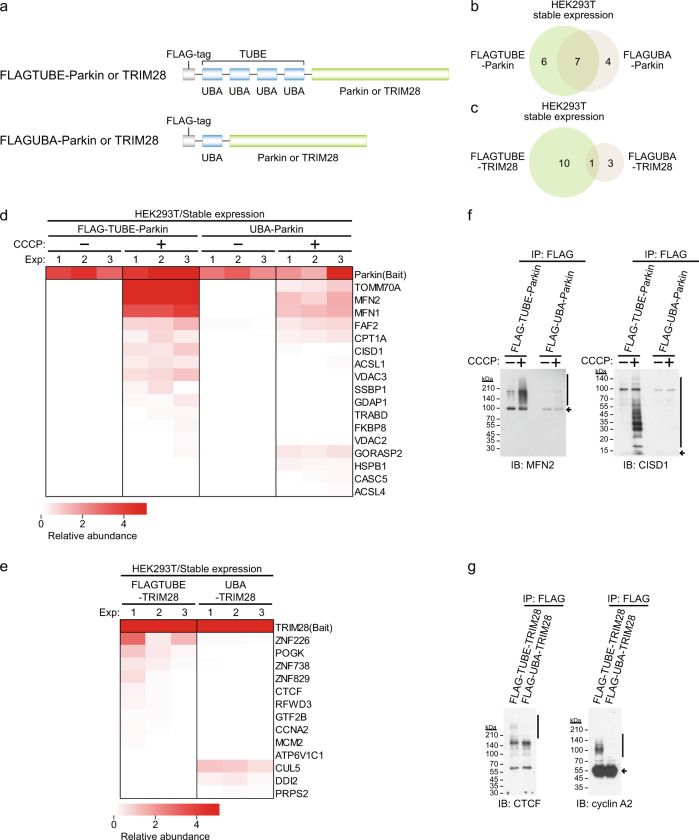
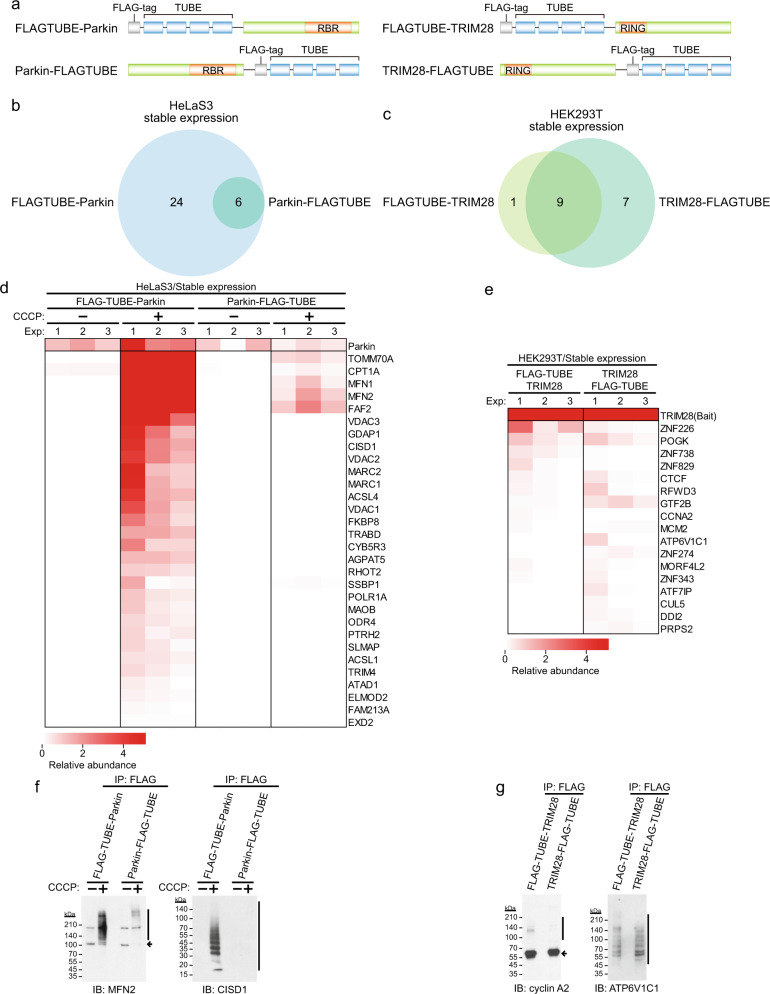
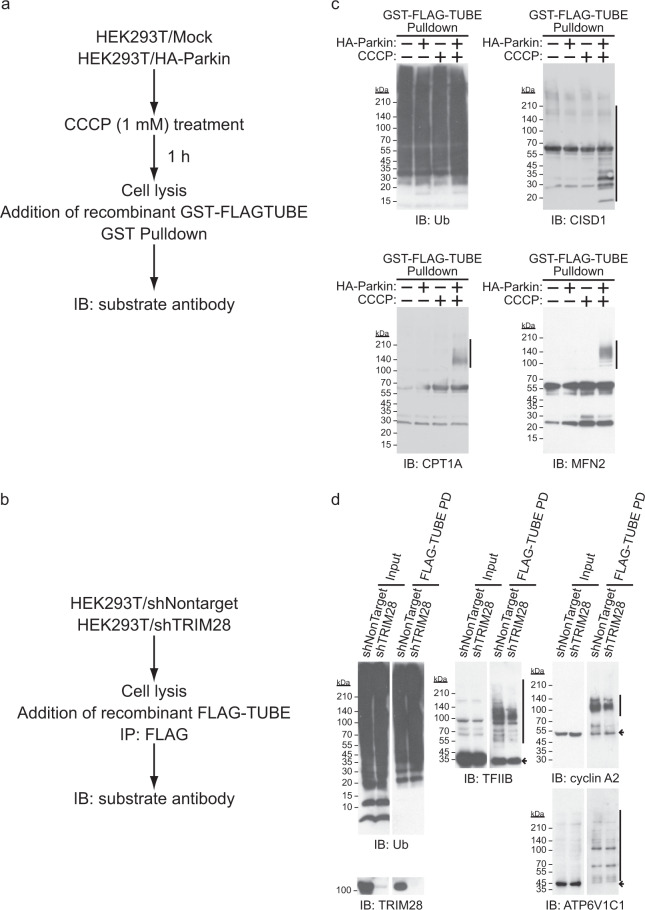
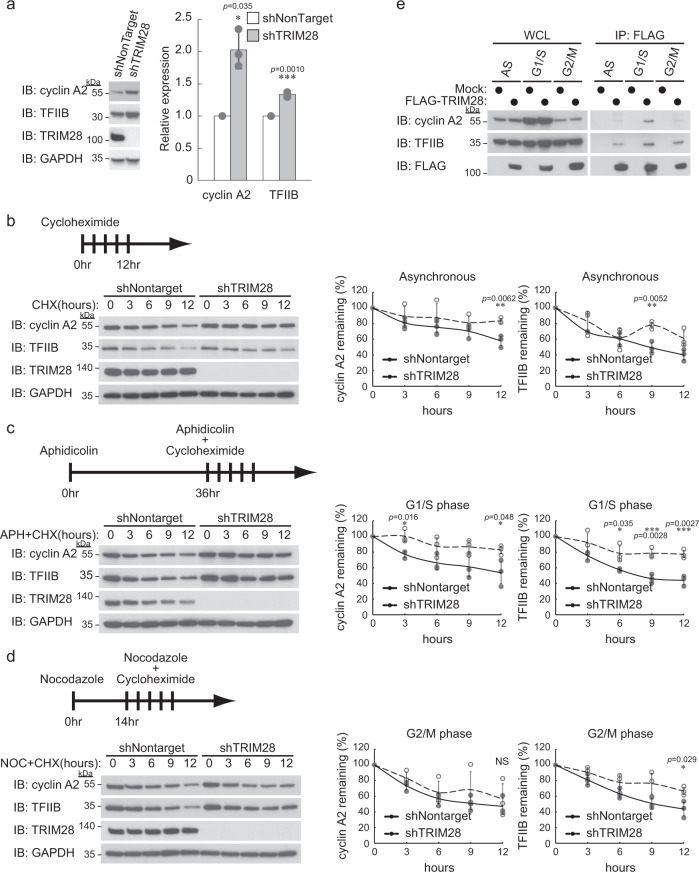
The identification of true substrates of an E3 ligase is biologically important but biochemically difficult. In recent years, several techniques for identifying substrates have been developed, but these approaches cannot exclude indirect ubiquitination or have other limitations. Here we develop an E3 ligase substrate-trapping strategy by fusing a tandem ubiquitin-binding entity (TUBE) with an anti-ubiquitin remnant antibody to effectively identify ubiquitinated substrates. We apply this method to one of the RBR-type ligases, Parkin, and to one of the RING-type ligases, TRIM28, and identify previously unknown substrates for TRIM28 including cyclin A2 and TFIIB. Furthermore, we find that TRIM28 promotes cyclin A2 ubiquitination and degradation at the G1/S phase and suppresses premature entry into S phase. Taken together, the results indicate that this method is a powerful tool for comprehensively identifying substrates of E3 ligases.
E3 连接酶的真正底物的鉴定在生物学上很重要,但在生物化学上却很困难。近年来,已经开发出了几种鉴定底物的技术,但这些方法不能排除间接泛素化或存在其他限制。在这里,我们通过将串联泛素结合结构域 (TUBE) 与抗泛素残基抗体融合,开发了一种 E3 连接酶底物捕获策略,可有效鉴定泛素化的底物。我们将这种方法应用于 RBR 型连接酶之一的 Parkin 和 RING 型连接酶之一的 TRIM28,鉴定了 TRIM28 的先前未知底物,包括细胞周期蛋白 A2 和 TFIIB。此外,我们发现 TRIM28 促进细胞周期蛋白 A2 在 G1/S 期的泛素化和降解,并抑制过早进入 S 期。总之,这些结果表明,该方法是全面鉴定 E3 连接酶底物的有力工具。