Yang Shuai, Hu Bin, Wang Zongming, Zhang Changming, Jiao Haosen, Mao Zhigang, Wei Liguang, Jia Ji, Zhao Jingling
Department of Neurosurgery, the First Affiliated Hospital of Sun Yat-sen University, Guangzhou, China.
Department of Neurosurgery, The Second People's Hospital of Qinzhou City, Qinzhou, China.
Cell Death Discov. 2020 Oct 12;6:102. doi: 10.1038/s41420-020-00338-3. eCollection 2020.
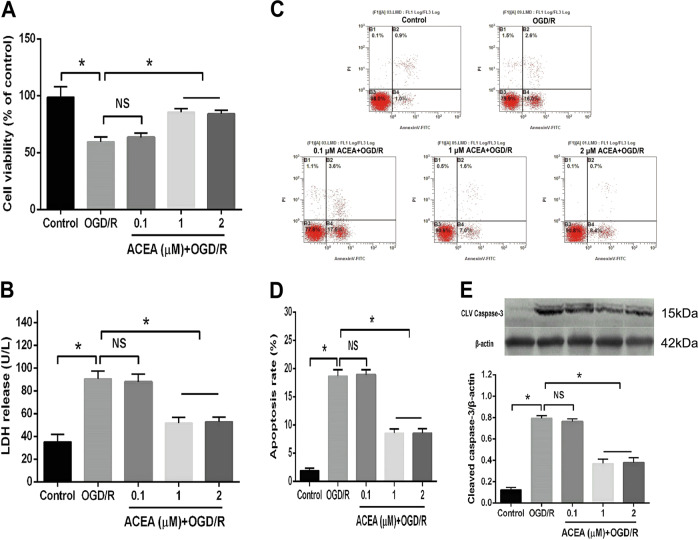
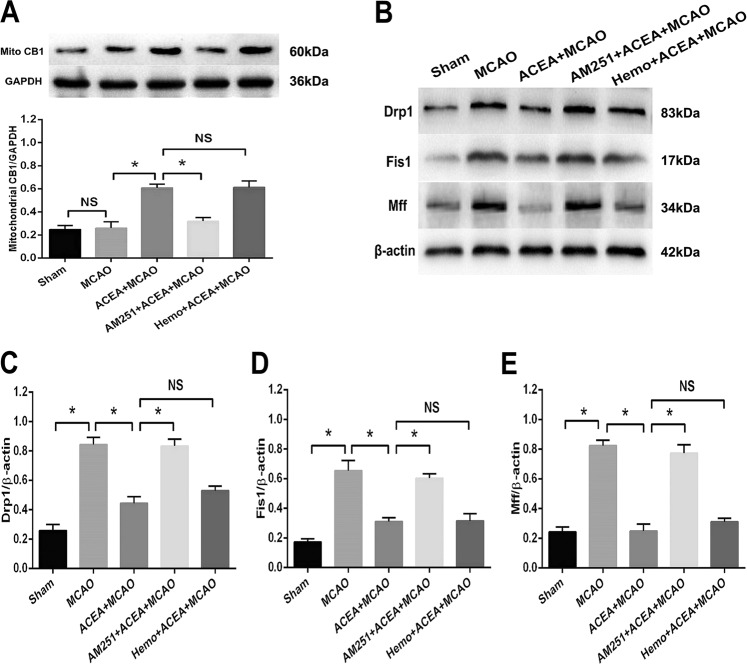
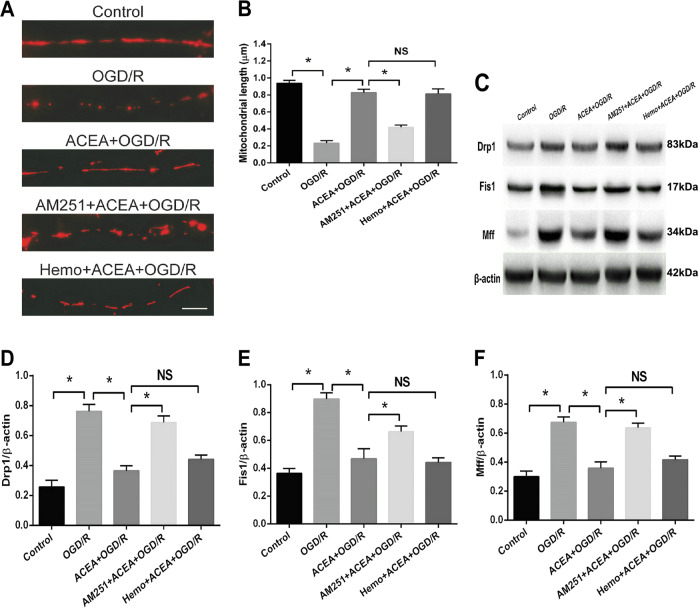
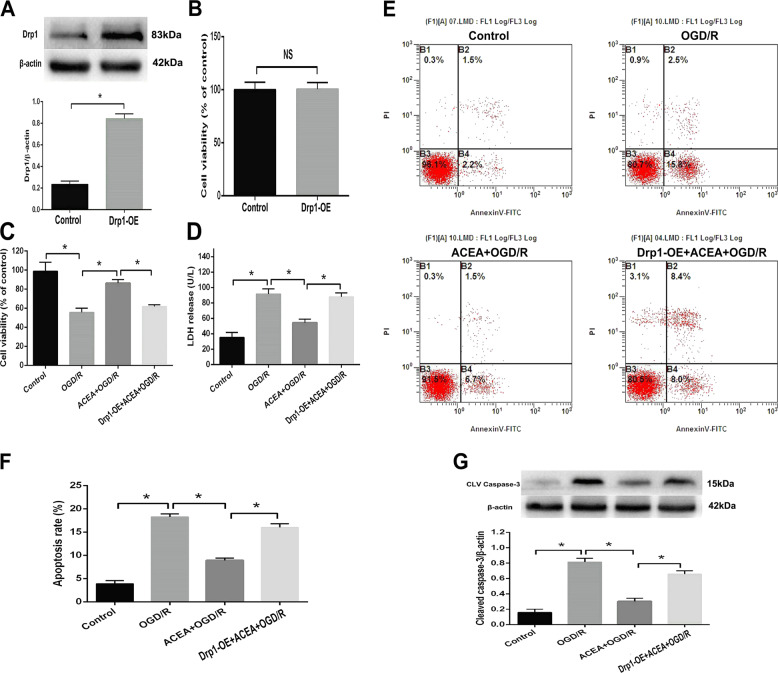
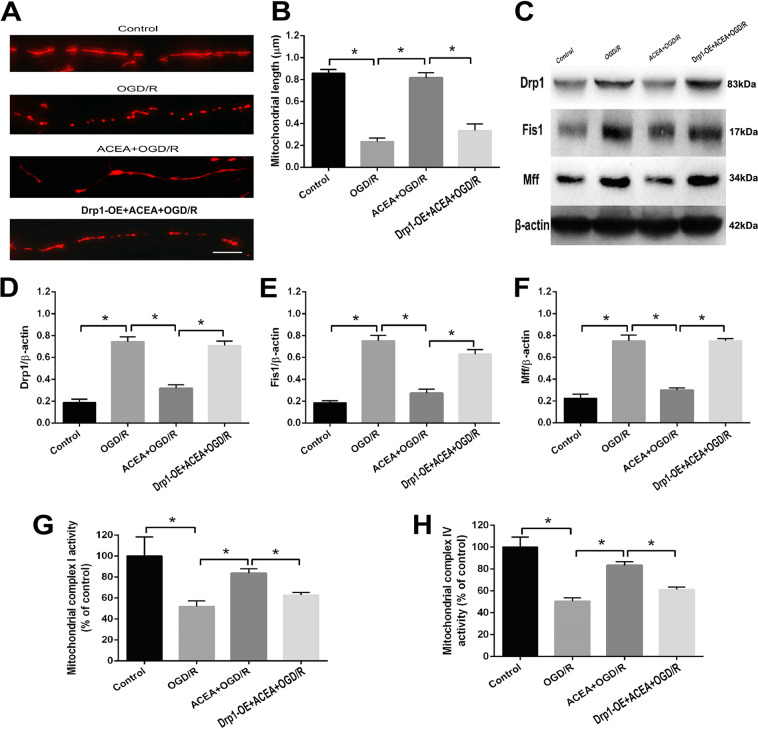
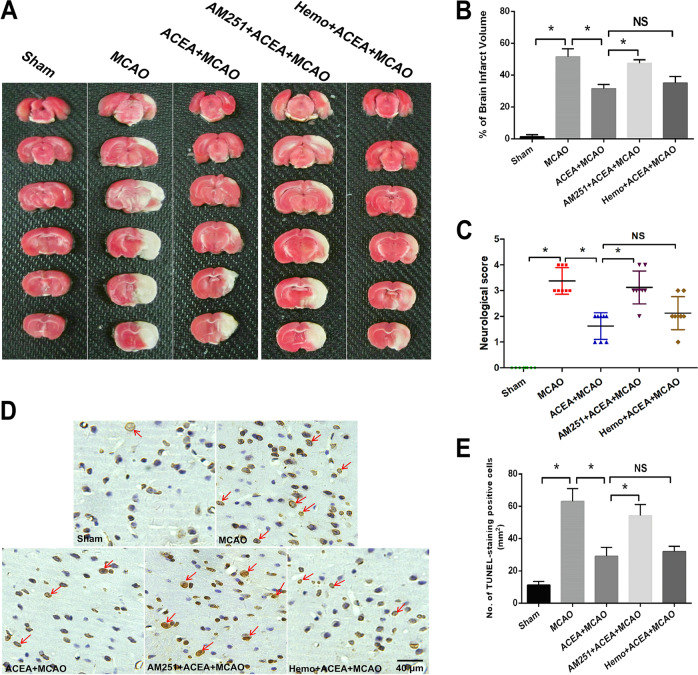
Activation of the cannabinoid CB1 receptor induces neuroprotection against brain ischemia/reperfusion injury (IRI); however, the mechanism is still unknown. In this study, we used oxygen-glucose deprivation/reoxygenation (OGD/R)-induced injury in neuronal cells and middle cerebral artery occlusion (MCAO)-induced brain IRI in rats to mimic ischemic brain injury, and hypothesized that the CB1 receptor agonist arachidonyl-2-chloroethylamide (ACEA) would protect ischemic neurons by inhibiting mitochondrial fission via dynamin-related protein 1 (Drp1). We found that OGD/R injury reduced cell viability and mitochondrial function, increased lactate dehydrogenase (LDH) release, and increased cell apoptosis, and mitochondrial fission. Notably, ACEA significantly abolished the OGD/R-induced neuronal injuries described above. Similarly, ACEA significantly reversed MCAO-induced increases in brain infarct volume, neuronal apoptosis and mitochondrial fission, leading to the recovery of neurological functions. The neuroprotective effects of ACEA were obviously blocked by coadministration of the CB1 receptor antagonist AM251 or by the upregulation of Drp1 expression, indicating that ACEA alleviates brain IRI via the CB1-Drp1 pathway. Our findings suggest that the CB1 receptor links aberrant mitochondrial fission to brain IRI, providing a new therapeutic target for brain IRI treatment.
大麻素CB1受体的激活可诱导对脑缺血/再灌注损伤(IRI)的神经保护作用;然而,其机制仍不清楚。在本研究中,我们利用氧糖剥夺/复氧(OGD/R)诱导的神经元细胞损伤以及大鼠大脑中动脉闭塞(MCAO)诱导的脑IRI来模拟缺血性脑损伤,并假设CB1受体激动剂花生四烯酸-2-氯乙酰胺(ACEA)可通过动力相关蛋白1(Drp1)抑制线粒体分裂来保护缺血神经元。我们发现OGD/R损伤降低了细胞活力和线粒体功能,增加了乳酸脱氢酶(LDH)释放,并增加了细胞凋亡和线粒体分裂。值得注意的是,ACEA显著消除了上述OGD/R诱导的神经元损伤。同样,ACEA显著逆转了MCAO诱导的脑梗死体积增加、神经元凋亡和线粒体分裂,从而导致神经功能的恢复。CB1受体拮抗剂AM251的共同给药或Drp1表达的上调明显阻断了ACEA的神经保护作用,表明ACEA通过CB1-Drp1途径减轻脑IRI。我们的研究结果表明,CB1受体将异常的线粒体分裂与脑IRI联系起来,为脑IRI治疗提供了一个新的治疗靶点。