Jindal Sonali, Narasimhan Jayasri, Borges Virginia F, Schedin Pepper
Department of Cell, Developmental and Cancer Biology, Oregon Health & Science University, 2720 S Moody Avenue, Mailing Code: KR-CDCB, Portland, OR 97201 USA.
Knight Cancer Institute, Oregon Health & Science University, 2720 S Moody Avenue, Mailing Code: KR-ADM, Portland, OR 97201 USA.
NPJ Breast Cancer. 2020 Oct 16;6:55. doi: 10.1038/s41523-020-00196-3. eCollection 2020.
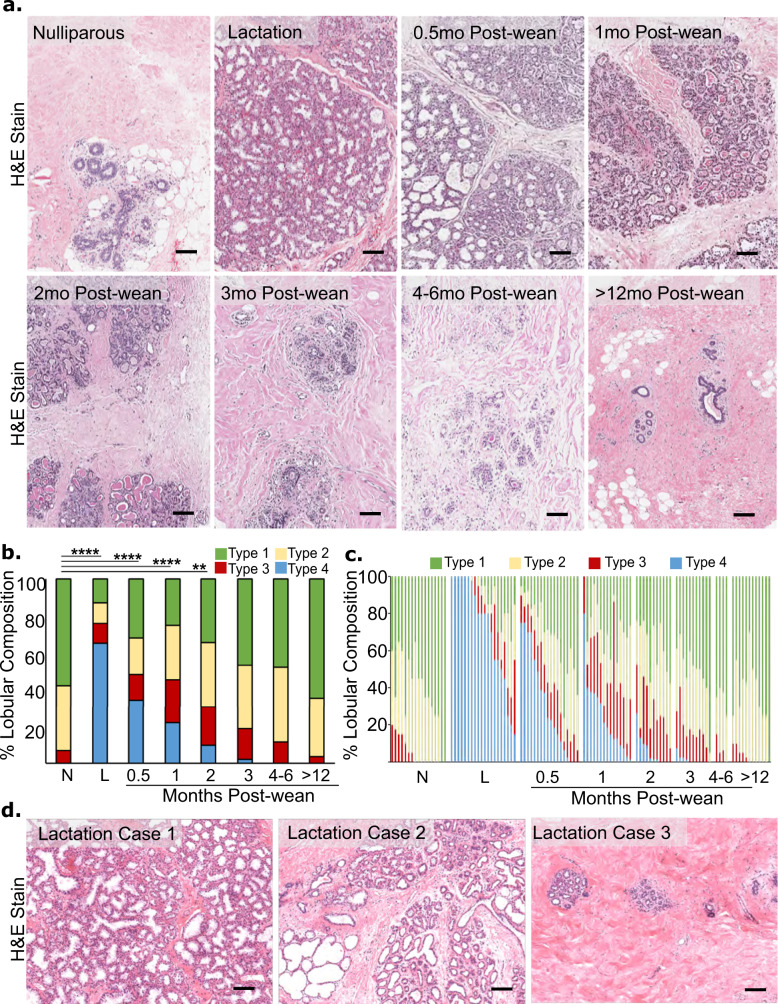
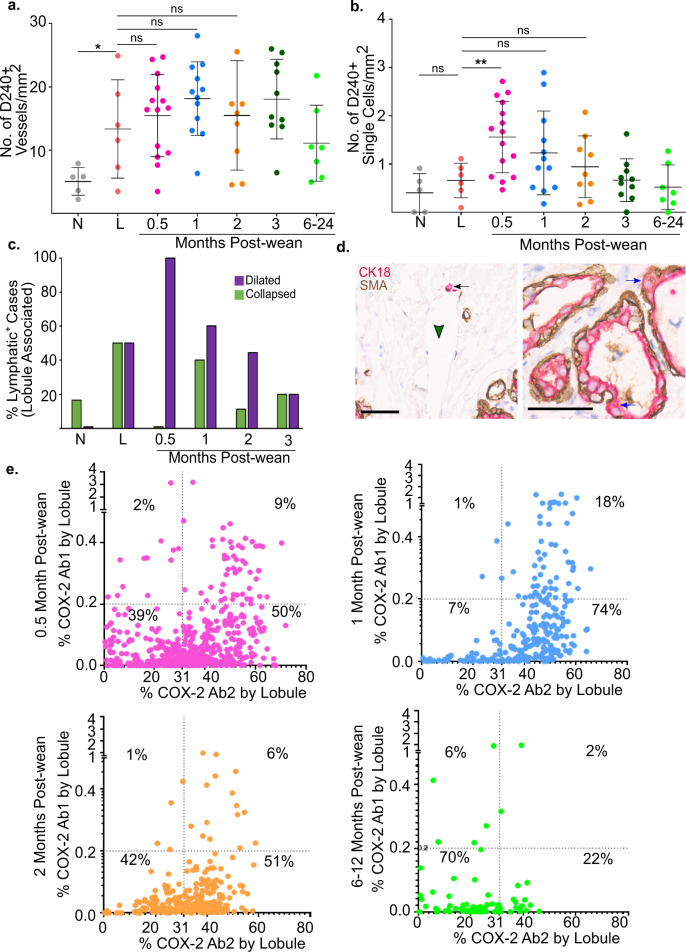
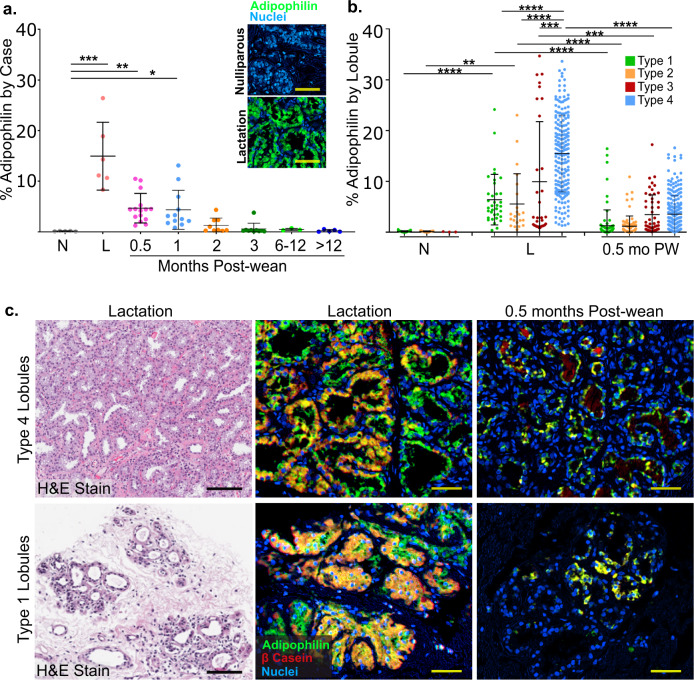
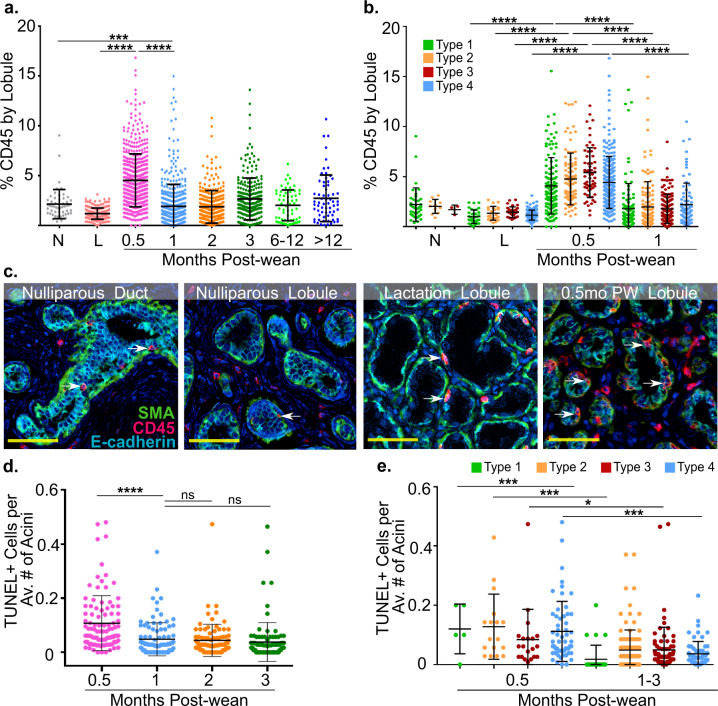
In rodents, weaning-induced mammary gland involution supports increased mammary tumor incidence, growth, and progression to metastasis. Further, the protumor attributes of gland involution are COX-2 dependent and mitigated by short-duration non-steroidal anti-inflammatory drugs (NSAIDs), suggesting a potential prevention strategy. However, the transition from lactation to postweaning breast involution has not been rigorously evaluated in healthy women. Here we queried breast biopsies from healthy women ( = 112) obtained at nulliparity, lactation, and multiple postweaning time points using quantitative immunohistochemistry. We found that mammary remodeling programs observed in rodents are mirrored in the human breast. Specifically, lactation associates with the expansion of large, secretory mammary lobules and weaning associates with lobule loss concurrent with epithelial cell death and stromal hallmarks of wound healing, including COX-2 upregulation. Altogether, our data demonstrate that weaning-induced breast involution occurs rapidly, concurrent with protumor-like attributes, and is a potential target for NSAID-based breast cancer prevention.
在啮齿动物中,断奶诱导的乳腺退化会增加乳腺肿瘤的发病率、生长以及向转移发展的进程。此外,腺体退化的促肿瘤特性依赖于COX-2,且短期非甾体抗炎药(NSAIDs)可减轻这种特性,这提示了一种潜在的预防策略。然而,在健康女性中,从哺乳期到断奶后乳腺退化的转变尚未得到严格评估。在此,我们使用定量免疫组织化学方法,对112名健康女性在未生育、哺乳期以及多个断奶后时间点获取的乳腺活检样本进行了研究。我们发现,在啮齿动物中观察到的乳腺重塑程序在人类乳腺中也有体现。具体而言,哺乳期与大型分泌性乳腺小叶的扩张相关,而断奶则与小叶丢失相关,同时伴有上皮细胞死亡以及伤口愈合的基质特征,包括COX-2上调。总之,我们的数据表明,断奶诱导的乳腺退化迅速发生,同时伴有促肿瘤样特性,并且是基于NSAIDs的乳腺癌预防的潜在靶点。