Ghode Abhijeet, Gross Lissy Z F, Tee Wei-Ven, Guarnera Enrico, Berezovsky Igor N, Biondi Ricardo M, Anand Ganesh S
Department of Biological Sciences, National University of Singapore, Singapore.
Instituto de Investigación en Biomedicina de Buenos Aires - CONICET - Partner Institute of the Max Planck Society, Buenos Aires, Argentina.
Biophys J. 2020 Nov 3;119(9):1833-1848. doi: 10.1016/j.bpj.2020.09.019. Epub 2020 Sep 28.
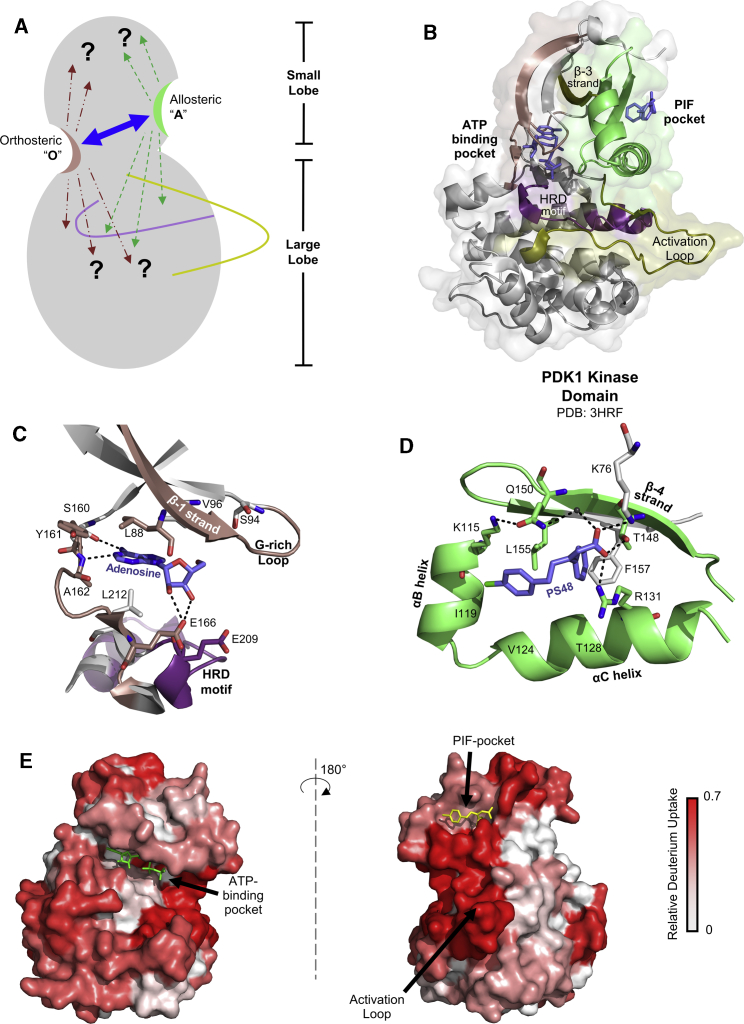
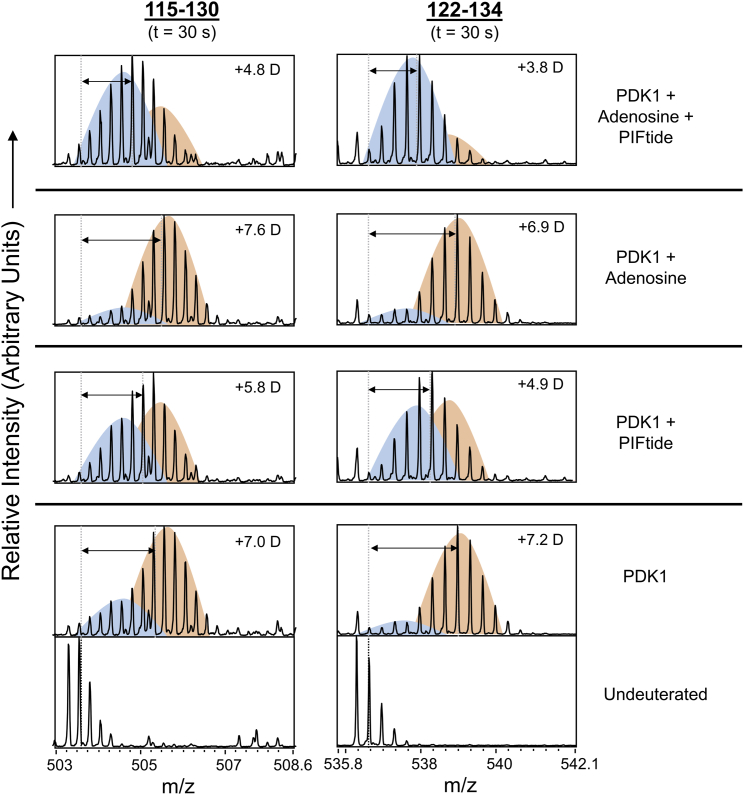
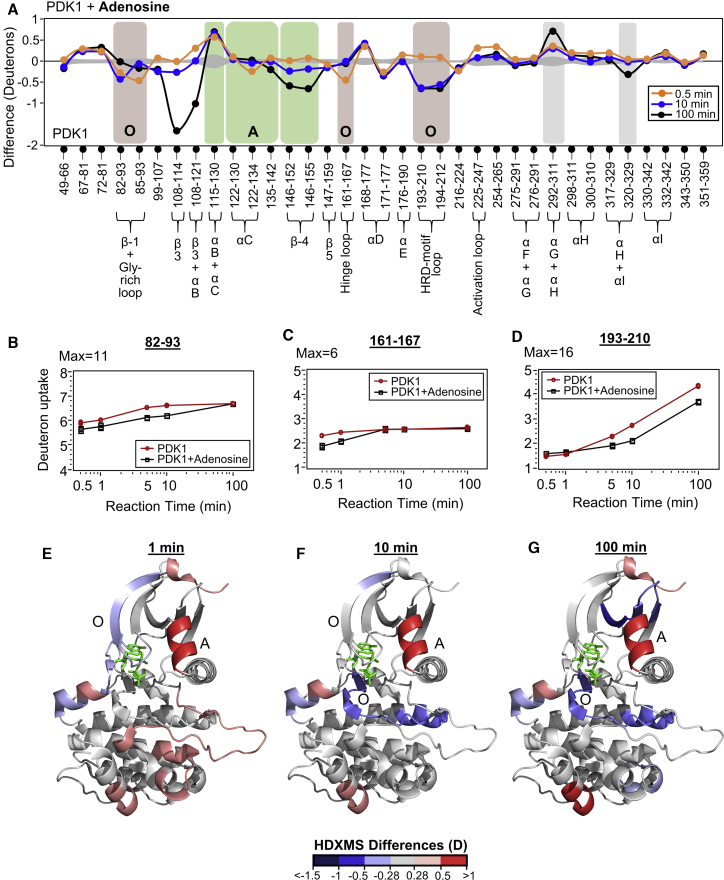
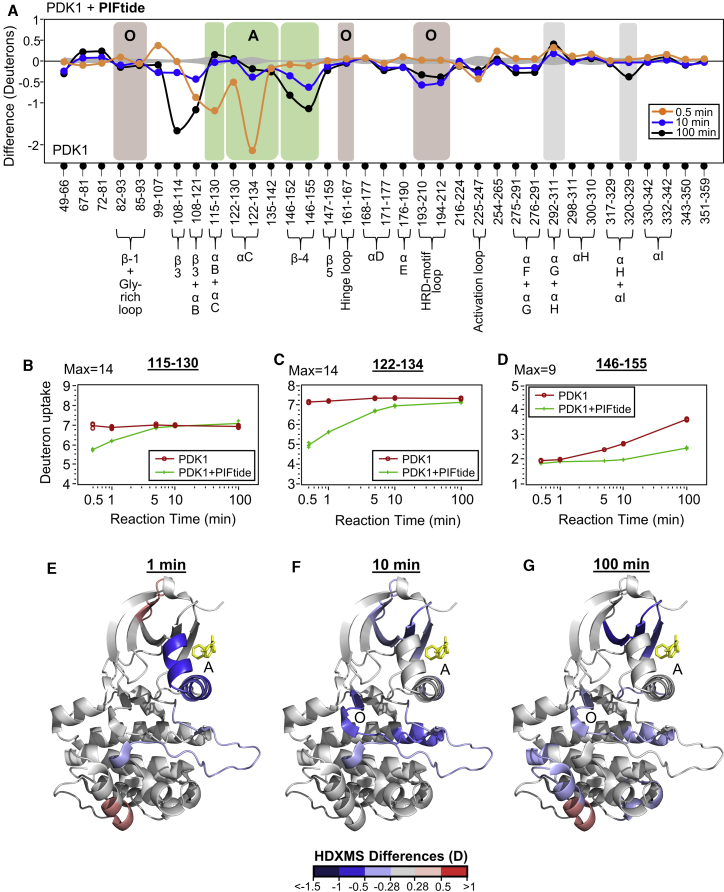
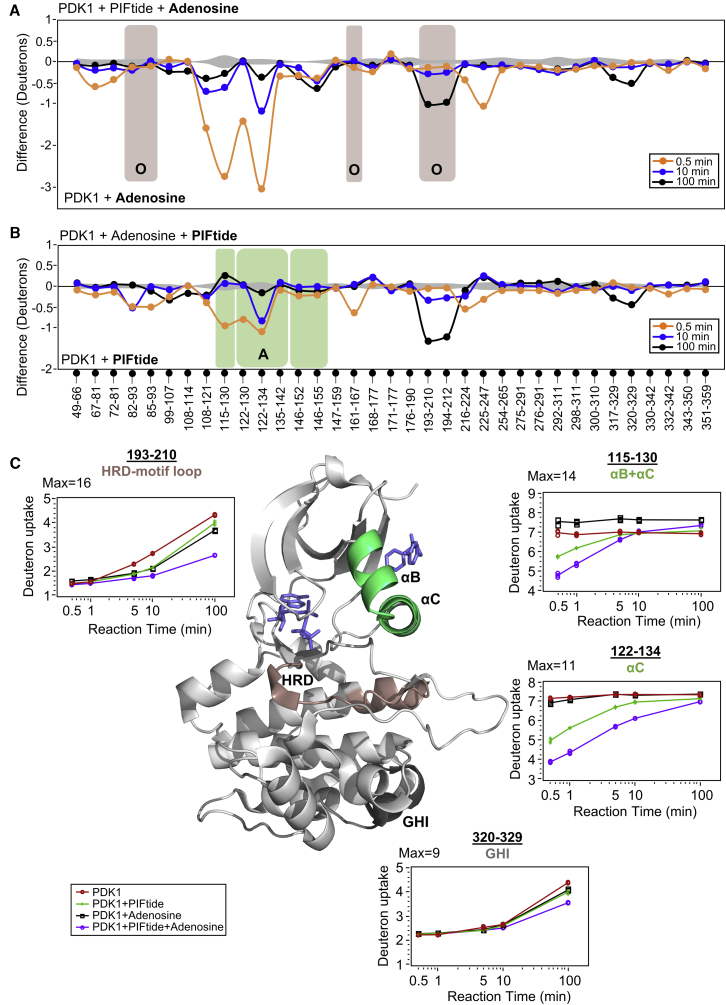
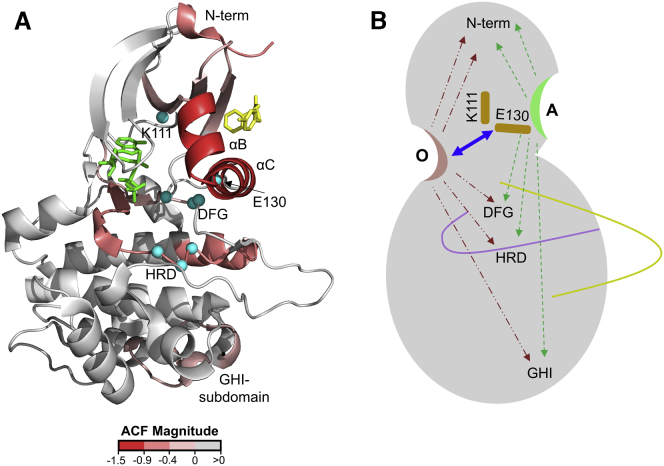
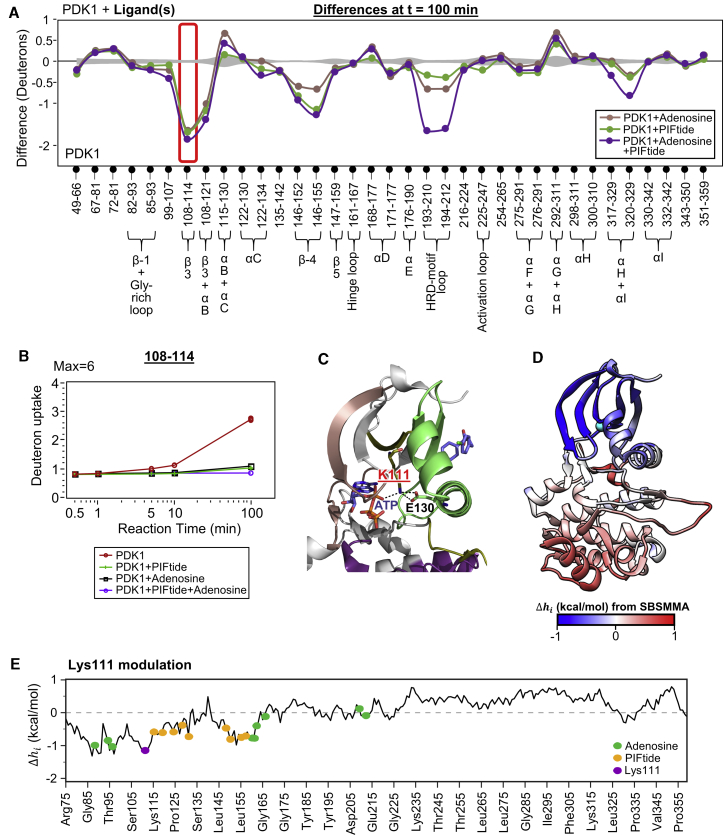
Amide hydrogen-deuterium exchange mass spectrometry is powerful for describing combinatorial coupling effects of a cooperative ligand pair binding at noncontiguous sites: adenosine at the ATP-pocket and a docking peptide (PIFtide) at the PIF-pocket, on a model protein kinase PDK1. Binding of two ligands to PDK1 reveal multiple hotspots of synergistic allostery with cumulative effects greater than the sum of individual effects mediated by each ligand. We quantified this synergism and ranked these hotspots using a difference in deuteration-based approach, which showed that the strongest synergistic effects were observed at three of the critical catalytic loci of kinases: the αB-αC helices, and HRD-motif loop, and DFG-motif. Additionally, we observed weaker synergistic effects at a distal GHI-subdomain locus. Synergistic changes in deuterium exchange observed at a distal site but not at the intermediate sites of the large lobe of the kinase reveals allosteric propagation in proteins to operate through two modes. Direct electrostatic interactions between polar and charged amino acids that mediate targeted relay of allosteric signals, and diffused relay of allosteric signals through soft matter-like hydrophobic core amino acids. Furthermore, we provide evidence that the conserved β-3 strand lysine of protein kinases (Lys111 of PDK1) functions as an integrator node to coordinate allosteric coupling of the two ligand-binding sites. It maintains indirect interactions with the ATP-pocket and mediates a critical salt bridge with a glutamate (Glu130) of αC helix, which is conserved across all kinases. In summary, allosteric propagation in cooperative, dual-liganded enzyme targets is bidirectional and synergistic and offers a strategy for combinatorial drug development.
酰胺氢-氘交换质谱对于描述协同配体对在非相邻位点结合的组合偶联效应非常有效:ATP口袋处的腺苷和PIF口袋处的对接肽(PIFtide),作用于模型蛋白激酶PDK1。两个配体与PDK1的结合揭示了协同变构的多个热点,其累积效应大于每个配体介导的个体效应之和。我们使用基于氘代差异的方法对这种协同作用进行了量化,并对这些热点进行了排序,结果表明在激酶的三个关键催化位点观察到了最强的协同效应:αB-αC螺旋、HRD基序环和DFG基序。此外,我们在远端GHI亚结构域位点观察到较弱的协同效应。在激酶大结构域的远端位点而非中间位点观察到的氘交换协同变化揭示了蛋白质中的变构传播通过两种模式进行。极性和带电氨基酸之间的直接静电相互作用介导变构信号的靶向传递,以及变构信号通过类似软物质的疏水核心氨基酸进行扩散传递。此外,我们提供证据表明蛋白激酶保守的β-3链赖氨酸(PDK1的Lys111)作为一个整合节点来协调两个配体结合位点的变构偶联。它与ATP口袋保持间接相互作用,并与αC螺旋的谷氨酸(Glu130)形成关键的盐桥,这在所有激酶中都是保守的。总之,协同双配体酶靶点中的变构传播是双向和协同的,并为组合药物开发提供了一种策略。