Park Mina, Kim Jin Woo, Ahn Sung Jun, Cha Yoon Jin, Suh Sang Hyun
Department of Radiology, Gangnam Severance Hospital, Yonsei University College of Medicine, Seoul 06273, Korea.
Department of Pathology, Gangnam Severance Hospital, Yonsei University College of Medicine, Seoul 06273, Korea.
J Clin Med. 2020 Oct 19;9(10):3353. doi: 10.3390/jcm9103353.
Aging is a major risk factor for many neurological disorders and is associated with dural lymphatic dysfunction. We sought to evaluate the association of aging with the volume of the peri-sinus lymphatic space using contrast-enhanced 3T T1-weighted black-blood magnetic resonance imaging (MRI).
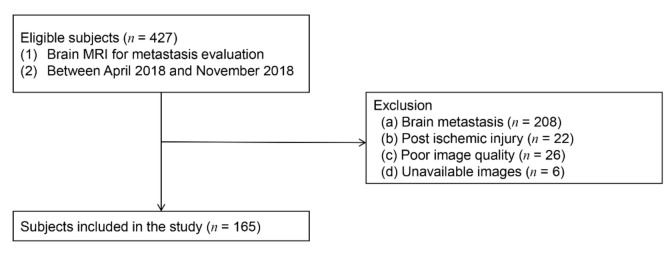
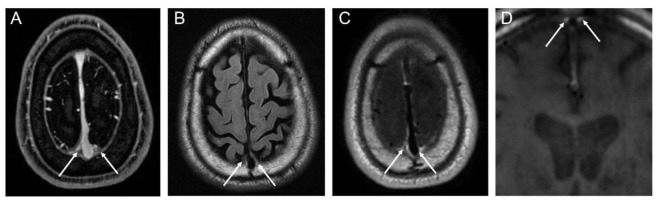
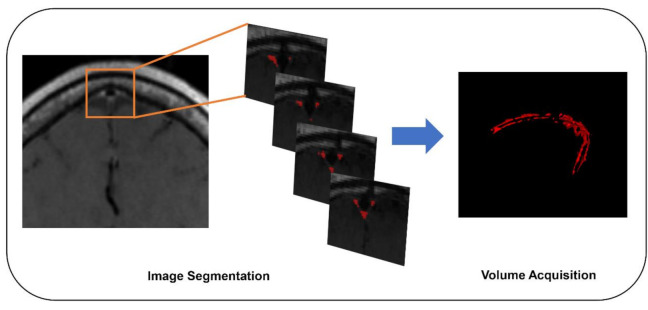
In this retrospective study, 165 presumed neurologically normal subjects underwent brain MRIs for cancer staging between April and November 2018. The parasagittal peri-sinus lymphatic space was evaluated using contrast-enhanced 3D T1-weighted black-blood MRIs, and volumes were measured with semiautomatic method. We compared the volumes of normalized peri-sinus lymphatic spaces between the elderly (≥65 years, = 72) and non-elderly ( = 93) groups and performed multivariate logistic regression analyses to assess if aging is independently associated with the volume of normalized peri-sinus lymphatic spaces.
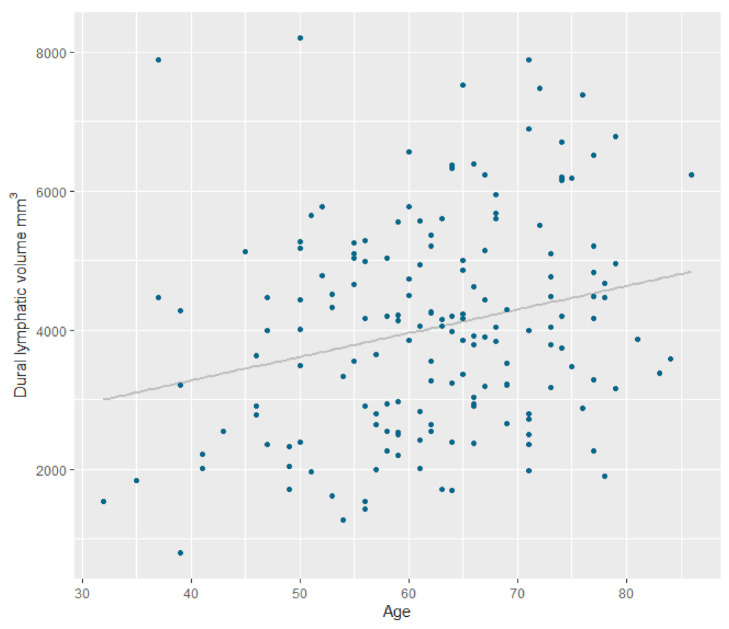
The normalized peri-sinus lymphatic space volume was significantly higher in the elderly than in the non-elderly (mean, 3323 ± 758.7 mL vs. 2968.7 ± 764.3 mL, = 0.047). After adjusting the intracranial volume, age age was the strongest factor independently associated with peri-sinus lymphatic space volume (β coefficient, 28.4 (5.7-51.2), = 0.015) followed by male sex (β coefficient, 672.4 (113.5-1230.8), = 0.019).
We found that the peri-sinus dural lymphatic space volume was higher in the elderly group than in the non-elderly group, and the increased peri-sinus lymphatic space was independently associated with aging. These findings indicate that the peri-sinus lymphatic space may be related with the aging process and lymphatic system dysfunction as well.
衰老为许多神经疾病的主要风险因素,且与硬脑膜淋巴管功能障碍相关。我们试图通过对比增强3T T1加权黑血磁共振成像(MRI)评估衰老与窦周淋巴间隙容积之间的关联。
在这项回顾性研究中,165名假定神经功能正常的受试者于2018年4月至11月间接受脑部MRI以进行癌症分期。使用对比增强3D T1加权黑血MRI评估矢状窦旁窦周淋巴间隙,并采用半自动方法测量其容积。我们比较了老年组(≥65岁,n = 72)和非老年组(n = 93)之间标准化窦周淋巴间隙的容积,并进行多因素逻辑回归分析,以评估衰老是否与标准化窦周淋巴间隙的容积独立相关。
老年组标准化窦周淋巴间隙容积显著高于非老年组(均值分别为3323±758.7 mL和2968.7±764.3 mL,P = 0.047)。在校正颅内容积后,年龄是与窦周淋巴间隙容积独立相关的最强因素(β系数为28.4(5.7 - 51.2),P = 0.015),其次是男性(β系数为672.4(113.5 - 1230.8),P = 0.019)。
我们发现老年组的窦周硬脑膜淋巴间隙容积高于非老年组,且窦周淋巴间隙增加与衰老独立相关。这些发现表明,窦周淋巴间隙可能与衰老过程以及淋巴系统功能障碍有关。